

Transparent Wedding Tent Ideas: 15 Stunning Clear Marquee Designs
Clear-top wedding tents have become the most-requested tent style over the last three years, driven by social media and golden-hour photography. Transparent marquee installations create 40% more shareable photo moments compared to traditional fabric tents. If you want to create an unforgettable outdoor wedding blending indoor elegance with natural surroundings, you need to understand clear tent design options, lighting strategies, and venue integration techniques.
This guide covers 15 stunning transparent wedding tent designs that transform any location into your perfect venue. You will learn about clear roof versus clear wall configurations, lighting combinations, seasonal considerations, and practical setup requirements.
Table of Contents
What Makes Transparent Wedding Tents Special
Transparent wedding tents use clear PVC panels instead of traditional fabric, creating unobstructed views of sky, landscape, and venue features. The transparency brings natural light and scenery into the protected event area.
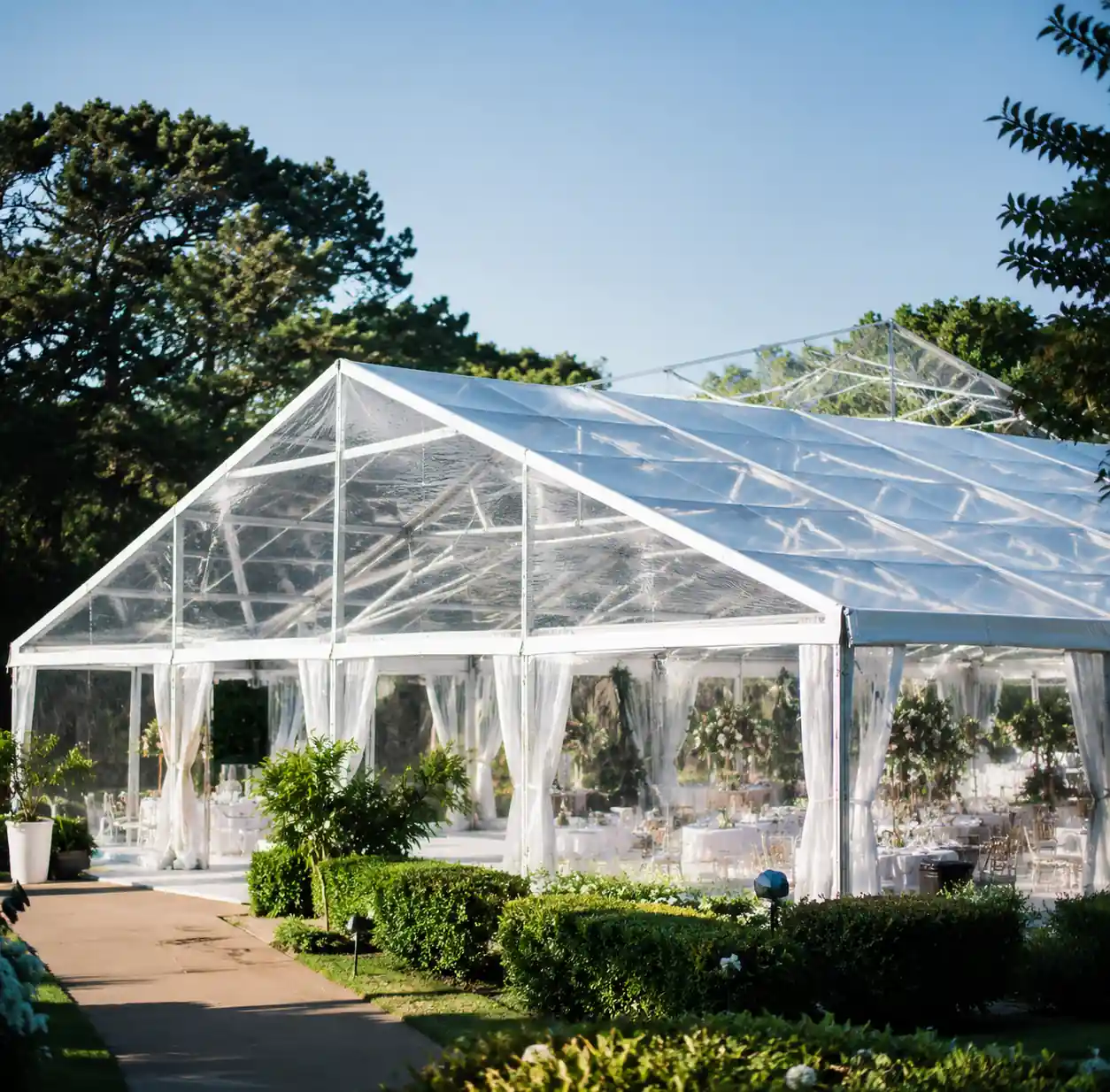 Transparent wedding tent with clear roof panels at outdoor garden venue
According to wedding planning professionals, evening ambiance is particularly striking—lights reflect off the ceiling in kaleidoscope patterns, and the outdoors becomes the décor. Clear marquees reduce daytime artificial lighting needs while showcasing overhead florals or natural surroundings.
One reception featured a transparent canopy with crystal chandeliers, creating dazzling visuals highlighting venue vistas. The key advantage is intentional design—you control what guests see above and around them, whether stars, string lights, or natural scenery.
Clear Roof vs Full Transparent Designs
Two primary configurations serve different aesthetic and practical needs. Clear roof designs maintain solid sidewalls with transparent ceiling panels, while full transparent tents include clear walls and roofing.
Transparent Tent Configuration Comparison
| Configuration | Visibility | Climate Control | Best Application | Cost Range |
|---|---|---|---|---|
| Clear Roof Only | Skyward views, enclosed sides | Excellent temperature control | Garden parties, vineyards | Moderate |
| Full Transparent | 360° panoramic views | Moderate control | Scenic locations, waterfront | Higher |
| Clear Wall Sections | Selective view framing | Good balance | Versatile venues | Moderate |
| Hybrid Design | Customizable per section | Maximum flexibility | Large weddings with zones | Variable |
Clear roof configurations showcase overhead elements like stars or tree canopies while maintaining climate control through solid sidewalls. Full transparent designs excel in scenic locations where surrounding landscape adds value—beachfront, mountain, or botanical gardens. Transparent walls create immersive experiences connecting guests to natural environment.
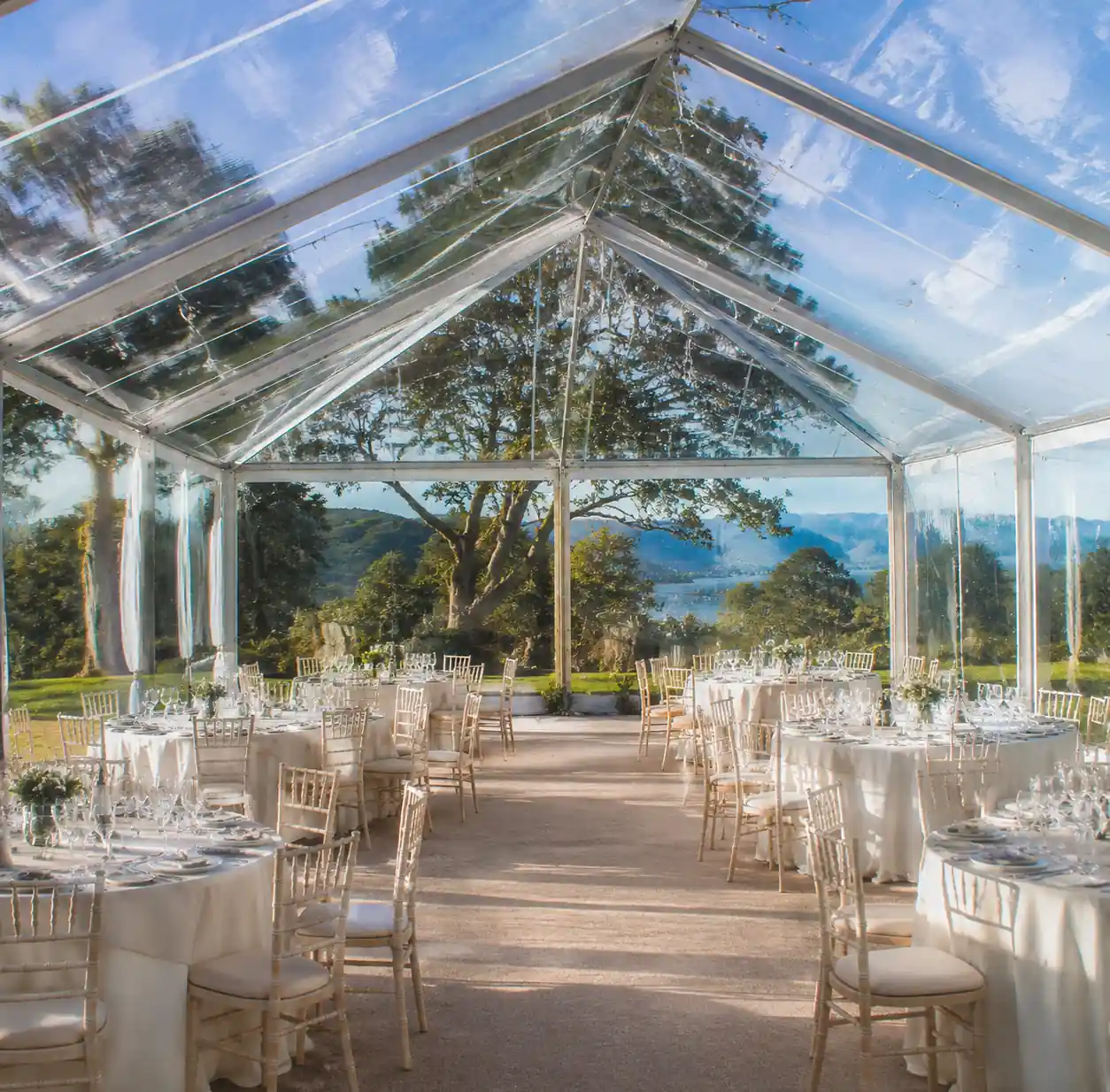 Clear span wedding marquee with transparent walls and panoramic views
Professional wedding marquee solutions use 850g/sqm PVC-coated polyester for solid sections and 0.7-1.0mm clear PVC for transparent panels, providing waterproof ratings exceeding 3000mm hydrostatic head. Hybrid designs allow customized transparency by section.
Stargazing Reception Setups
Stargazing designs maximize celestial views through clear panel placement and minimal overhead lighting. These work best for evening receptions in locations with low light pollution.
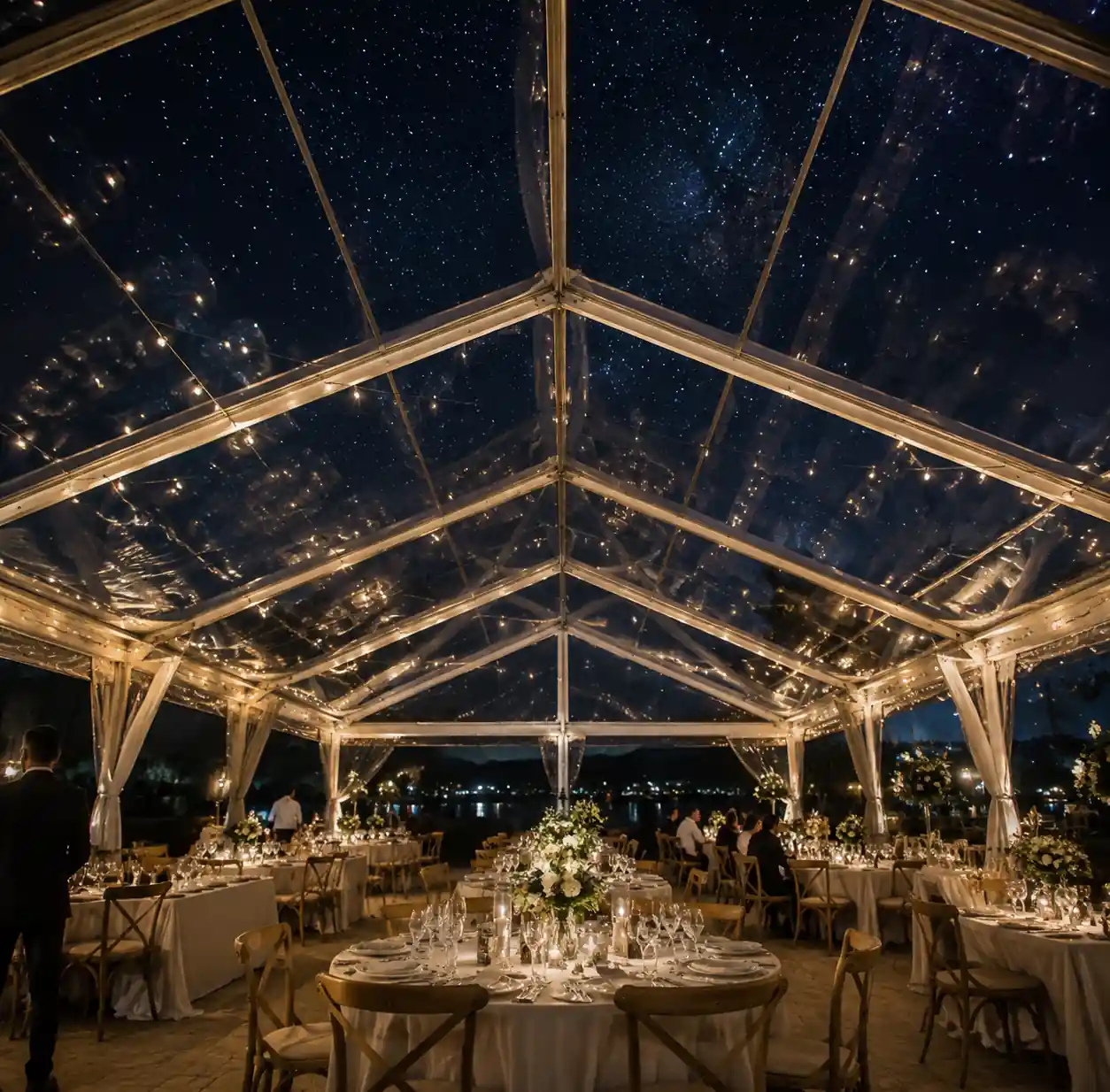 Stargazing wedding reception setup with clear ceiling at night
Position tents to frame the best sky views—orient away from direct ambient light. Clear span tents ranging 15-40m width accommodate 200-800 guests. Use perimeter string lights or bistro lights around tent edges rather than overhead, keeping ceiling clear. Amber-toned fairy lights at 20-30% brightness provide illumination without washing out stars. Table candles and low-profile uplighting create intimate zones while preserving overhead darkness.
Garden Venue Integration
Transparent tents integrate with botanical venues by framing natural surroundings. Garden integration emphasizes landscape as part of design.
Garden Integration Design Elements
| Integration Type | Visual Impact | Setup Complexity | Seasonal Suitability | Guest Capacity |
|---|---|---|---|---|
| Tree Canopy Frame | High—foliage overhead | Moderate | Spring/Summer/Fall | 100-300 |
| Floral Surround | High—360° garden views | Low-Moderate | Peak bloom seasons | 50-250 |
| Water Feature Adjacent | Very High—reflection effects | Moderate-High | Year-round | 150-500 |
| Pathway Connection | Moderate—guided flow | Low | Year-round | Flexible |
Position tents to maximize views of signature garden features—rose gardens, water fountains, or mature trees. Clear walls allow these elements to remain visible, creating indoor-outdoor flow. The surrounding garden becomes venue décor, reducing need for interior decoration. Professional clear tent installations orient dining tables toward best views. Considerations include ground protection, permit requirements, and seasonal timing.
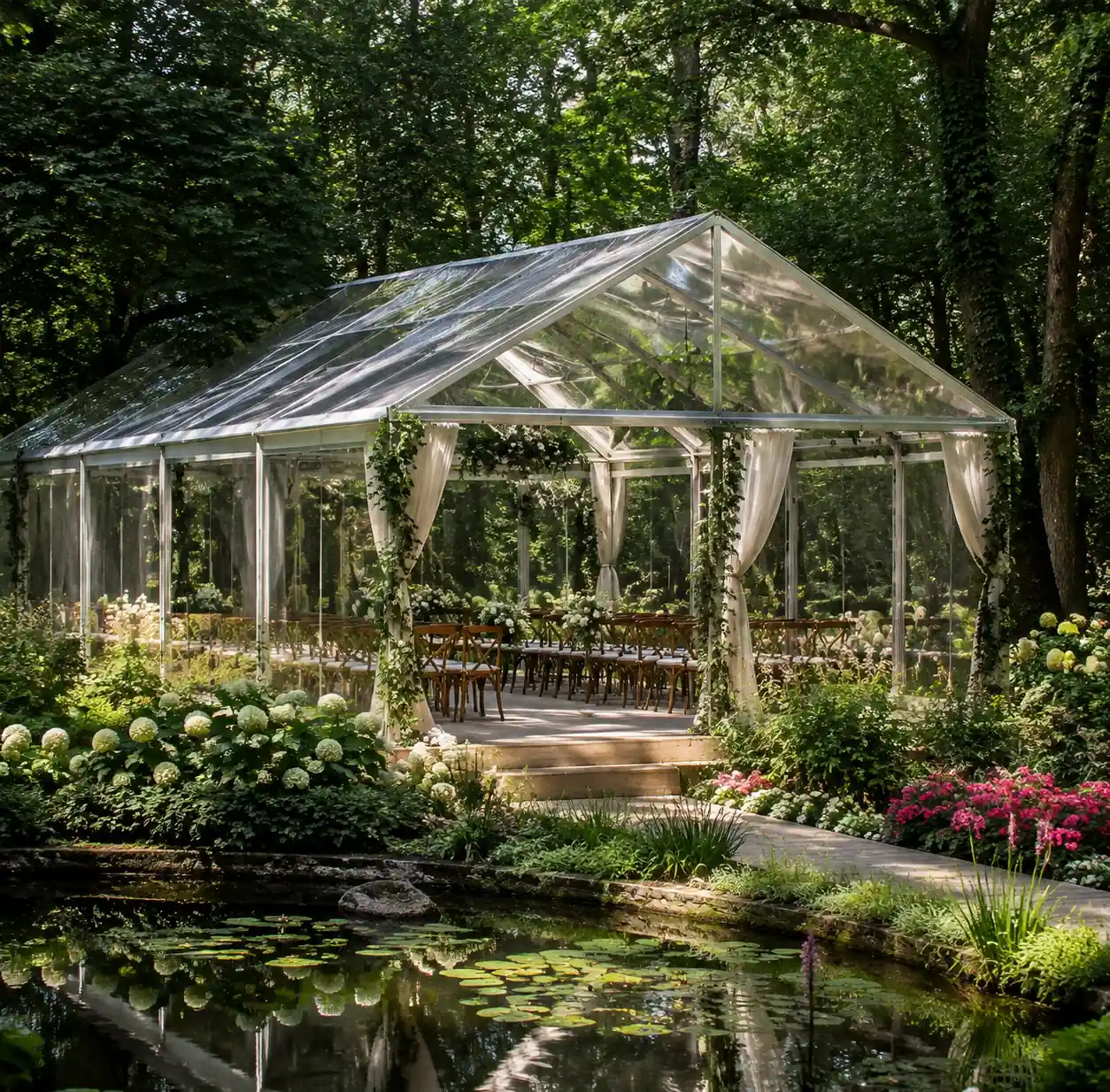 Transparent wedding tent integrated with botanical garden venue
Chandelier and Lighting Combinations
Lighting transforms transparent tents into dramatic evening venues. Strategic combinations create layered illumination.
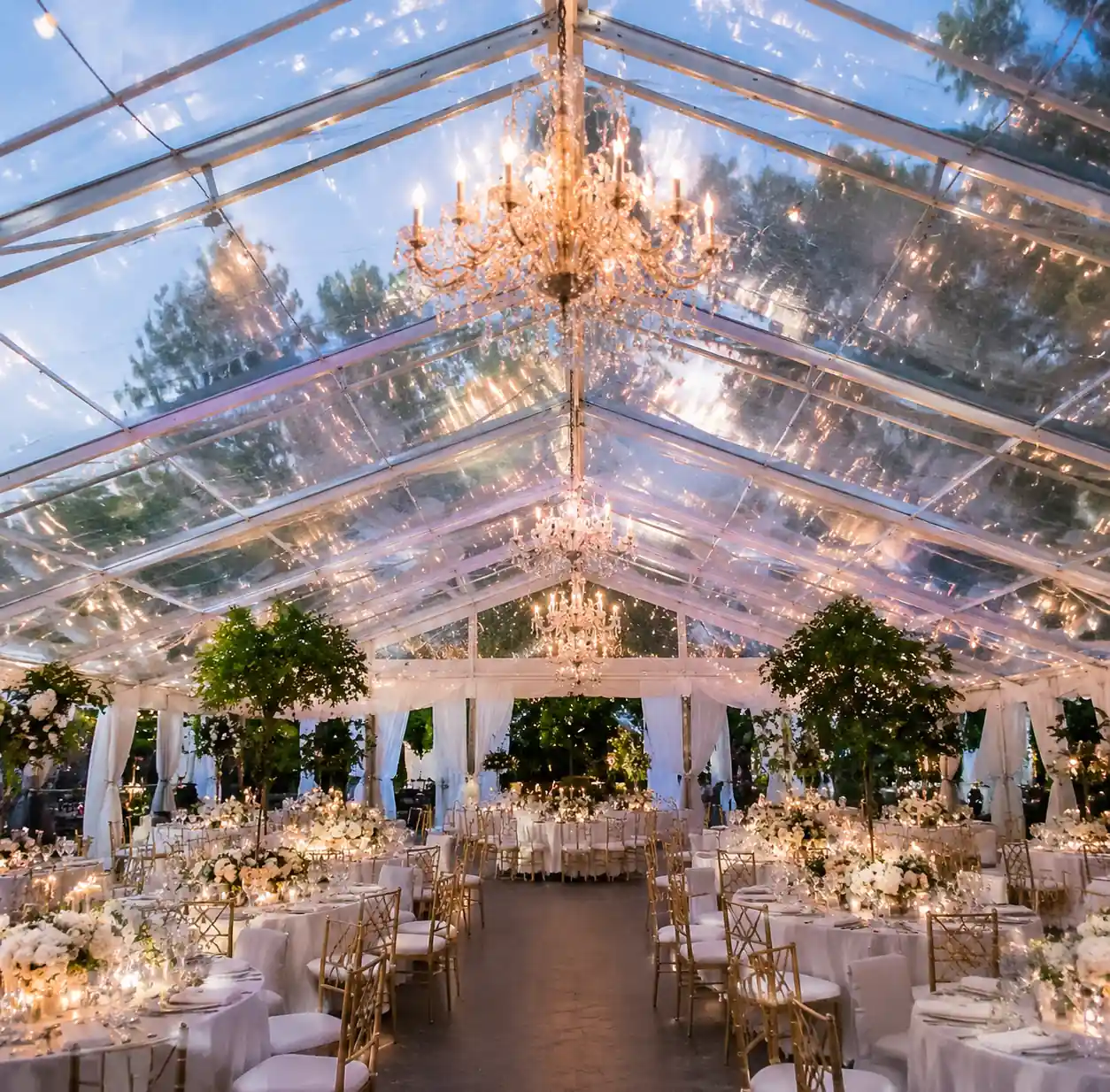 Crystal chandeliers hanging in transparent wedding tent ceiling
Crystal chandeliers work well in clear tents—transparent ceilings allow natural light during daytime while chandeliers become focal points after sunset. Hang 3-5 statement chandeliers along tent centerline. Chandelier light reflection off clear PVC panels amplifies the effect.
String lights offer versatile ambient coverage. Drape bistro lights in crisscross patterns, hang in parallel lines, or wrap around support structures. Mix bulb sizes—larger bistro bulbs (50-70mm) for primary illumination and fairy lights for twinkling accents.
Layering combines multiple types: string lights for ambient coverage, chandeliers as focal points, fairy lights for accents, and uplighting for emphasis. Battery-powered options and solar panels work for remote venues.
Seasonal Transparent Tent Designs
Each season offers unique advantages. Design strategies should account for weather patterns and seasonal aesthetics.
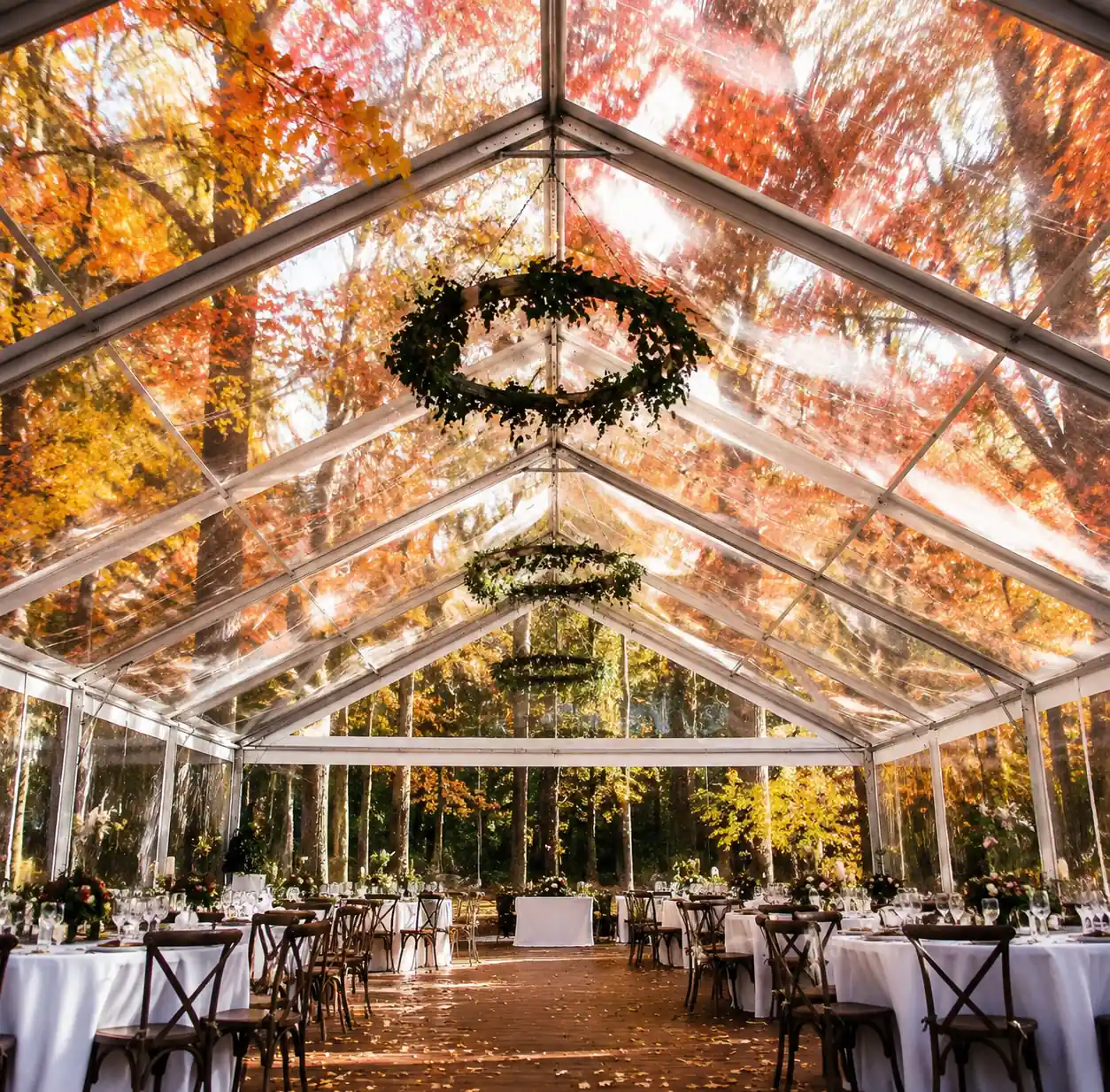 Transparent wedding tent showcasing autumn foliage through clear panels
Spring (March-May) capitalizes on fresh blooms and moderate temperatures. Position near cherry blossoms, magnolias, or tulips to create natural ceiling décor visible through panels.
Summer (June-August) requires active climate control—transparent materials create greenhouse effects. Use A-frame tents with clear roofs and solid sidewalls. Install fans (minimum 4 units per 100 sqm) and HVAC systems. Summer offers longest daylight for golden-hour photography.
Fall (September-November) showcases autumn foliage. Position tents to frame maple trees or hillside views displaying fall colors. Lower sun angle creates warm light enhancing amber tones.
Winter (December-February) creates cozy atmospheres with heating systems and warm lighting. Clear roofs allow winter sun for passive solar heating. Heating requirements run 1 kW per 10-15 sqm.
Structural Frame Options
Frame systems determine aesthetic appearance and structural performance. Aluminum frames dominate transparent tent applications.
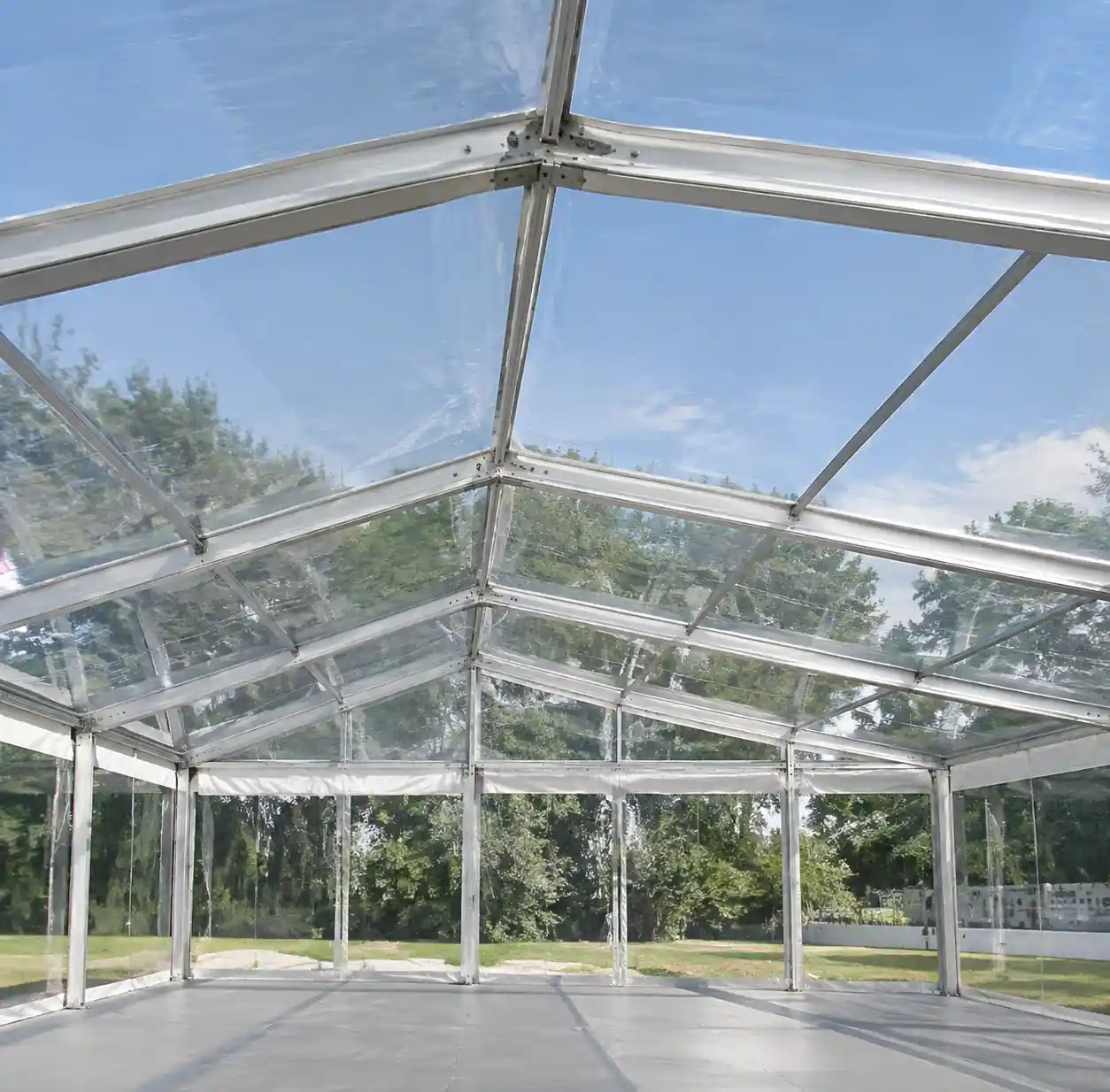 Aluminum frame structure of clear span transparent wedding tent
Clear span aluminum frames provide elegant transparent tent appearance. The frame eliminates interior support poles, creating unobstructed sightlines and layout flexibility. Frame profiles are typically 120mm x 68mm extruded aluminum with powder-coated finishes in white, silver, or custom colors.
Pagoda structures offer peaked roof designs with excellent water runoff. The pyramid shape works well for smaller installations (3-10m width) serving as entrance canopies or VIP zones. Multiple pagoda units connect to create modular spaces.
White or light silver frames blend with wedding décor and remain unobtrusive in photos. Wind resistance varies—clear span structures typically withstand 80-100 km/h winds with proper anchoring, while geodesic dome designs exceed 120 km/h.
Weather Considerations
Transparent tents require specific weather planning due to thermal and visual characteristics. Understanding these factors ensures guest comfort and structural safety.
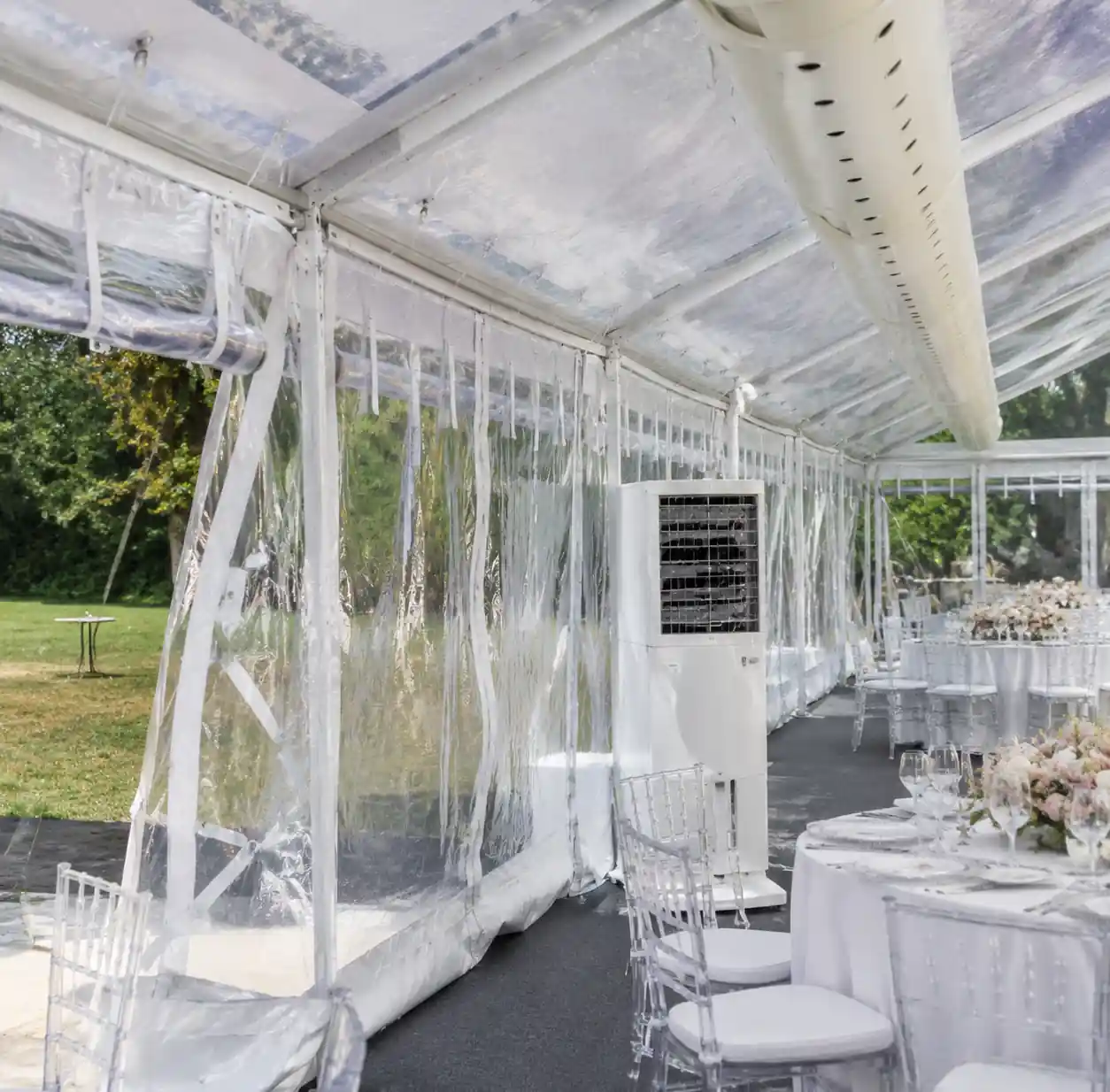 Transparent wedding tent with ventilation and climate control features
Temperature management is critical. Clear PVC panels create greenhouse effects in sunlight, potentially raising interior temperatures 10-15°C above ambient. Mitigation includes positioning tent in partial shade, installing ventilation systems (mesh panels covering 20-30% of sidewalls), using HVAC equipment (1 ton cooling per 200-300 sqm), and scheduling during cooler hours.
Condensation control prevents moisture buildup on clear panels. Solutions include ventilation fans promoting air circulation, dehumidifiers for enclosed setups, and anti-condensation coatings on PVC panels.
Rain and drainage require engineered systems. Transparent roofs need minimum 15-degree pitch for water runoff, with gutters channeling rainfall away. Heat-welded seams prevent leak points. Heavy downpours can accumulate 500+ liters on roof sections without proper drainage.
Wind and anchoring determine structural safety. Wind forces on a 20m x 30m clear span tent can exceed 15 tons of uplift during 100 km/h winds. Proper anchoring includes concrete ballast systems (minimum 500kg per anchor point), auger anchors (1000-1500mm length, 2.5-ton pull-out resistance), or stake clusters. Anchor spacing should not exceed 6 meters along perimeters.
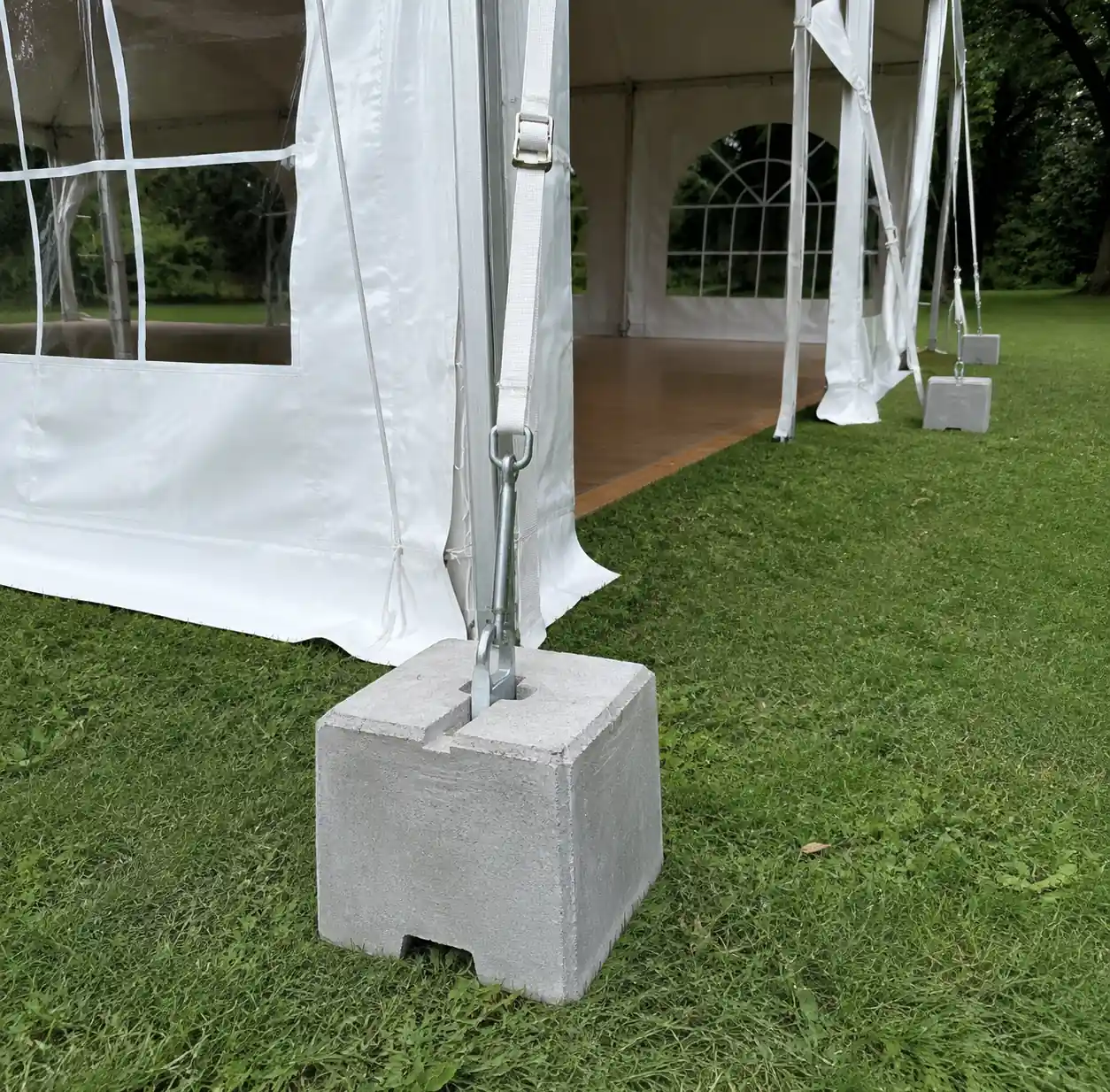 Wedding tent anchoring and ground support system installation
FAQ
How much does a transparent wedding tent cost compared to traditional tents?
Transparent tents typically cost 20-40% more than traditional fabric tents due to specialized clear PVC materials. A 20x40 tent package runs approximately $1,600-2,000, while a 30x60 tent for 150 guests costs $2,800-3,500. Clear PVC panels add $8-15 per square meter versus standard fabric.
Do transparent tents work well in hot weather?
Transparent tents can create greenhouse effects in direct sun, raising interior temperatures 10-15°C. They work well when properly managed with ventilation systems, HVAC equipment (1 ton cooling per 200-300 sqm), strategic positioning in partial shade, and scheduling during cooler hours. Industrial fans and mesh panels covering 20-30% of sidewalls improve comfort.
Can you see through transparent tents during the day?
Yes, transparent tents provide clear visibility both inward and outward during daylight. Clear PVC panels with 0.7-1.0mm thickness offer optical clarity allowing guests to see surrounding landscapes. People outside can also see into the tent. For privacy, consider clear roof with solid sidewalls or draping sheer fabrics along sections.
What lighting works best with clear wedding tents?
Layered lighting creates dramatic effects: crystal chandeliers as focal points (3-5 pieces), string lights for ambient coverage (crisscross patterns), fairy lights for twinkling accents, and uplighting for emphasis. Use amber-toned lights at 20-30% brightness for stargazing setups. Transparent ceilings reflect and amplify light, requiring less intensity than solid tents.
Are transparent tents safe in storms?
Transparent tents meeting engineering standards are safe when properly installed with adequate anchoring. Clear span aluminum frames withstand 80-100 km/h winds, while geodesic domes handle 120+ km/h. Evacuate during extreme conditions. Professional installations include weather monitoring and reinforced anchoring systems.
How far in advance should I book a transparent wedding tent?
Book 6-12 months in advance for peak season (May-October) and 3-6 months for off-season dates. Transparent tents are in higher demand due to their popularity for photography. Premium dates (Saturdays in June-September) may require 12+ months advance booking.
Conclusion
Transparent wedding tents transform outdoor venues by blending indoor elegance with natural surroundings. This guide covered design approaches from stargazing setups and garden integration to seasonal configurations and lighting combinations. Understanding clear roof versus full transparent options, weather management, and structural frames helps you select the ideal solution.
Successful transparent tent weddings require intentional design—positioning to showcase best views, lighting that enhances transparency, and proper climate control. Whether crystal chandeliers or minimal stargazing lighting, transparent marquees create unforgettable visual experiences.
Velaria Spatia offers premium clear tent solutions from intimate 100-guest setups to 800+ guest receptions. Our aluminum frame clear span structures feature optical-grade PVC panels, customizable transparency, and engineered weather resistance for luxury weddings and botanical venues worldwide.
Contact us today for custom transparent wedding tent solutions and competitive factory-direct pricing.