


Tent Maintenance Guide: Extend Your Marquee Lifespan to 15+ Years
Systematic maintenance protocols prevent premature fabric degradation, frame corrosion, and structural failures. Professional event companies in challenging climates report that proper routines extend tent lifespan from 8–10 years to 15+ years, cutting replacement costs by 40% while maintaining rental quality standards.
This guide covers PVC and canvas cleaning, aluminum frame inspection, mold prevention in humid environments, and storage best practices to help rental companies, venues, and facility managers protect their marquee investments.
Table of Contents
- 1. Why Tent Maintenance Matters for ROI
- 2. Fabric Cleaning Procedures by Material Type
- 3. Frame Inspection and Maintenance Protocols
- 4. Mold Prevention Strategies for Humid Climates
- 5. Proper Storage Techniques to Prevent Damage
- 6. Seasonal Maintenance Schedules
- 7. Common Damage Types and Early Detection
- 8. Repair vs Replace Decision Framework
- 9. Frequently Asked Questions
- 10. Conclusion
Why Tent Maintenance Matters for ROI
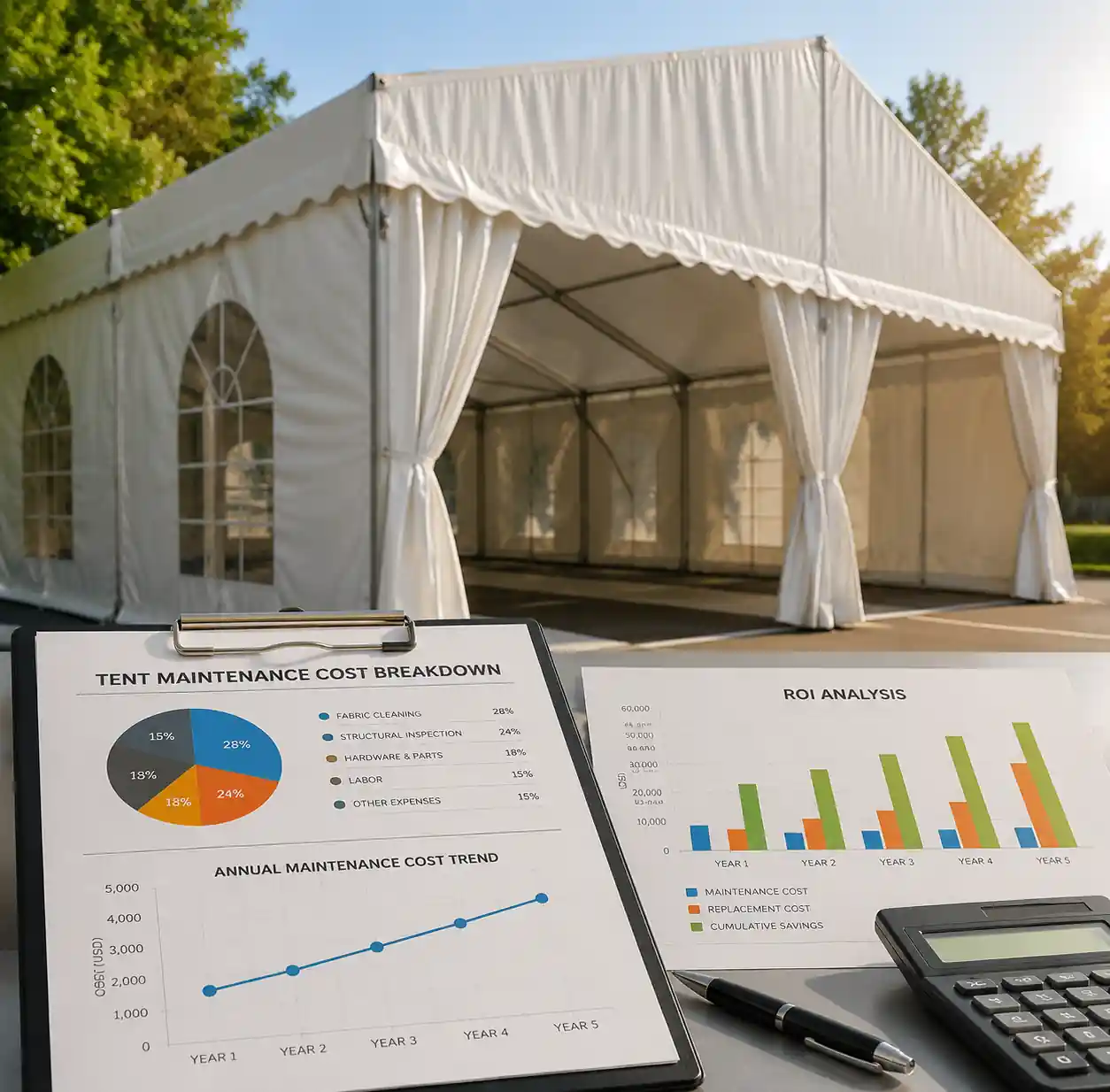
Tent investments range from $8,000 to $150,000+. Without maintenance, UV exposure accelerates fabric degradation by 60%, aluminum corrosion compromises load-bearing capacity, and mold renders tents unusable within 5–7 years instead of 12–15.
 Event tent maintenance ROI and cost comparison
Professional maintenance delivers measurable returns: quarterly inspections reduce emergency repairs by 35%, fabric replacement frequency by 28%, and improve client appearance scores by 42%. Neglect costs far more—mold remediation runs $800–$2,500 per tent, fabric replacement $5,000–$25,000, and frame welding repairs $1,200–$3,500, while preventive programs cost under $200 annually.
Fabric Cleaning Procedures by Material Type
PVC-Coated Polyester
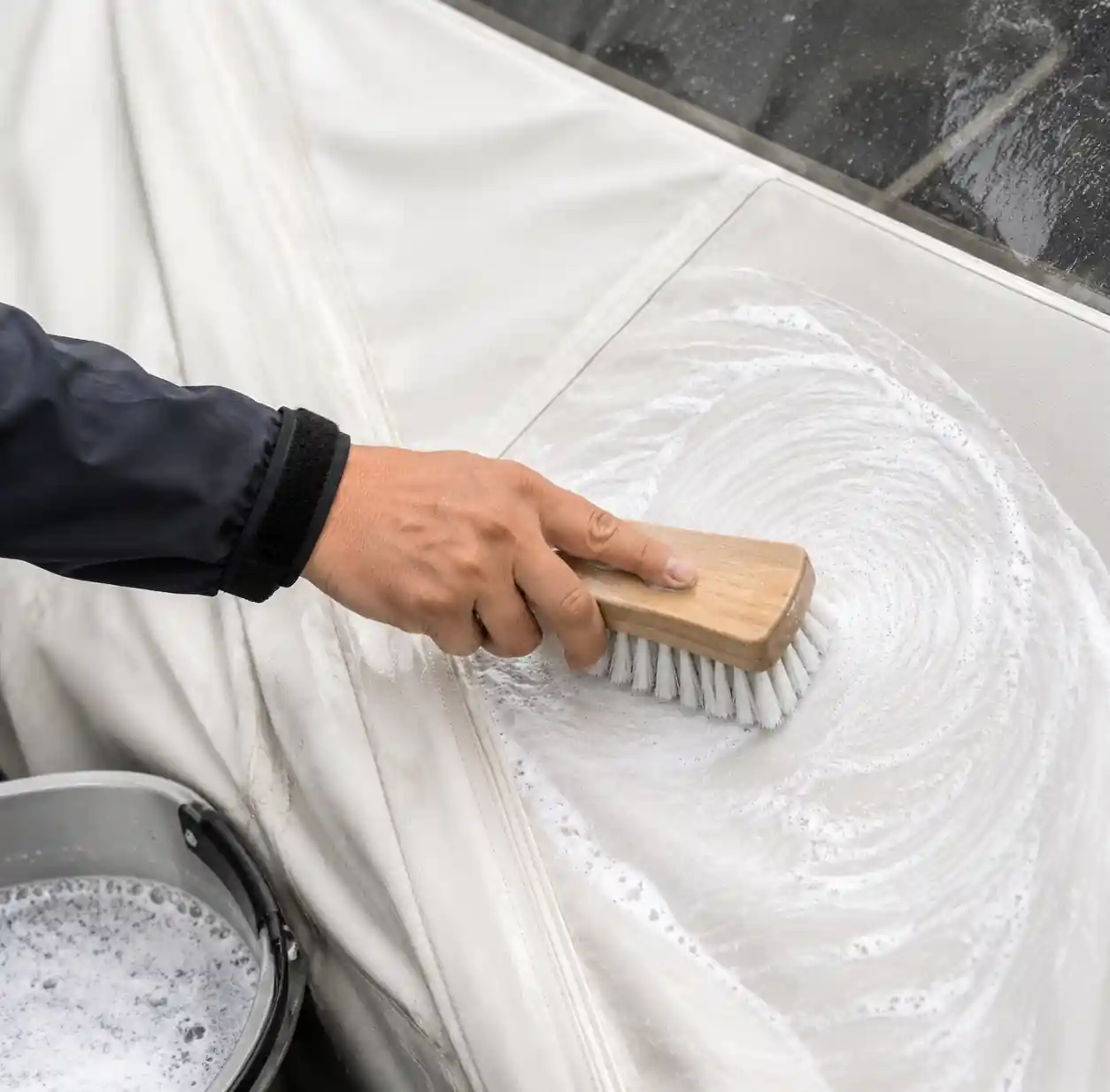
Dominant in commercial tents, this material requires pH-neutral cleaners—alkaline or acidic products degrade the PVC coating.
Cleaning Protocol:
- Mix pH-neutral detergent (e.g., automotive car wash soap) with lukewarm water at 1:50
- Apply with soft-bristle brush or microfiber mop in 2-meter sections
- Gently scrub in circular motions
- Rinse thoroughly with low-pressure water (under 40 PSI)
- Air-dry completely in shade before folding
Avoid pressure washers above 60 PSI, bleach, ammonia, or solvent degreasers. For stubborn stains (sap, bird droppings, oil), spot-treat with 70% isopropyl alcohol on a soft cloth, then rinse immediately.
 PVC-coated tent fabric cleaning procedure
Canvas/Cotton
Requires gentler handling to preserve fiber strength.
Cleaning Process:
- Brush off dry dirt before wetting
- Mix mild dish soap with cold water (hot water shrinks canvas)
- Sponge-clean affected areas without saturating
- Rinse with minimal water
- Dry completely (24–48 hours in ventilated area)
Canvas benefits from annual reproofing with water-based sealants.
Comparison Table: Fabric Cleaning Requirements
| Fabric Type | Cleaning Frequency | Recommended Cleaner | Drying Time | Special Considerations |
|---|---|---|---|---|
| PVC-Coated Polyester | After each event | pH-neutral detergent | 4–6 hours | Avoid high-pressure washing |
| Canvas/Cotton | Every 3–5 uses | Mild dish soap | 24–48 hours | Requires annual reproofing |
| Clear Vinyl | After each event | Glass cleaner or vinegar solution | 2–3 hours | Polish with microfiber to prevent scratches |
| Mesh Sidewalls | Every 2–3 uses | Gentle detergent | 3–5 hours | Avoid snagging on rough surfaces |
Frame Inspection and Maintenance Protocols
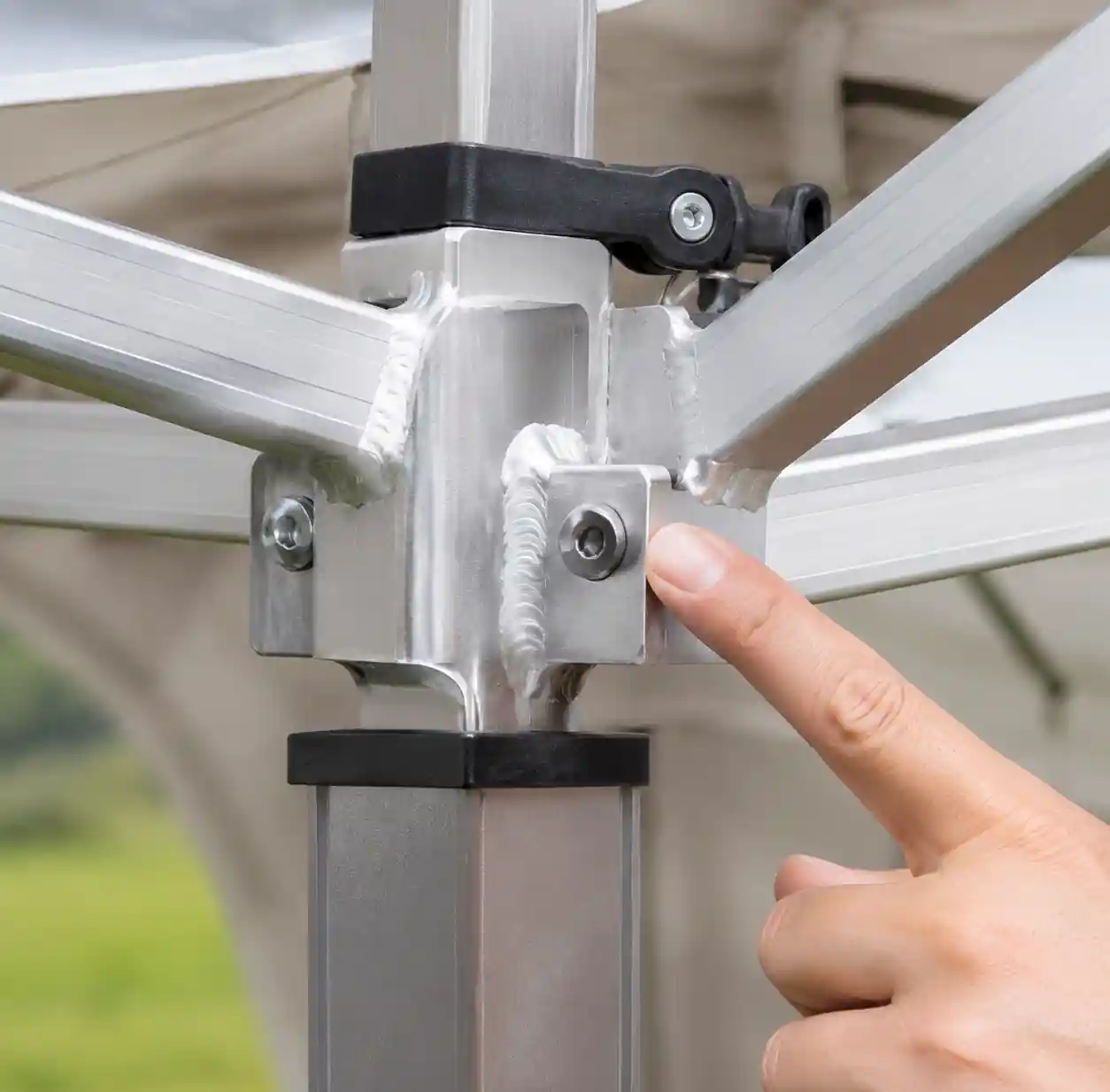
Aluminum and steel frames need systematic inspection for stress cracks, corrosion, and connection wear.
 Aluminum tent frame inspection and maintenance
Aluminum Inspection Checklist
Aluminum develops fatigue cracks at welds and high-stress zones after 150–200 installation cycles. Inspect quarterly:
Visual Inspection Points:
- Examine all weld seams for hairline cracks (use magnifying glass)
- Check corner joints for elongated bolt holes
- Inspect extrusions for dents or deformation exceeding 3mm
- Verify base plates and anchor points
- Assess powder coating for chips or delamination
Cracks longer than 15mm or through-thickness require immediate removal from service and structural engineer assessment. Do not field-weld cracked aluminum—welding compromises heat treatment and reduces strength by 40–60%.
Frame Maintenance Procedures
Lubrication Schedule:
- Apply silicone-based lubricant to all pin connections and rotating joints every 10 installations
- Grease bolt threads and quick-release mechanisms
- Lubricate telescoping sections
Corrosion Prevention:
- Clean aluminum surfaces with mild detergent after each use to remove salt, fertilizer, or chemical residues
- Apply automotive paste wax in coastal environments
- Touch up powder coating chips immediately
- Store frames in dry, ventilated spaces
Steel frames need penetrating oil on connections and zinc-rich paint for exposed areas; in humid climates, inspect monthly.
Mold Prevention Strategies for Humid Climates
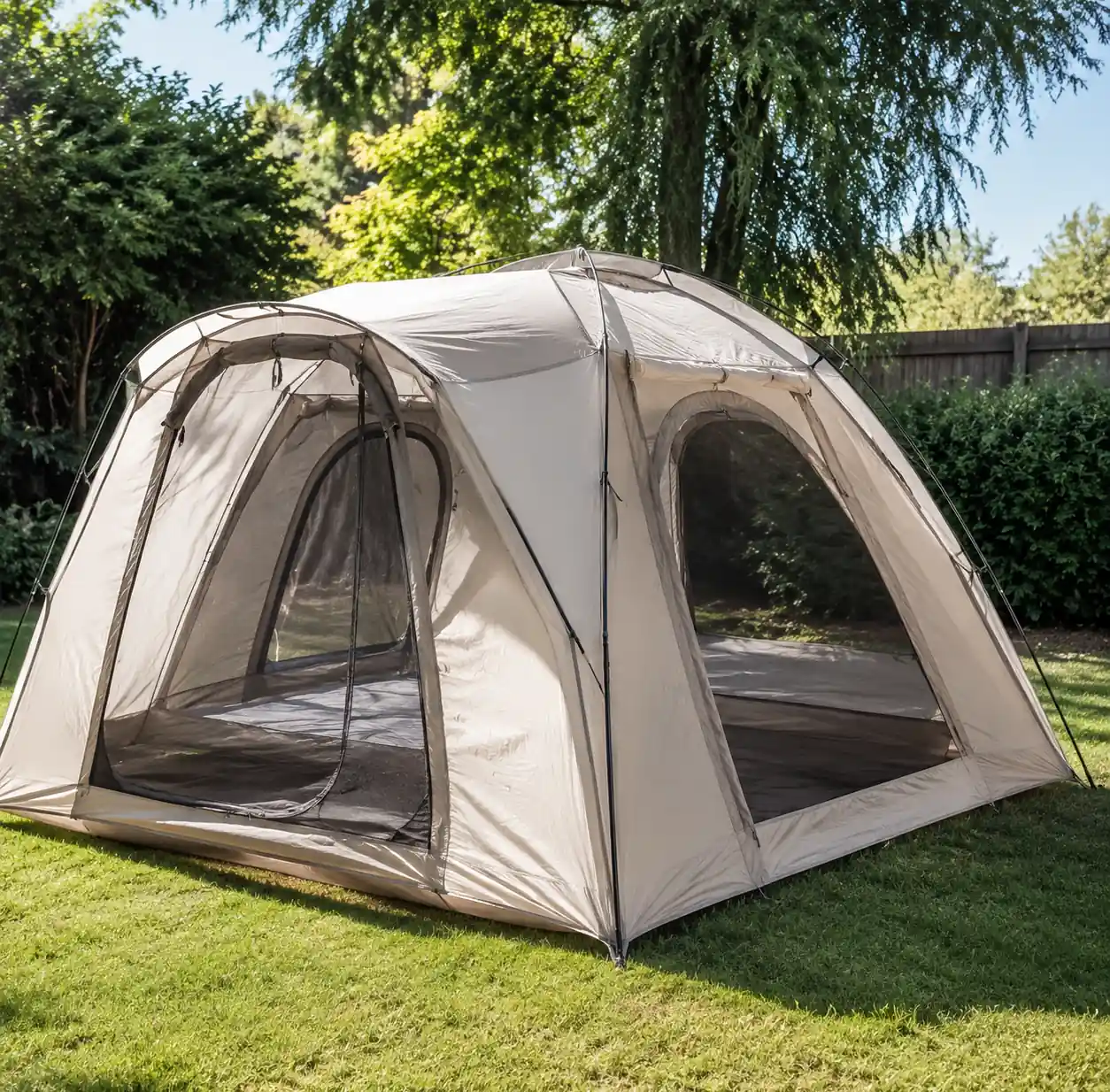
Mold colonizes damp fabric within 48–72 hours. Operators in tropical, coastal, or high-humidity areas must enforce aggressive prevention.
 Tent fabric drying process for mold prevention
Critical Control Points
Moisture Elimination: Fabric with moisture content above 15% develops visible mold within one week. Complete drying before folding is non-negotiable.
Drying Protocol:
- Erect tents fully after rainy events for airflow
- Use portable fans in enclosed storage
- Verify dryness by touching interior surfaces (should feel room temperature, not cool)
- Allow 6 hours drying in sun, 12–24 hours in overcast conditions
- Never fold damp or condensation-bearing fabric
If tents must be packed wet due to scheduling, unpack and dry within 48 hours maximum.
Mold Treatment and Removal
Surface Mold Removal:
- Mix white vinegar and water (1:1) in spray bottle
- Apply liberally and let dwell 30 minutes
- Scrub with soft brush
- Rinse thoroughly with clean water
- Dry in direct sunlight (UV kills residual spores)
- Apply antimicrobial treatment to prevent recurrence
Severe penetration requires professional ozone or enzyme cleaning ($800–$2,500); success rates exceed 85% if addressed within 6 months.
Comparison Table: Mold Prevention Methods
| Prevention Strategy | Effectiveness | Cost | Frequency | Climate Suitability |
|---|---|---|---|---|
| Complete drying before storage | 95% | Free | Every use | All climates |
| Antimicrobial fabric treatment | 75% | $150–400 per tent | Annually | Tropical/humid regions |
| Climate-controlled storage | 90% | $500–2,000/month | Continuous | High humidity areas |
| Silica gel desiccant packs | 60% | $50–120 | Each storage cycle | Moderate humidity |
| Regular airing and inspection | 70% | Free | Monthly | All climates |
Proper Storage Techniques to Prevent Damage
Storage conditions—UV exposure, compression creasing, moisture, pests, and chemicals—directly affect longevity.
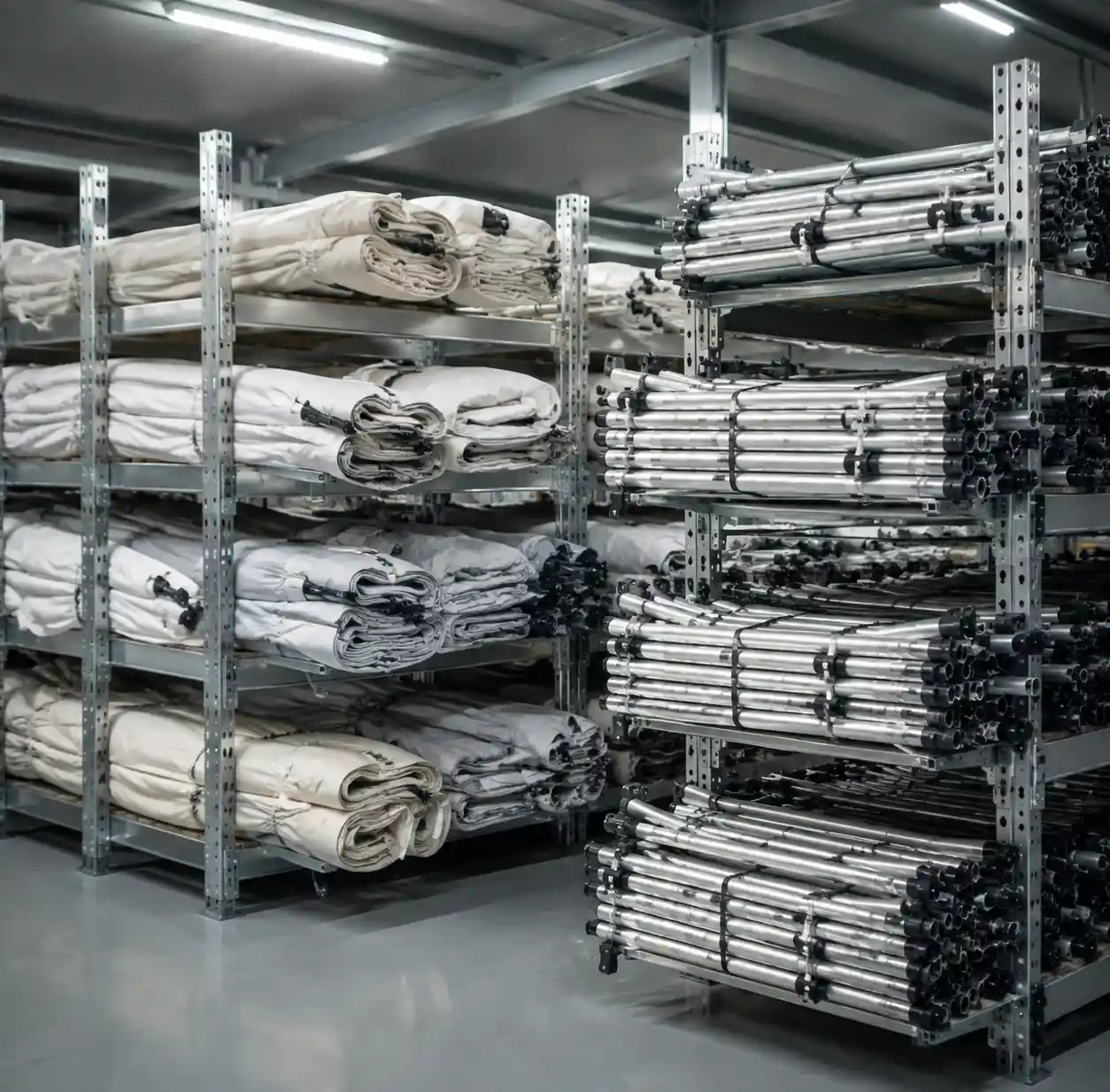 Professional tent storage facility with organized frame racks
Fabric Folding and Rolling
Best Practice:
- Accordion-fold large sections in 1-meter panels
- Use rounded folds to avoid sharp creases
- Alternate fold directions to distribute stress
- Roll smaller components (sidewalls, canopies under 20 sqm)
- Use breathable storage bags
For storage exceeding 3 months, consider hanging fabric sections on wide bars.
Frame Component Storage
- Store horizontal sections in padded racks
- Keep hardware in labeled bins by tent model
- Separate models to prevent mixing
- Maintain 6-inch ground clearance
- Use protective caps on tube ends
Stack carefully—heaviest on bottom, max 300 kg per stack—with cardboard or foam between layers to prevent scratching.
Environmental Storage Conditions
- Temperature: 15–25°C (avoid daily swings >10°C)
- Relative humidity: 40–60% (use dehumidifiers if >65%)
- Light exposure: Zero direct sunlight
- Ventilation: Air circulation to prevent condensation and mold
- Pest control: Rodent prevention
Without climate control, increase inspection frequency and apply extra protective treatments before storage.
Seasonal Maintenance Schedules
Three-tier approach: post-event, quarterly, and annual.
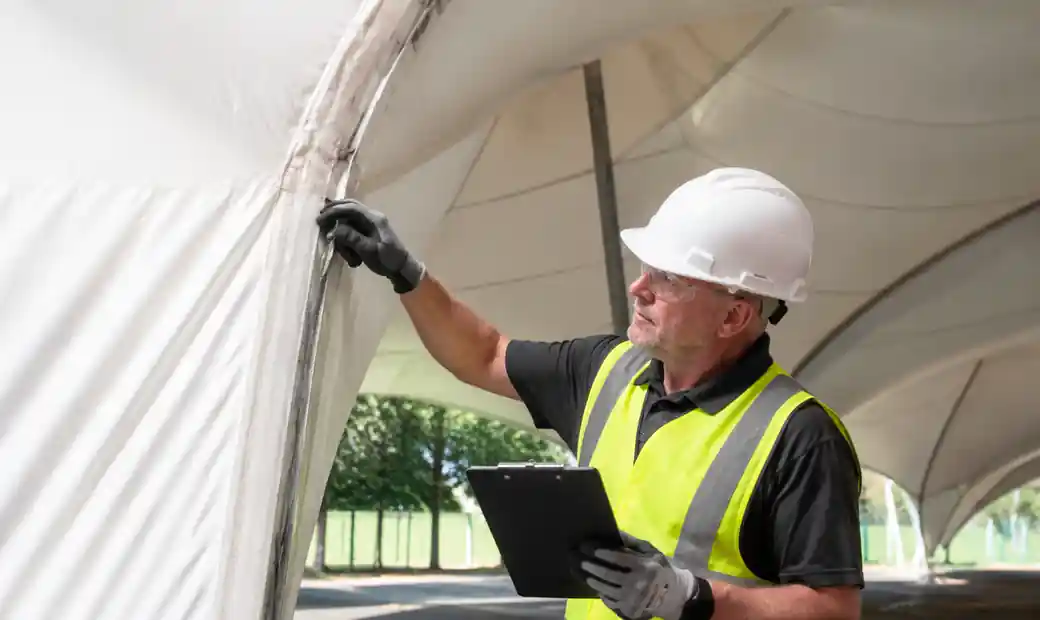 Seasonal tent maintenance inspection checklist
Post-Event (After Each Use – 15–30 minutes)
- Inspect fabric for tears, punctures, or staining within 24 hours
- Clean visible dirt, grass, or debris
- Dry completely before folding (check interior and seams)
- Check frame connections for looseness or damage
- Document any damage
- Apply spot treatments to stains or mold
Quarterly Comprehensive Inspection (2–3 hours per large tent)
- Deploy tent fully to inspect under tension
- Measure fabric tension at key points
- Perform load testing on anchor points and base plates
- Inspect all seams for separation or stitching failure
- Test zipper function
- Verify waterproofing with spray test
- Check guy ropes
- Update maintenance logs
Annual Deep Maintenance ($300–$800 per tent)
- Professional deep cleaning including seam treatment
- Fabric reproofing with UV inhibitor and waterproofing compounds
- Frame powder-coating touch-up and corrosion treatment
- Complete hardware inventory and replacement
- Structural assessment for tents over 5 years old
- Photograph condition for insurance and marketing
Common Damage Types and Early Detection
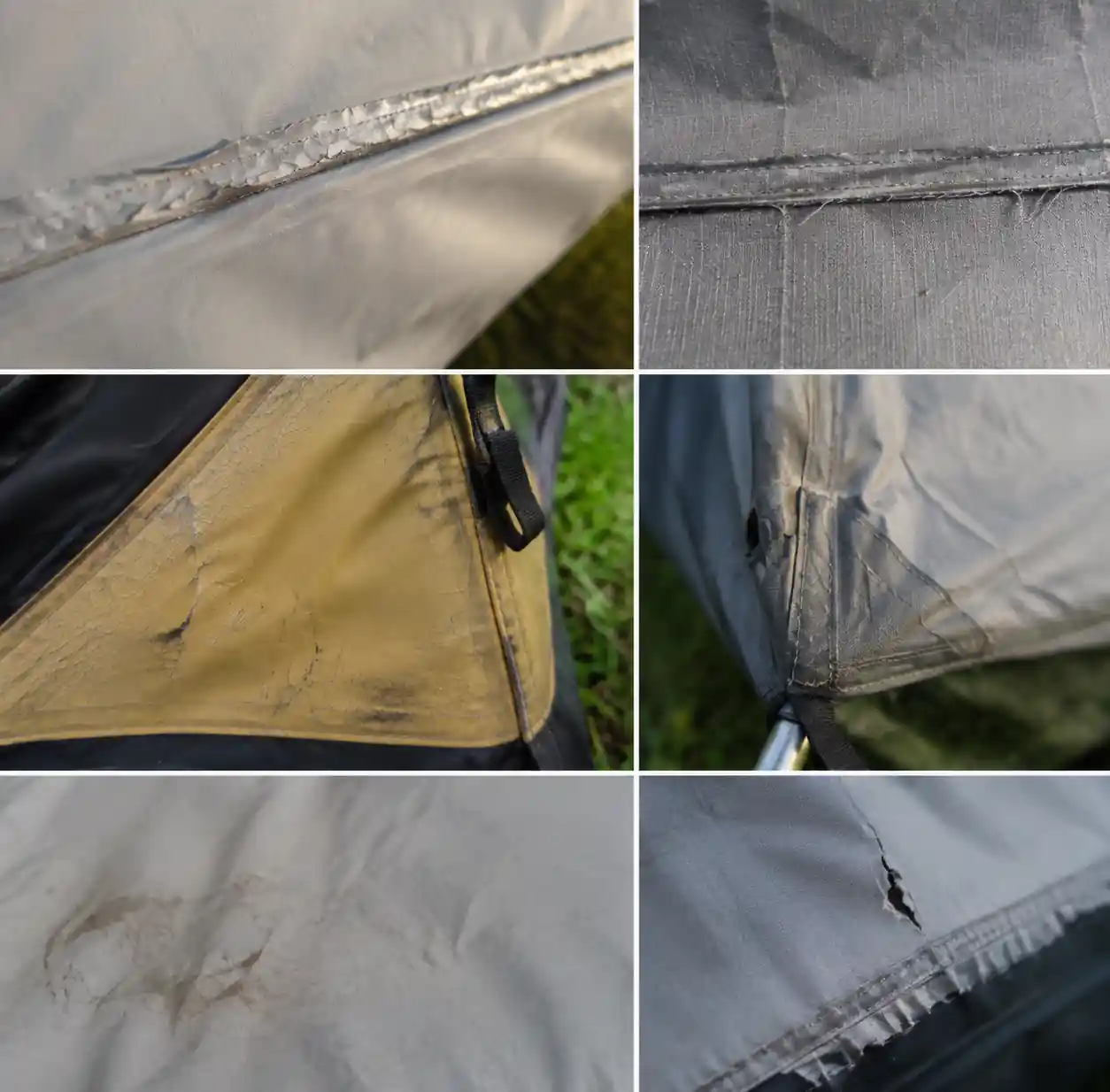 Common tent fabric damage types and early detection
Fabric Degradation
UV Damage: Chalking, stiffness, whitening or micro-cracking at folds. Prevent with annual UV inhibitors and rotating inventory.
Seam Separation: Begins as small thread breaks (1–2 cm) that propagate under wind. Inspect monthly with backlighting; repair immediately with industrial sewing, UV-resistant thread, and seam sealer tape.
Puncture/Tear: Small punctures (<5 cm) can be patched with heat-sealed PVC; larger tears need professional sewing or panel replacement.
Frame Failures
Connection Wear: Elongation >2 mm or looseness requires hardware replacement; continued use accelerates tube wear and increases collapse risk.
Corrosion: Surface rust or white powder oxidation—wire-brush, apply rust converter/etching primer, and recoat. Penetration >10% of wall thickness needs engineering assessment.
Comparison Table: Damage Types and Repair Costs
| Damage Type | Early Signs | Detection Method | Repair Cost | If Neglected |
|---|---|---|---|---|
| UV Degradation | Fading, chalking | Flex test, visual | $200–600 (treatment) | $5,000–20,000 (fabric replacement) |
| Seam Separation | Thread gaps, small openings | Backlit inspection | $150–400 (resewing) | $800–2,500 (panel replacement) |
| Puncture/Tear | Visible holes | Visual inspection | $80–300 (patch) | $1,200–4,000 (major repair) |
| Frame Corrosion | Surface rust, coating chips | Visual, tap test | $200–800 (cleaning, recoating) | $2,500–8,000 (component replacement) |
| Mold Colonization | Musty smell, dark spots | Visual, smell test | $800–2,500 (cleaning) | $5,000–15,000 (fabric disposal) |
Repair vs Replace Decision Framework
Repair Threshold:
- Under 25% of replacement value: Always repair
- 25–40%: Repair if tent under 8 years old
- 40–60%: Replace unless specialty tent
- Over 60%: Always replace
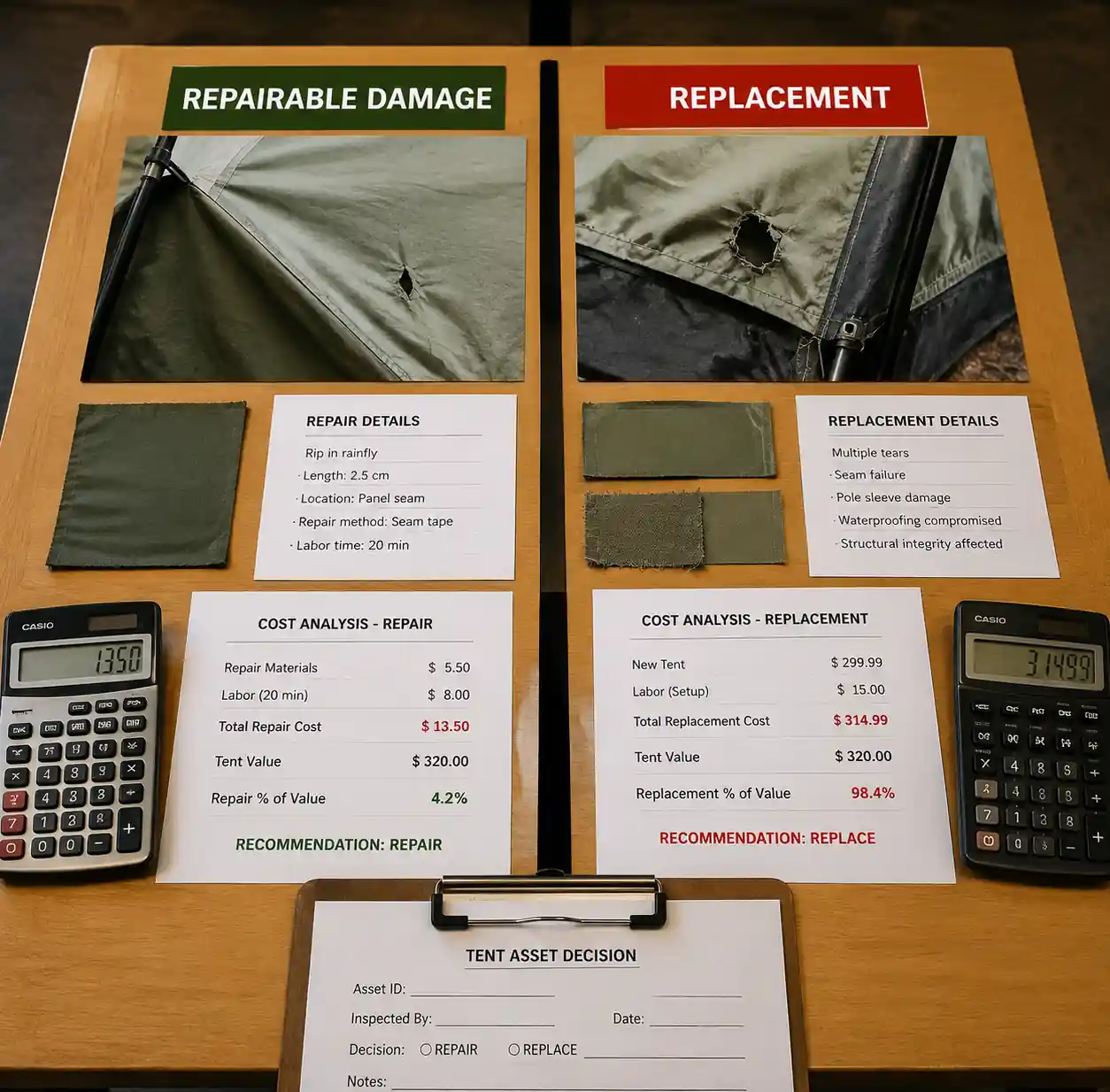 Tent repair versus replacement decision framework
More than two repairs per year indicates systemic degradation—replace despite individual costs appearing reasonable.
Remaining Service Life:
- Base: 12–15 years with proper maintenance
- Deduct 1 year per 25 deployment cycles annually
- Add 2–3 years for excellent maintenance; deduct 3–5 for poor
- Deduct 2–4 years for harsh climates (coastal salt, extreme UV)
- Immediate replacement if load-bearing capacity is compromised
A 7-year-old tent with excellent maintenance and moderate use retains 6–8 years of life, justifying repairs up to 40% of replacement cost.
Upgrade Assessment: New tents offer 25–30% weight reduction, better UV resistance, and faster sidewall installation. If annual deployments = 40 and setup time saves 2 hours per event, labor savings of $2,400/year offset higher upfront cost within 3–5 years, while improving client satisfaction.
Frequently Asked Questions
How often should I clean my tent? After every deployment or when visibly soiled. Minimum quarterly for stored tents; high-use rentals (15+ events/year) benefit from monthly spot cleaning.
What causes fabric to become stiff or brittle? UV degradation (typically after 5–7 years) and alkaline/solvent cleaners that leach plasticizers. Annual UV protectant and pH-neutral cleaners slow the process.
Can I pressure-wash my tent? Yes, but at 40–60 PSI maximum, with a 12-inch nozzle distance. Over 80 PSI damages coatings. Test on an inconspicuous area first.
When should fabric be replaced? When showing extensive UV damage, tears >30 cm compromising integrity, deep mold penetration, seam separation over 20% of the perimeter, or waterproofing failure after reproofing.
Best way to store tents long-term? Clean, completely dry, climate-controlled (15–25°C, 40–60% humidity), away from direct sunlight. Accordion-fold or hang (>3 months). Store frames in padded racks, hardware in labeled bins. Inspect quarterly and rotate inventory.
Should I use mold-resistant treatments? Yes, especially in humid climates or when drying is inconsistent. Antimicrobial treatments provide 12–18 months of protection but do not replace proper drying.
How long do aluminum frames last? 15–20 years with good maintenance, though high-use (200+ cycles) may need component replacement at 12–15 years. Coastal environments reduce lifespan to 10–12 years without aggressive protection. Annual structural inspections after year 10.
Safe storage temperature range? 10–30°C, with daily swings under 15°C. Above 40°C accelerates degradation; below -5°C makes fabric brittle. Stable temperatures significantly extend life.
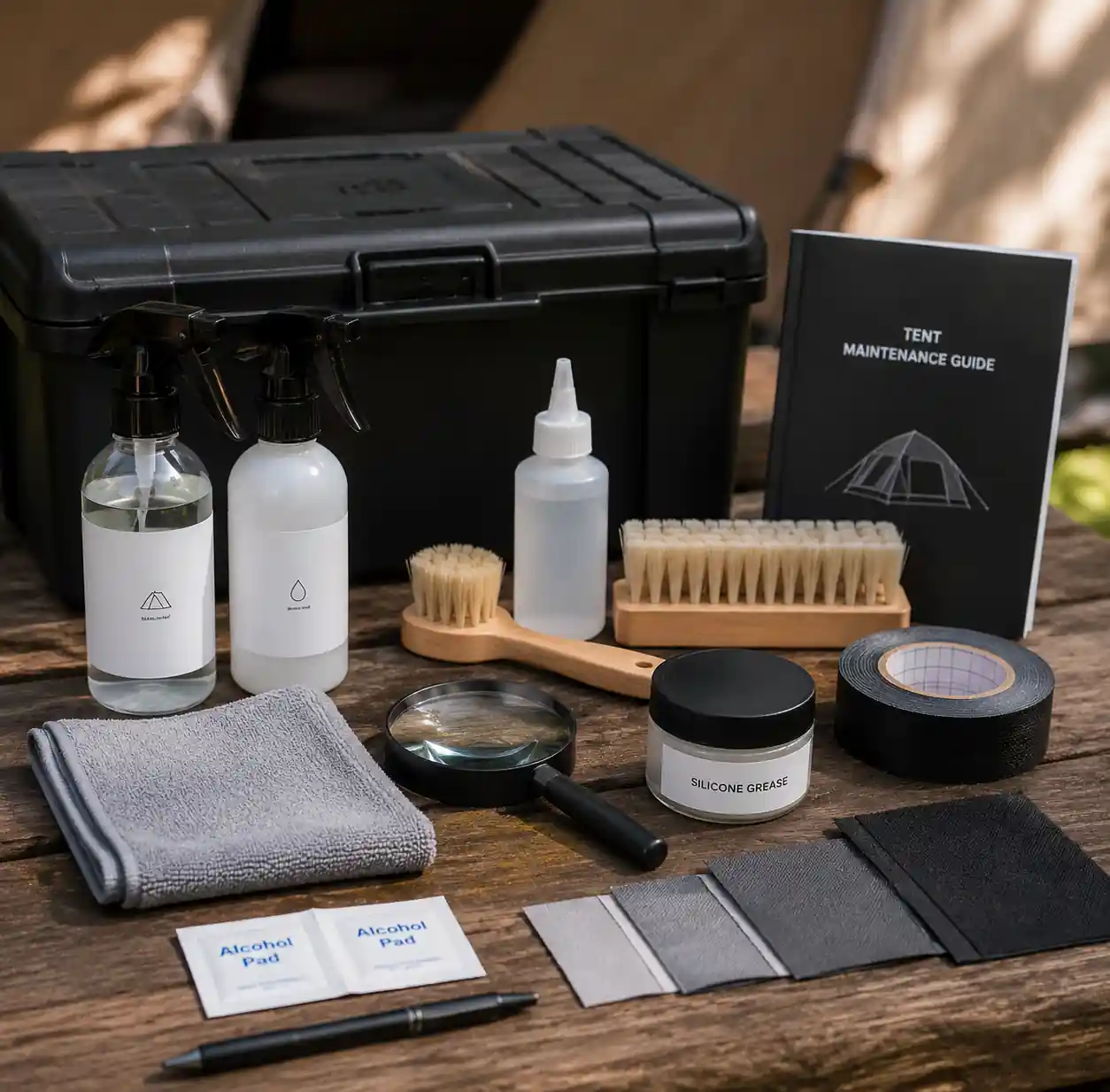 、
Essential tent maintenance tools and equipment
、
Essential tent maintenance tools and equipment
Conclusion
Systematic maintenance extends tent lifespan from 8–10 years to 15+ years while preserving premium rental quality. Preventive investment averages $500–$1,200 annually per tent but prevents emergency repairs of $2,000–$8,000 and delays fabric replacement of $5,000–$25,000.
Professional care focuses on three pillars: fabric protection through proper cleaning and drying, frame integrity through regular inspection and corrosion prevention, and mold elimination through moisture control and antimicrobial treatments. Challenging environments (tropical, coastal) require intensified monthly inspections versus quarterly in temperate zones.
If you need high-quality event tents engineered for easy maintenance and extended service life, Velaria Spatia offers commercial-grade systems built with 850g/sqm PVC-coated polyester fabric, corrosion-resistant aluminum frames, and reinforced seam construction. Our facility uses advanced fabric welding and powder-coated finishing to enhance durability in demanding rental applications. We supply tent structures for rental companies, event venues, and entertainment facilities worldwide, with custom configurations for specific climate conditions.
Contact us today for tent solutions engineered for maximum lifespan, detailed maintenance specifications, and competitive factory-direct pricing.