


Pagoda Tent for Garden Party: Sizing & Layout Ideas
Garden parties create memorable outdoor celebrations, and choosing the right tent structure makes all the difference. Pagoda tents bring elegant peaked roofs and flexible configurations to transform any garden venue into a sophisticated event space. Studies show that proper tent sizing reduces weather disruptions by up to 80% while maximizing guest comfort.
This guide explains pagoda tent sizes, capacity calculations, layout configurations, and decoration strategies for garden parties from 50 to 200+ guests.
Table of Contents
- 1. What Is a Pagoda Tent?
- 2. Pagoda Tent Sizes for Garden Parties
- 3. Guest Capacity Calculations
- 4. Single Unit vs Multiple Connected Pagodas
- 5. Layout Configurations for Different Party Types
- 6. Garden Ground Protection Strategies
- 7. Lighting and Decoration Ideas
- 8. Frequently Asked Questions
- 9. Conclusion
What Is a Pagoda Tent?
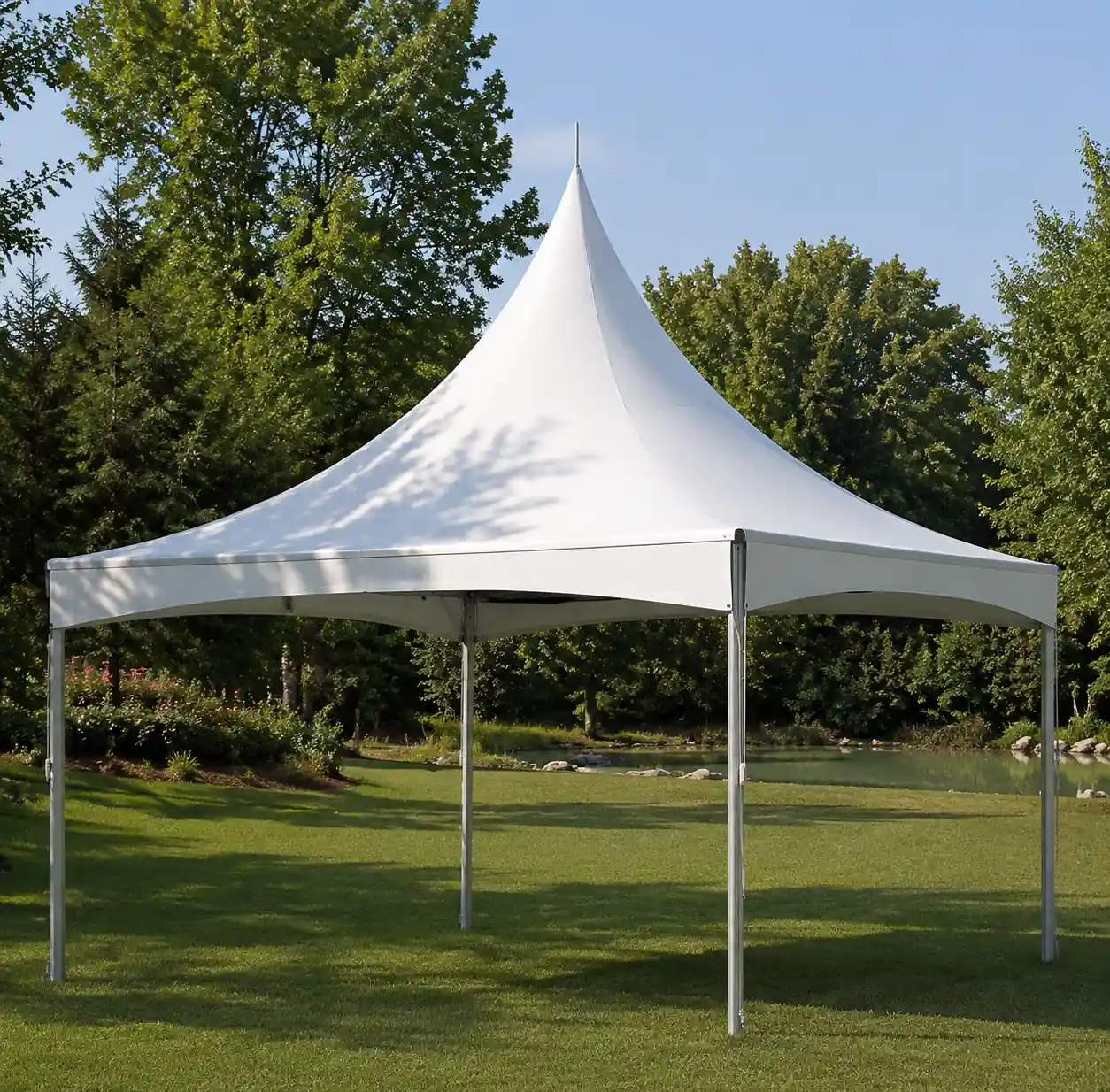 Elegant pagoda tent with peaked roof installed in garden setting for outdoor party
Pagoda tents are square-shaped event structures featuring distinctive high-peaked roofs with elegant curved eaves, designed to provide weather protection and visual appeal for outdoor celebrations. The aluminum frame system creates a self-supporting structure without interior poles, offering complete layout flexibility for garden parties.
This modular design uses 6061-T6 aluminum alloy frames that connect seamlessly to other pagoda units, allowing you to expand capacity by linking multiple structures together. You can configure pagoda tents from compact 3m × 3m units for intimate garden gatherings up to 10m × 10m structures accommodating larger celebrations.
For garden parties, pagoda tents offer quick setup on grass or paved surfaces (2–4 hours), no interior obstructions for furniture arrangement, and architectural elegance that enhances any outdoor setting. The peaked roof provides superior rain drainage and wind resistance compared to flat canopy alternatives.
Pagoda Tent Sizes for Garden Parties
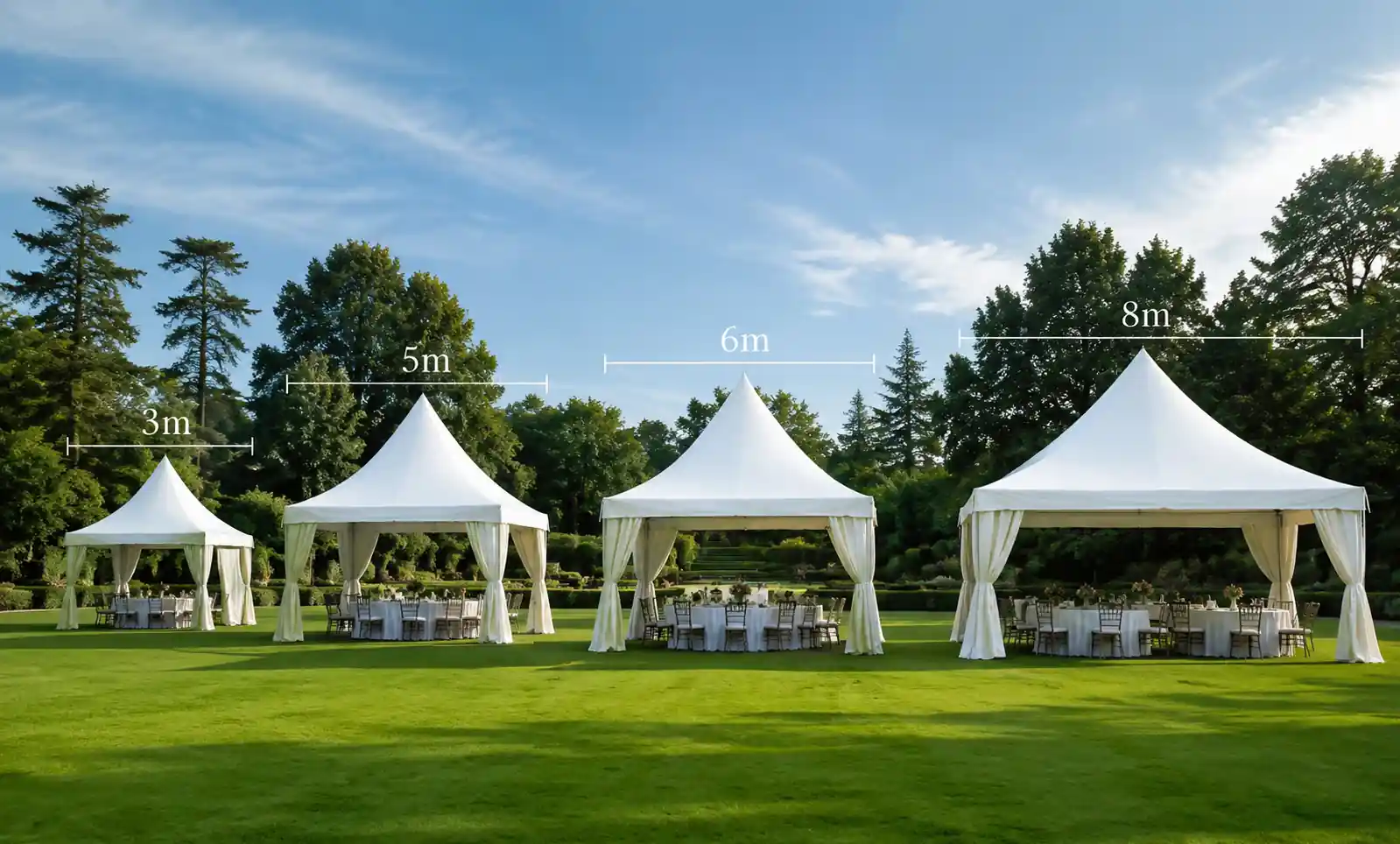 Multiple pagoda tent sizes arranged in garden venue showing scale differences
Standard Pagoda Tent Dimensions
Pagoda tents are manufactured in square configurations ranging from 3m to 10m clear-span widths. Below are the most popular sizes for garden party applications:
| Size (Width × Length) | Area Coverage | Typical Guest Capacity | Best Use Case |
|---|---|---|---|
| 3m × 3m | 9 sqm | 8-12 guests | Cocktail reception, small gathering |
| 4m × 4m | 16 sqm | 15-20 guests | Intimate dinner party |
| 5m × 5m | 25 sqm | 20-30 guests | Garden wedding ceremony |
| 6m × 6m | 36 sqm | 30-45 guests | Mid-size celebration |
| 8m × 8m | 64 sqm | 50-75 guests | Large garden party |
| 10m × 10m | 100 sqm | 80-120 guests | Premium outdoor event |
Choosing Size Based on Party Type
You should calculate space requirements based on your event layout and guest activities. For seated dinners, allocate 1.2-1.5 sqm per guest to accommodate tables and chairs comfortably. For cocktail receptions with standing guests, you can reduce spacing to 0.8-1.0 sqm per person.
Consider additional space for buffet tables, bars, DJ equipment, or dance floors when selecting tent size. A 6m × 6m pagoda accommodating 35 seated guests for dinner leaves approximately 8-10 sqm for service areas and circulation space.
Guest Capacity Calculations
Seated Dinner Capacity Formula
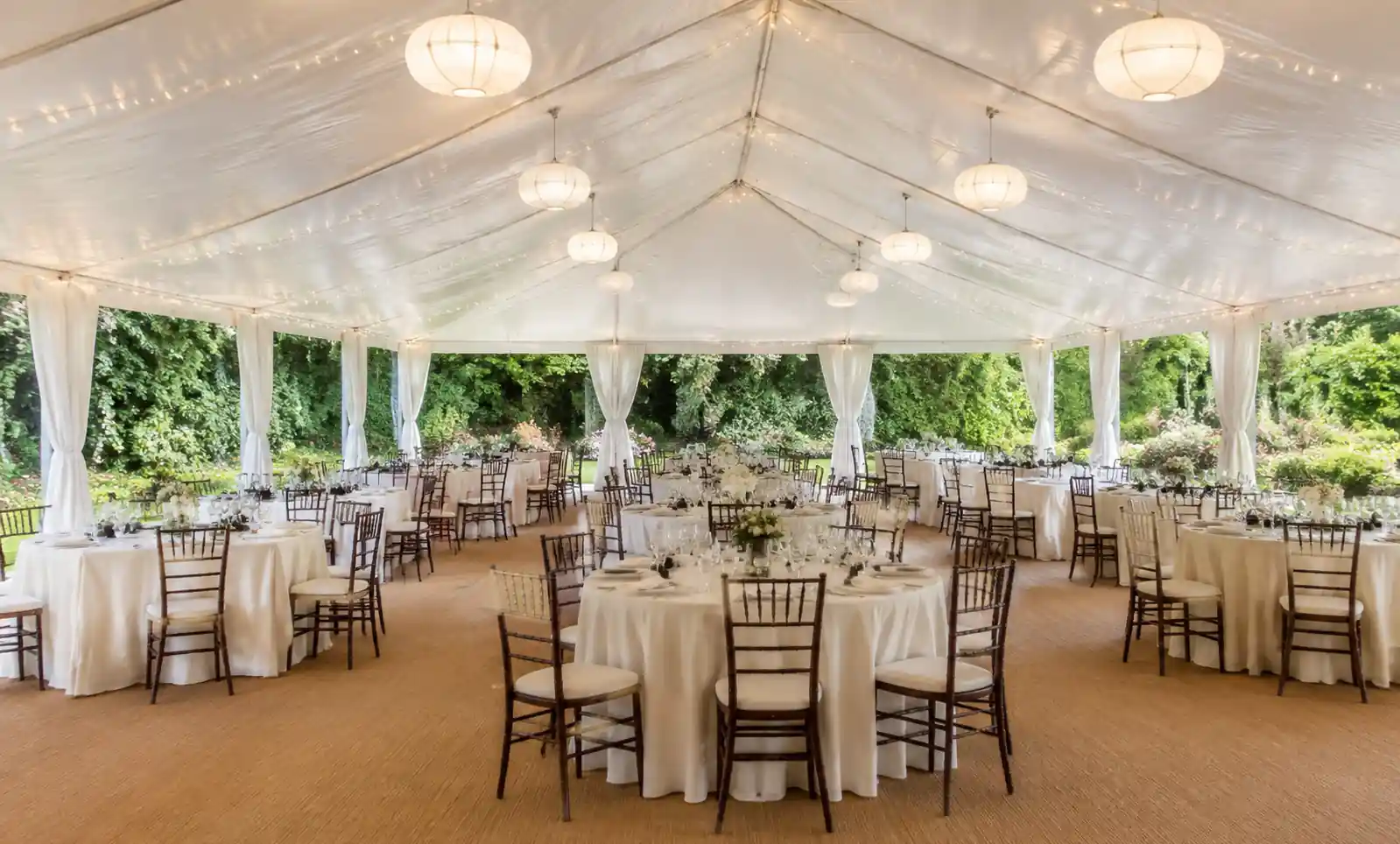 Seated dinner setup inside pagoda tent with tables and chairs for garden party
Calculate pagoda tent capacity for seated garden dinners using this formula:
Guest Capacity = (Tent Area sqm × 0.7) ÷ 1.2 sqm per guest
The 0.7 factor accounts for circulation aisles, entrance space, and service areas. For example, a 5m × 5m pagoda (25 sqm total area) provides:
(25 × 0.7) ÷ 1.2 = 14-15 seated guests comfortably
Standing Reception Capacity
For cocktail-style garden parties where guests remain standing:
Guest Capacity = (Tent Area sqm × 0.75) ÷ 0.9 sqm per guest
A 6m × 6m pagoda (36 sqm) accommodates:
(36 × 0.75) ÷ 0.9 = 30 standing guests
Buffet and Service Area Requirements
When planning buffet service in your garden party, reserve 4-8 sqm for buffet tables (depending on menu complexity) and 2-4 sqm for beverage stations. This reduces net guest capacity by 15-20% compared to plated service.
Single Unit vs Multiple Connected Pagodas
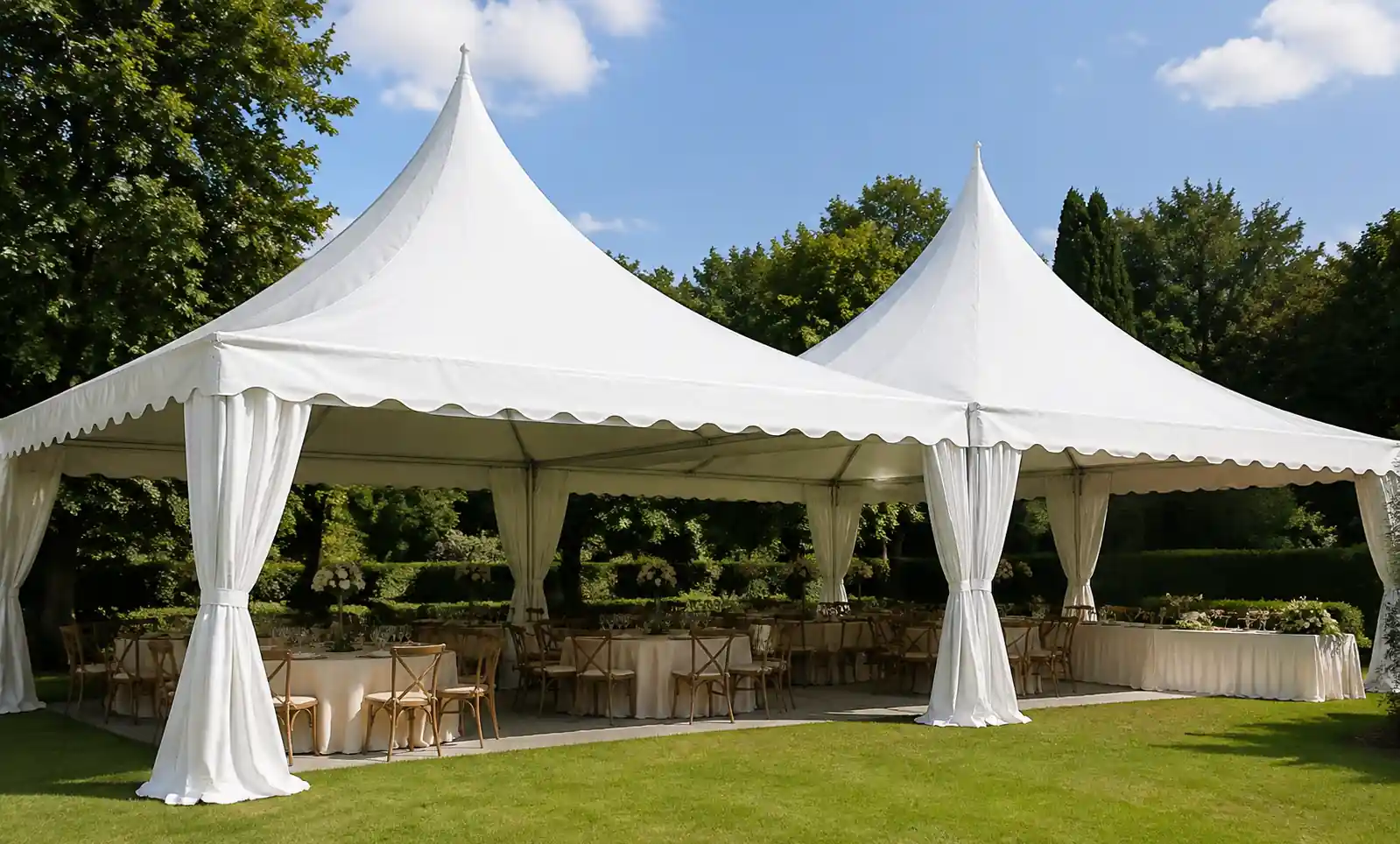 Multiple pagoda tents connected together creating expanded event space in garden
Multi-Pagoda Configurations
Pagoda frames connect side-by-side or in L-shapes, letting you zone an event rather than crowd everyone under one roof. Common configurations:
| Configuration | Total Coverage | Guest Range | Layout Concept |
|---|---|---|---|
| Two 5m × 5m units | 50 sqm | 50–75 | Dining zone + cocktail zone |
| 8m × 8m + two 5m × 5m | 114 sqm | 100–150 | Main pavilion + side lounges |
| 10m × 10m + four 6m × 6m | 244 sqm | 150–200 | Dining + entertainment + VIP |
The practical advantage is cost control: rent only what you need and add units if your guest count grows closer to the date.
Layout Configurations for Different Party Types
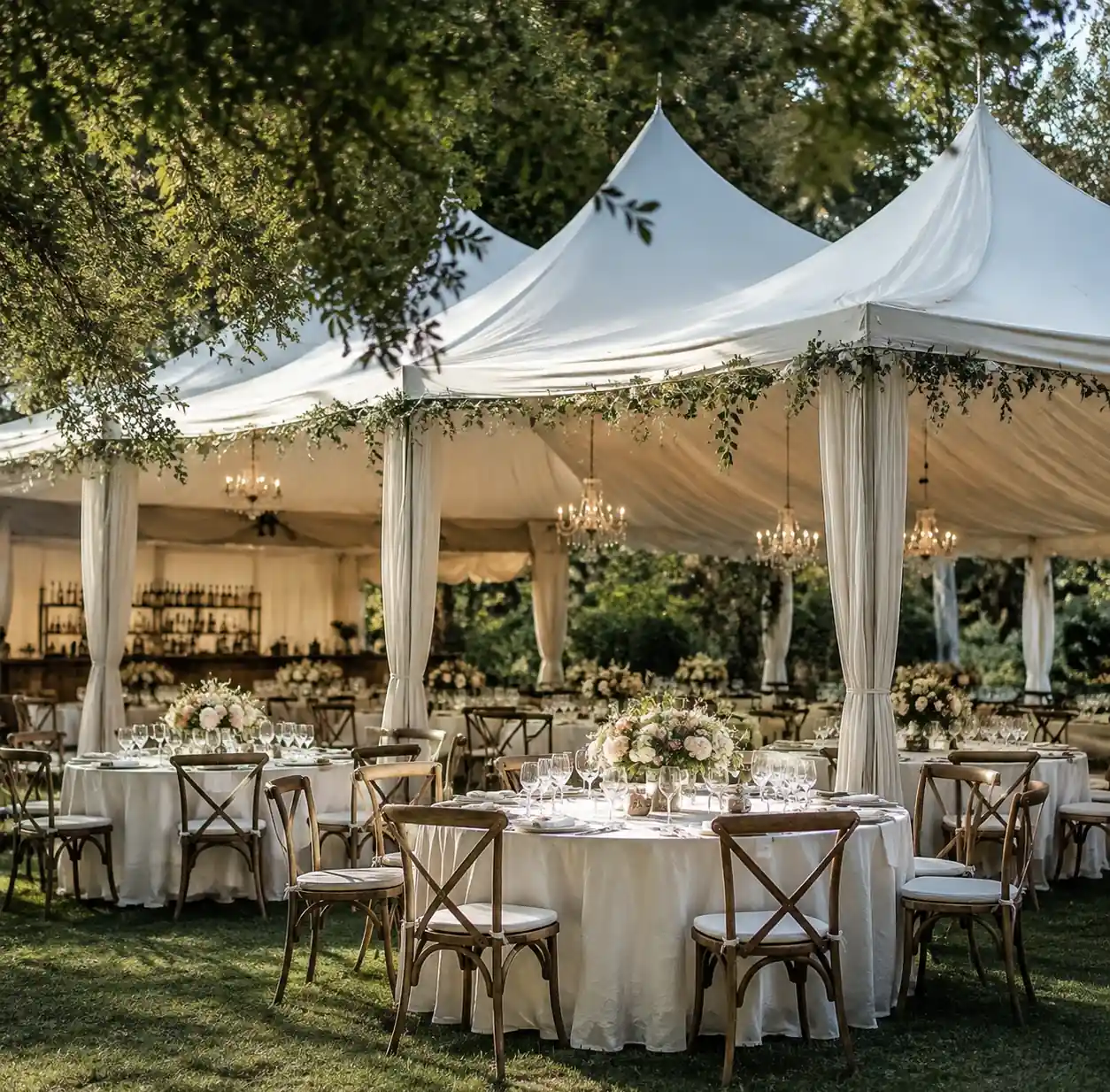 Garden wedding reception layout with tables and decorations inside pagoda tent
Match your pagoda tent layout to your party format. The table below covers the three most common configurations based on real-world setups:
| Party Type | Recommended Size | Guests | Key Layout Elements |
|---|---|---|---|
| Seated Wedding Dinner | 6m × 6m | 30-35 | 5 round tables (1.5m dia.), service aisle (1.2m), beverage station along sidewall |
| Cocktail Reception | 8m × 8m | 55-60 | 8 cocktail tables, buffet station at rear, bar in corner, 40% open circulation |
| Birthday with Dancing | 5m × 5m | 30-40 | 4 rectangular tables, dessert station, DJ booth (2m × 1.5m), 3m × 2m dance area |
For the seated wedding layout, 1.3 sqm per guest ensures comfortable seating with service access. Cocktail receptions need at least 40% clear floor area to allow natural mingling. Birthday parties with a dance floor work best when the dance zone is positioned opposite the entrance to naturally draw guests through the space.
Garden Ground Protection Strategies
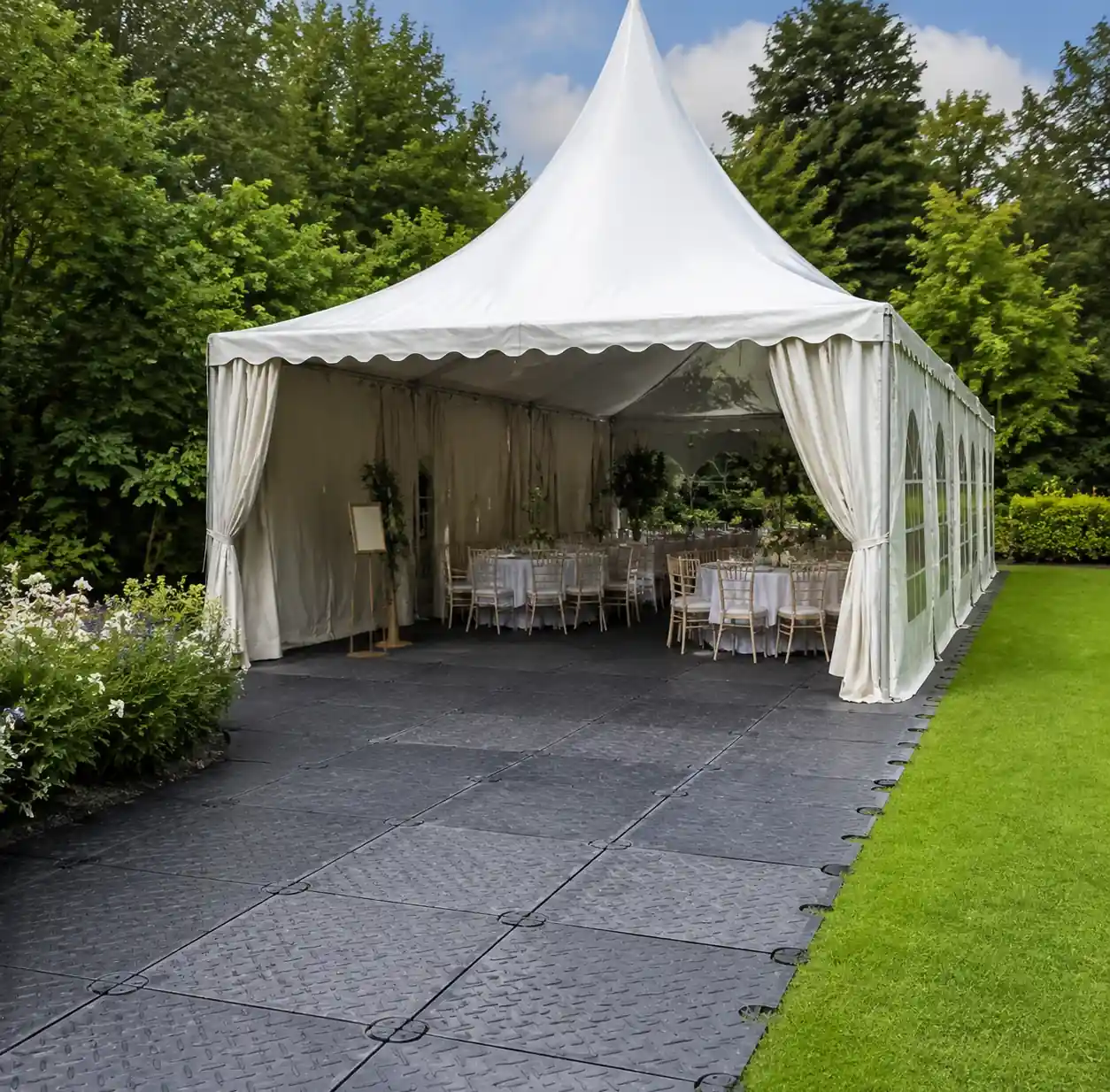 Pagoda tent with protective flooring system installed on garden grass
Protecting Your Garden Lawn
Pagoda tent installations can damage garden grass if proper ground protection is not implemented. You should use these strategies to preserve lawn quality:
Flooring systems: Install interlocking PVC panels or plywood subflooring to distribute weight evenly across grass surface. This prevents soil compaction and allows continued air and moisture circulation to grass roots.
Anchoring methods: Choose screw anchors or weighted bases rather than traditional stakes for garden installations, as these create minimal lawn disruption and remove cleanly after events.
Timing considerations: Schedule garden party setup and breakdown during dry soil conditions when possible, as wet ground increases compaction damage risk by 60-70%.
Patio and Hard Surface Installations
For pagodas erected on garden patios, decking, or paved areas, you can use weighted ballast systems instead of ground anchoring. Each pagoda corner typically requires 25-50kg weights depending on tent size and wind exposure. Always verify surface load capacity with your venue before installing weighted systems on elevated decks or fragile paving.
Lighting and Decoration Ideas
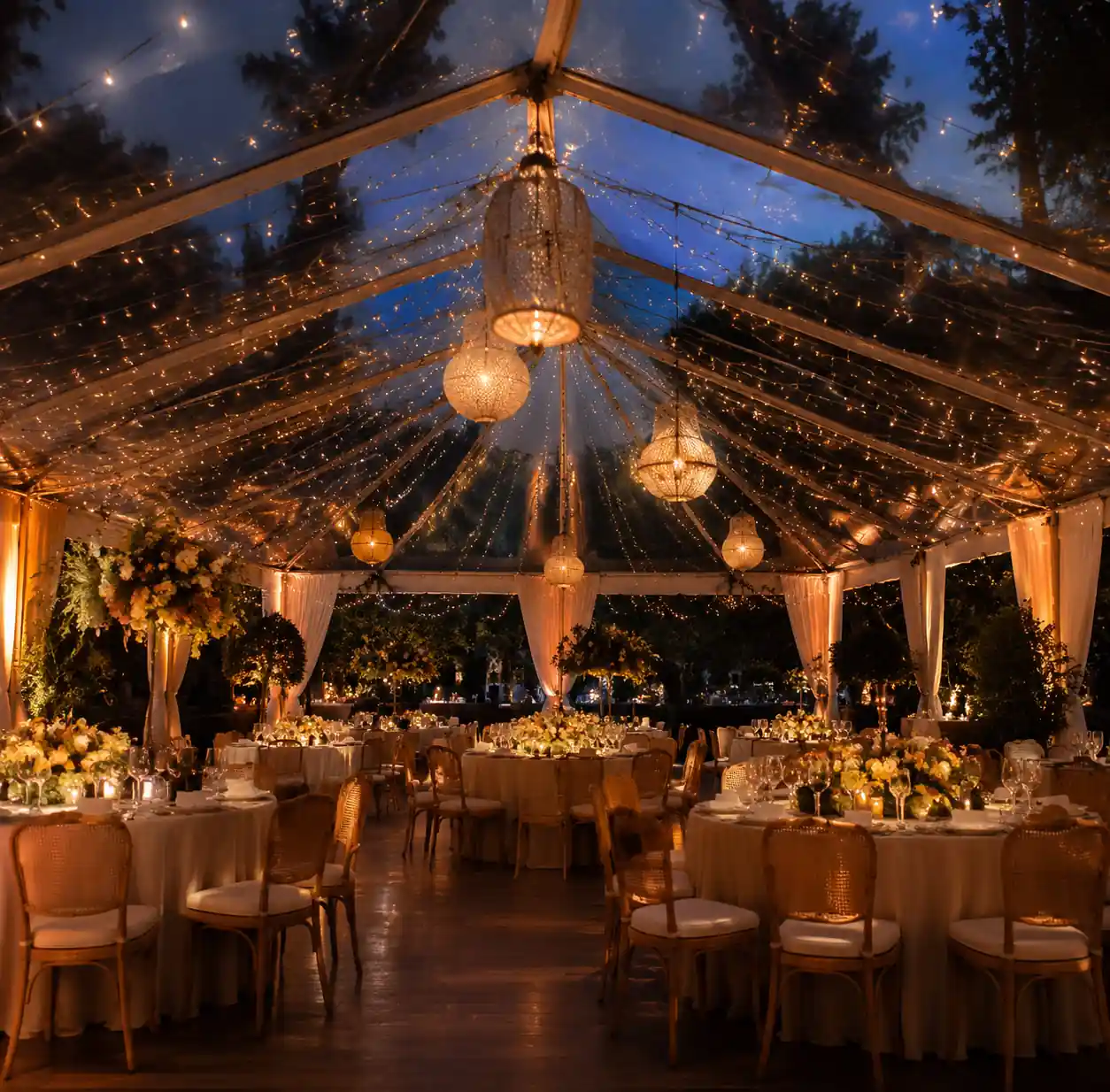 Pagoda tent decorated with fairy lights and hanging lanterns for evening garden party
Garden Party Lighting Design
Pagoda tent frames are purpose-built for decorative lighting. The most effective approaches for garden parties:
Fairy light canopy: Crisscross LED strands across the interior ceiling. A 5m × 5m pagoda needs 30–40 m of strands for full overhead coverage.
Hanging lanterns: Cluster 5–7 paper or LED globe lanterns at varying heights from the apex for layered depth.
Perimeter uplights: LED uplights aimed at the peaked roof exterior create architectural drama after dark.
Chandelier centerpiece: A battery-powered chandelier hung from the center apex works well for seated dining configurations.
Decoration Strategies
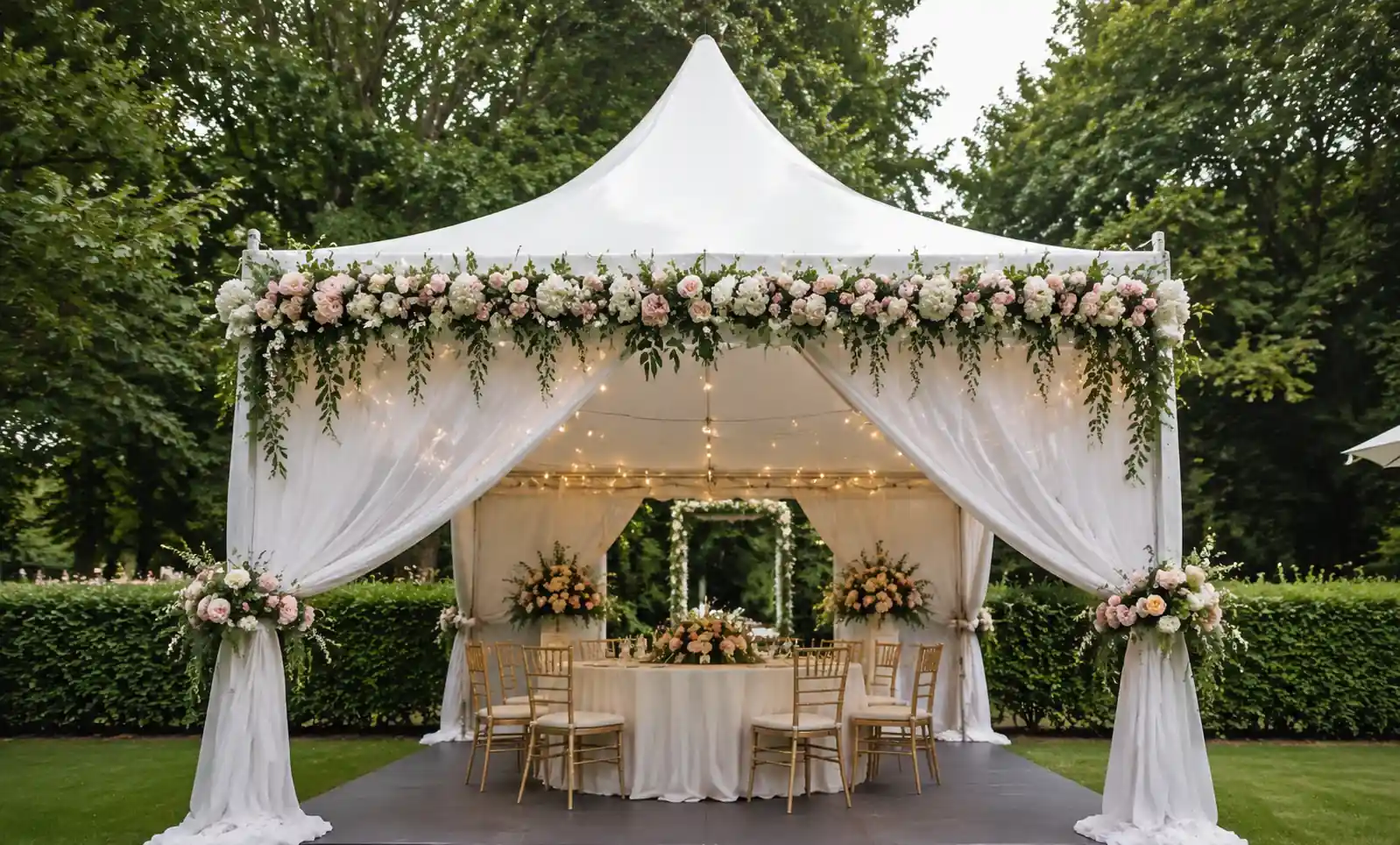 Pagoda tent decorated with fabric draping and floral garlands for garden celebration
Pagoda tent frames accommodate various decoration styles:
- Fabric draping: Attach sheer fabric panels or flowing curtains to frame posts, softening the structure while maintaining open garden views
- Floral installations: Secure garland runners along roof edges or create floral archways at pagoda entrance points
- Balloon arrangements: Design balloon garland installations along frame perimeter or create balloon chandelier clusters for celebratory atmosphere
Ensure all decorations attach securely to frame points without compromising structural integrity or blocking emergency exits.
Seasonal Decoration Themes
Spring: Pastel fabric draping, fresh floral garlands, and warm white fairy lights. Summer: Light linens with eucalyptus runners and perimeter misting fans. Autumn: Amber fabric accents, dried wheat bundles, and LED lanterns paired with outdoor heaters. Each season's palette works naturally with the pagoda's peaked silhouette because the architectural framing provides a neutral backdrop that lets decoration choices read clearly.
Frequently Asked Questions
What size pagoda tent do I need for 50 guests at a garden party?
For 50 seated dinner guests, choose a 6m × 6m (36 sqm) pagoda for a snug fit or an 8m × 8m (64 sqm) for additional buffet and dance floor space. Use the formula: (area × 0.7) ÷ 1.2 sqm per guest to confirm capacity.
Can I connect multiple pagoda tents together for larger garden events?
Yes. Pagoda tents use modular aluminum frames that connect seamlessly side-by-side or in L-shapes. Two 5m × 5m units give you 50 sqm for 50–75 guests; a 10m × 10m plus four 6m × 6m units yields 244 sqm for 150–200 guests.
How long does it take to install a pagoda tent in a garden?
A single 5m × 5m pagoda takes 2–3 hours for a professional crew; an 8m × 8m or multi-unit configuration runs 4–6 hours. Schedule installation at least one day before the event to leave time for decoration.
Will a pagoda tent damage my garden lawn?
Minimal damage if you use interlocking PVC floor panels to prevent compaction, screw anchors instead of stakes, and remove the tent within 2–3 days post-event. Dry soil conditions at setup and breakdown reduce risk by 60–70%.
What wind rating should I specify for garden pagoda tents?
Specify 80–100 km/h wind-load rating as a minimum for garden use. Ensure anchoring matches the surface: screw anchors for grass, 25–50 kg ballast weights per corner for patios or decking.
Do I need permits for temporary pagoda tents at garden parties?
Private parties under 50 guests generally need no permit. Events with 100+ guests or amplified music may require local authority approval. Check municipal rules on temporary structures, noise limits, and parking before confirming your event date.
Conclusion
Pagoda tents provide elegant and flexible solutions for garden parties ranging from intimate 30-guest gatherings to expansive 200+ person celebrations. Understanding capacity calculations (1.2-1.5 sqm per seated guest), modular connection options, and proper ground protection strategies ensures successful outdoor events that preserve your garden landscape.
If you need high-quality pagoda tents for your garden party or outdoor celebration, Velaria Spatia offers premium aluminum-framed structures from 3m × 3m to 10m × 10m configurations. Our modular tent systems provide weather-resistant solutions with elegant peaked roof designs, creating sophisticated outdoor venues for weddings, VIP receptions, and private celebrations.
Contact us today for custom pagoda tent solutions, detailed capacity planning, and competitive pricing for your garden party needs.