


How to Clean and Store Event Tents: Step-by-Step Guide
Event tent maintenance accounts for up to 60% of total equipment longevity. Studies show that proper cleaning and storage protocols extend tent lifespan by 5-7 years while preventing costly mildew damage, fabric degradation, and structural failures that can disrupt outdoor events.
If you want to protect your event tent investment and maintain peak performance, then you need to understand professional cleaning methods, stain removal techniques, proper drying procedures, and climate-controlled storage requirements that preserve fabric integrity and frame durability.
This comprehensive guide covers the critical steps for cleaning event tents, removing stubborn stains, preventing mildew growth, implementing proper fold techniques, and establishing storage conditions that protect your marquee structures between events. You'll learn industry-proven methods used by professional event companies worldwide.
Table of Contents
- 1. Why Proper Tent Maintenance Matters
- 2. Pre-Cleaning Preparation
- 3. Cleaning Solutions and Products
- 4. Step-by-Step Cleaning Process
- 5. Stain Removal Techniques
- 6. Drying Methods
- 7. Proper Folding Techniques
- 8. Storage Conditions and Requirements
- 9. Maintenance Schedule
- 10. Common Mistakes to Avoid
- 11. FAQ
- 12. Conclusion
Why Proper Tent Maintenance Matters
Event tent fabrics face constant exposure to UV radiation, moisture, dirt, and environmental contaminants that gradually degrade protective coatings and structural integrity. Without regular maintenance, PVC-coated polyester fabric loses waterproofing capacity within 18-24 months, while aluminum frames develop corrosion that compromises load-bearing capacity.
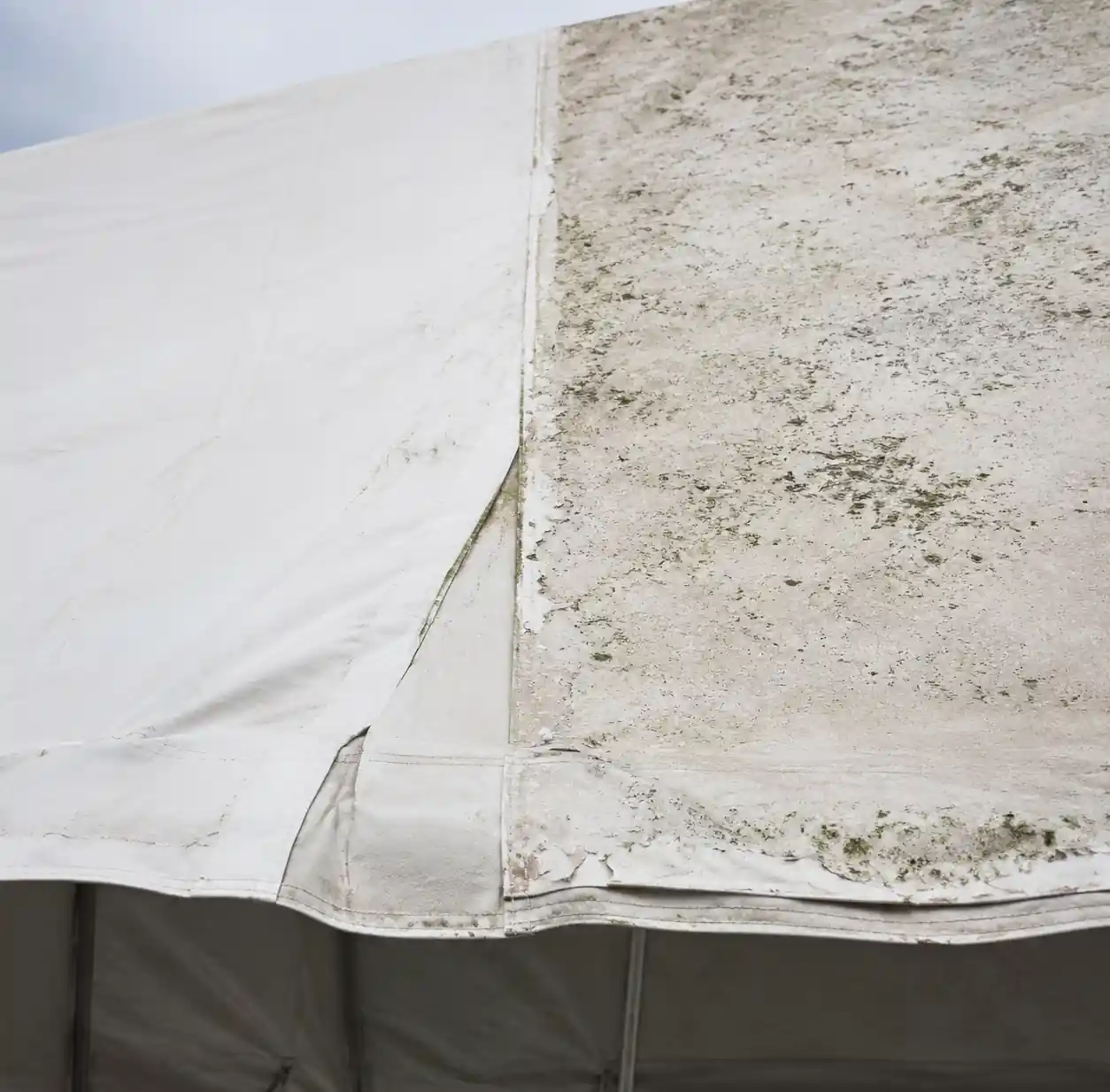 Event tent fabric showing UV degradation and mildew damage from improper maintenance
Professional maintenance prevents three critical failure modes. First, mildew growth penetrates fabric weave structures, creating permanent discoloration and weakening tensile strength by up to 40%. Second, accumulated dirt acts like sandpaper, abrading protective coatings and exposing base fabrics to accelerated UV degradation. Third, improper storage creates stress points and permanent creases that compromise waterproof seam integrity.
You can avoid these issues by implementing systematic cleaning and storage protocols after each event. According to industry maintenance standards, tents maintained with proper procedures last 8-10 years compared to 3-4 years for neglected equipment. This represents significant cost savings and operational reliability for event businesses.
Pre-Cleaning Preparation
Pre-cleaning preparation begins while your tent remains erected at the event site. Remove all loose debris including leaves, twigs, and dirt using soft-bristle brushes before dismantling the structure. This prevents ground contamination from embedding into fabric during takedown operations.
Inspect the entire tent surface for specific problem areas requiring targeted treatment. Document stains, mildew spots, and damaged sections with photos for reference during the cleaning process. Check frame components for dirt accumulation in joints and connection points that require disassembly cleaning.
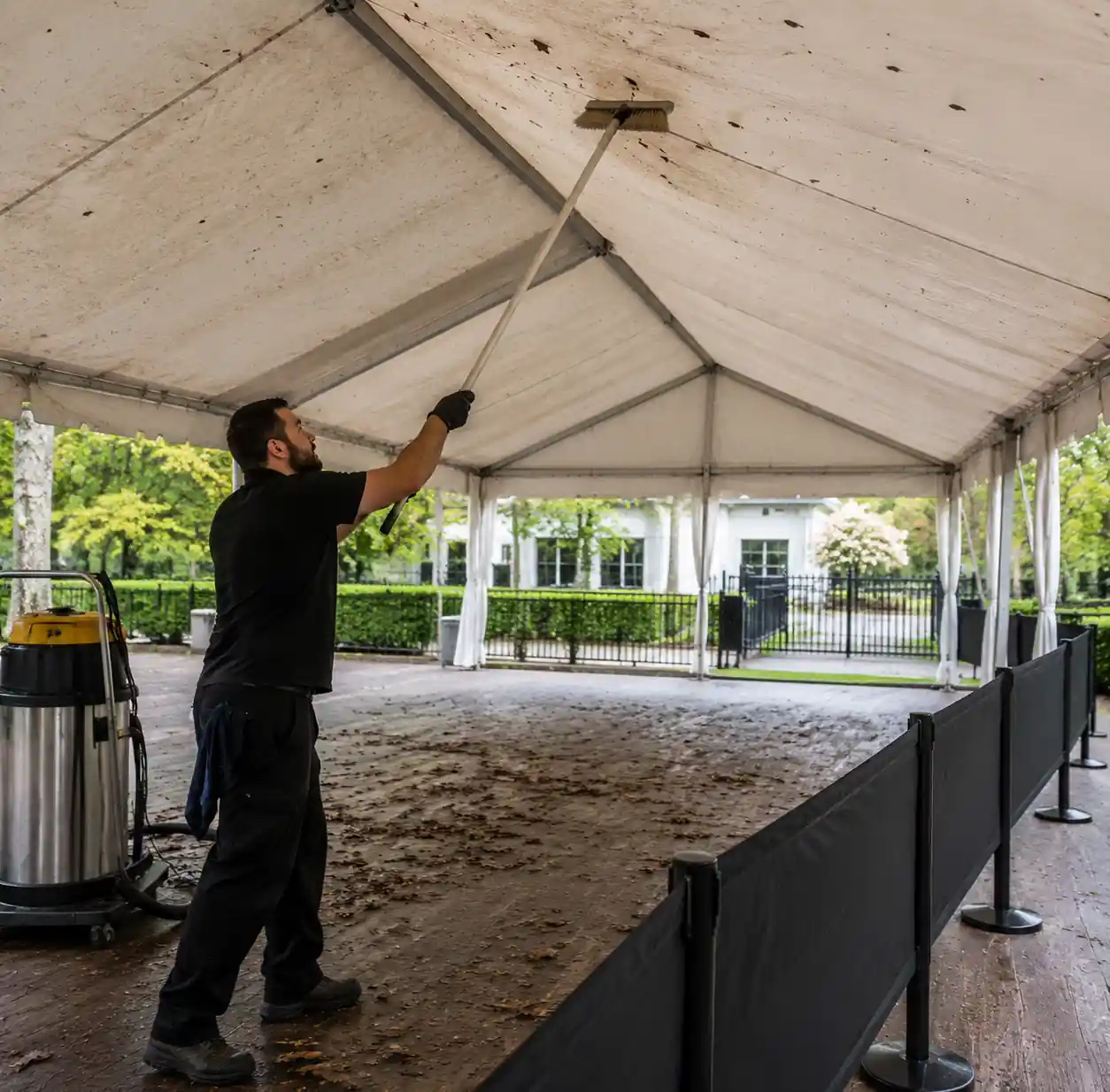 Worker removing debris from erected event tent before cleaning process
Choose an appropriate cleaning location with adequate space for laying out large tent sections. Never place tent fabric directly on concrete, gravel, or asphalt surfaces, as rough textures puncture vinyl and scrape protective coatings. Always use durable ground barriers or clean tarps as underlayment. Ensure the cleaning area provides access to water sources and drainage for rinse water management.
Cleaning Solutions and Products
Professional event tent cleaning requires fabric-specific solutions that preserve protective coatings while removing contaminants. The standard homemade cleaning solution combines four parts warm water, one part white vinegar, and several drops of fragrance-free, bleach-free dish soap. This pH-balanced mixture effectively removes dirt without damaging PVC coatings or waterproof treatments.
| Cleaning Product | Application | Fabric Type | Notes |
|---|---|---|---|
| Vinegar Solution (4:1:soap) | General cleaning | PVC-coated polyester, canvas | Safe for all tent fabrics |
| Calcium Hypochlorite Formula | Mildew removal | Vinyl, PVC | Professional-grade, non-corrosive |
| Tent-Specific Cleaners | Targeted stains | Manufacturer-specified | Preserves factory coatings |
| Scotchguard/Water Repellent | Post-clean protection | All fabrics | Apply to dry, clean surfaces |
For commercial operations, specialized products like Dynamite Vinyl Shine Mildew Formula use calcium hypochlorite instead of standard bleach, providing superior mildew removal without corroding fabric coatings. According to professional tent maintenance guides, these commercial formulations remove organic growth and discoloration more effectively than household cleaners.
You should avoid three categories of cleaning agents that damage tent fabrics. First, chlorine bleach destroys protective UV coatings and weakens fabric fibers. Second, harsh detergents containing enzymes or optical brighteners strip waterproofing treatments. Third, petroleum-based solvents dissolve PVC coatings and create permanent fabric damage.
Step-by-Step Cleaning Process
The professional cleaning process follows a systematic approach that protects fabric integrity while achieving thorough contamination removal. Start by spreading tent sections on clean ground barriers in a shaded area, as direct sunlight accelerates cleaning solution evaporation and can set stains permanently.
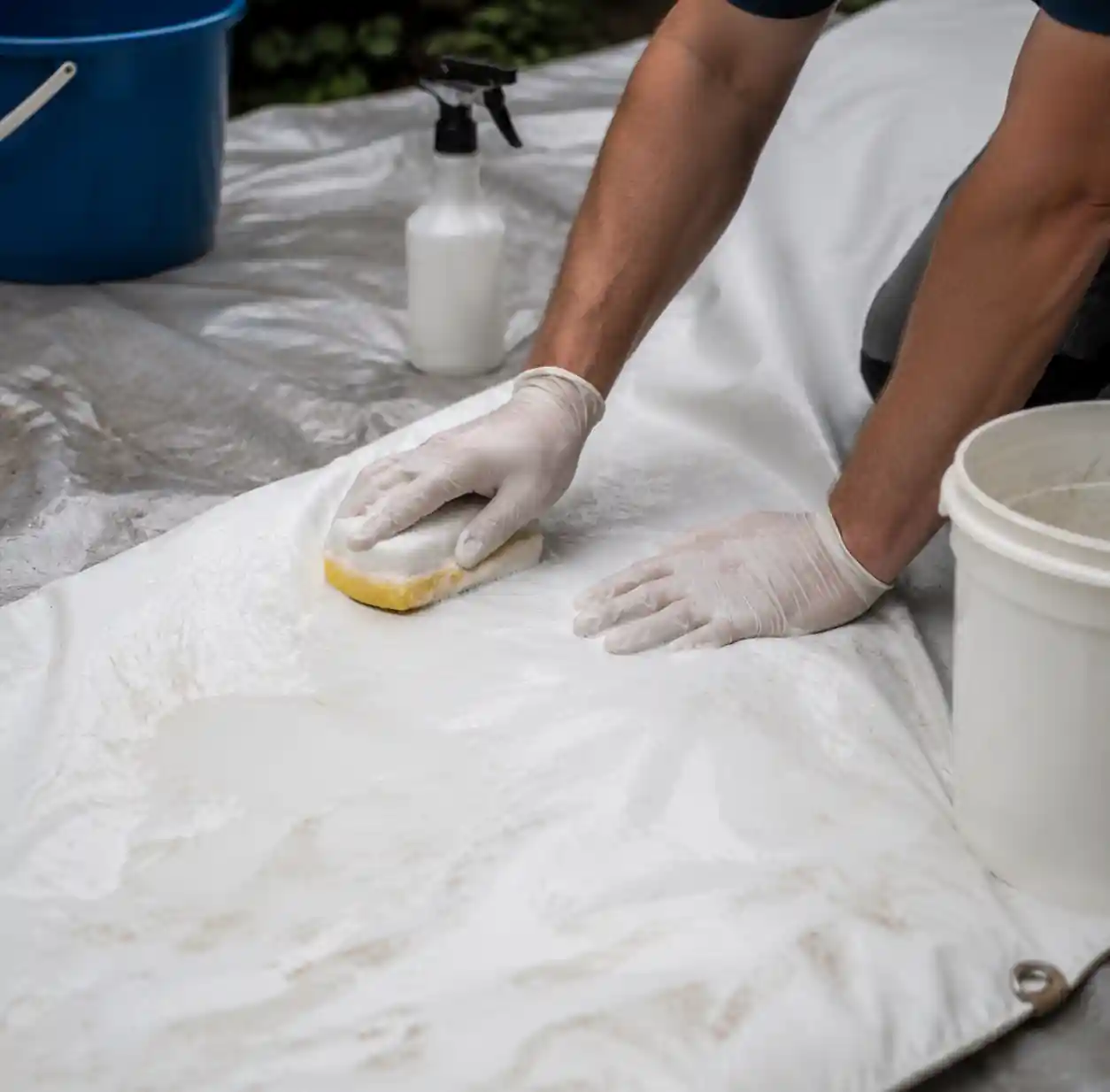 Professional cleaning event tent fabric with soft sponge and cleaning solution
Step 1: Initial Rinse Spray tent surfaces with clean water to remove loose dirt and prepare fabric for cleaning solution application. Use low-pressure garden hose settings rather than power washers, which can damage coatings and force water through seams. Focus on heavily soiled areas including ground-contact zones and seam lines where dirt accumulates.
Step 2: Solution Application Apply your cleaning solution using soft sponges or microfiber cloths in circular motions. Work in 2-3 square meter sections to prevent solution from drying before rinsing. For A-frame tents and pagoda tents, pay special attention to roof peak areas where environmental contaminants concentrate.
Step 3: Gentle Scrubbing Use soft-bristle brushes for stubborn dirt, applying light pressure to avoid abrading protective coatings. The cleaning action should come from chemical dissolution rather than mechanical force. Allow cleaning solution to dwell for 3-5 minutes on heavily soiled areas before scrubbing.
Step 4: Thorough Rinsing Rinse each section completely with clean water, ensuring no soap residue remains. Soap residue attracts dirt and accelerates re-soiling between events. Continue rinsing until water runs clear and no foam appears on fabric surfaces.
Step 5: Frame Component Cleaning Clean aluminum frame components separately using the same solution. Disassemble connection joints to remove accumulated dirt that causes corrosion and binding. Dry frame components thoroughly before reassembly to prevent oxidation.
Stain Removal Techniques
Specific stain types require targeted removal approaches that address the chemical nature of contaminants without damaging fabric. Treatment timing matters significantly, as fresh stains respond to gentle methods while set stains may require multiple treatment cycles.
| Stain Type | Treatment Method | Dwell Time | Success Rate |
|---|---|---|---|
| Grass/Organic | Vinegar solution + soft brush | 5-10 minutes | 85-90% |
| Mud/Clay | Dry brush first, then vinegar wash | 3-5 minutes | 90-95% |
| Mildew/Mold | Calcium hypochlorite formula | 10-15 minutes | 75-85% |
| Food/Beverage | Immediate cold water rinse + soap | 5 minutes | 80-90% |
| Tree Sap/Resin | Rubbing alcohol (test first) | 2-3 minutes | 60-70% |
For mildew stains that penetrate fabric weave, apply specialized mildew removers according to manufacturer specifications. These professional products work through oxidation reactions that break down organic compounds without bleaching fabric dyes. According to canvas tent maintenance research, treating mildew within 48 hours prevents permanent staining.
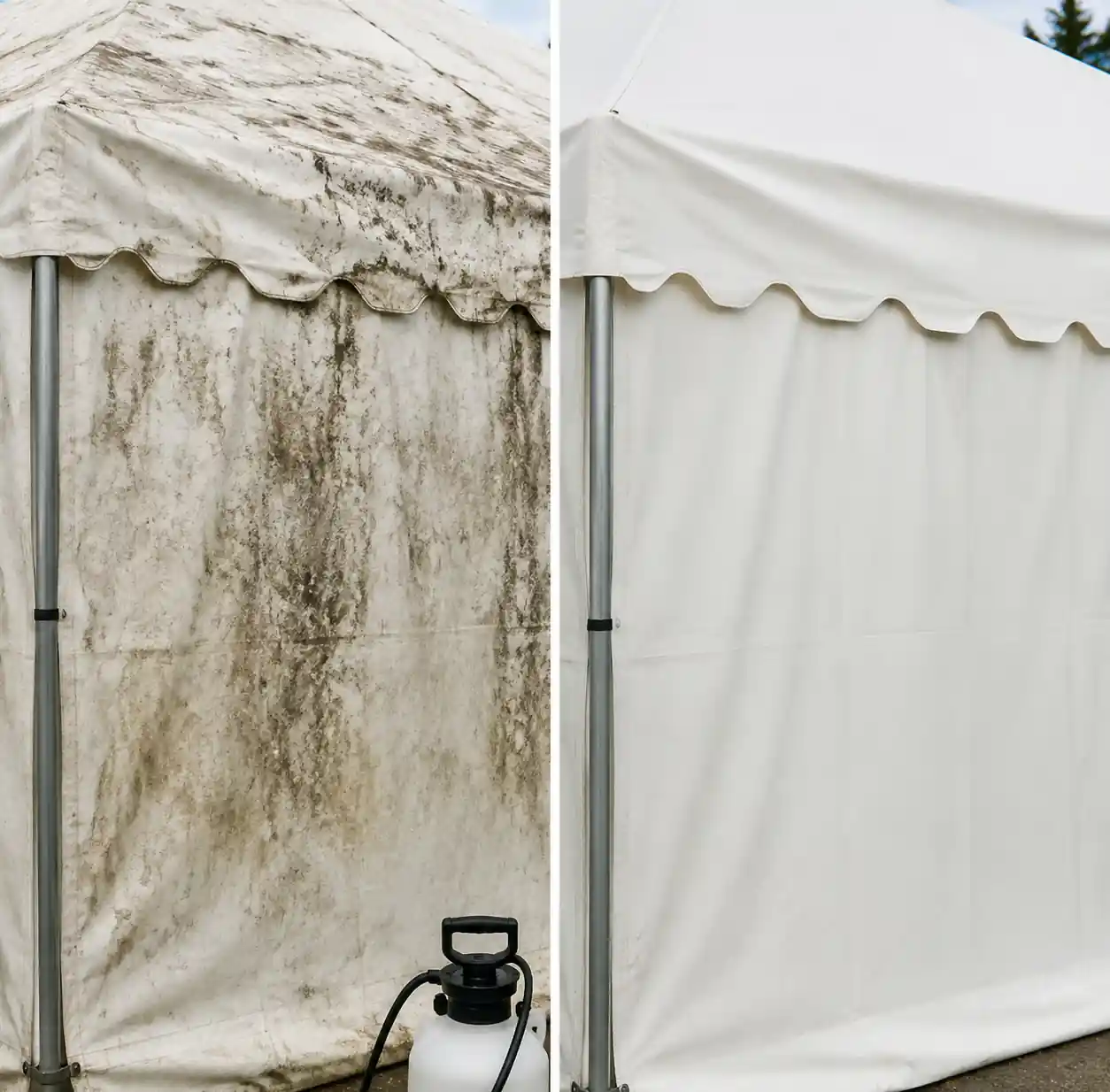 Targeted stain removal treatment on event tent showing before and after
You should test any stain removal product on inconspicuous fabric areas before full application. Some chemicals react with specific dye formulations or coating types, causing discoloration or coating delamination. Apply treatments to small test sections and wait 10-15 minutes to observe any adverse reactions before proceeding with full treatment.
For stubborn stains that resist initial treatment, repeat the cleaning cycle rather than increasing chemical concentration or scrubbing pressure. Multiple gentle treatments preserve fabric integrity better than aggressive single treatments. Document particularly difficult stains for consideration during future event setup to avoid similar contamination.
Drying Methods
Complete drying before storage represents the single most critical factor in preventing mildew growth and fabric degradation. Any moisture remaining in tent fabric or frame crevices creates ideal conditions for mold development, which can occur within 48 hours under humid conditions above 60% relative humidity.
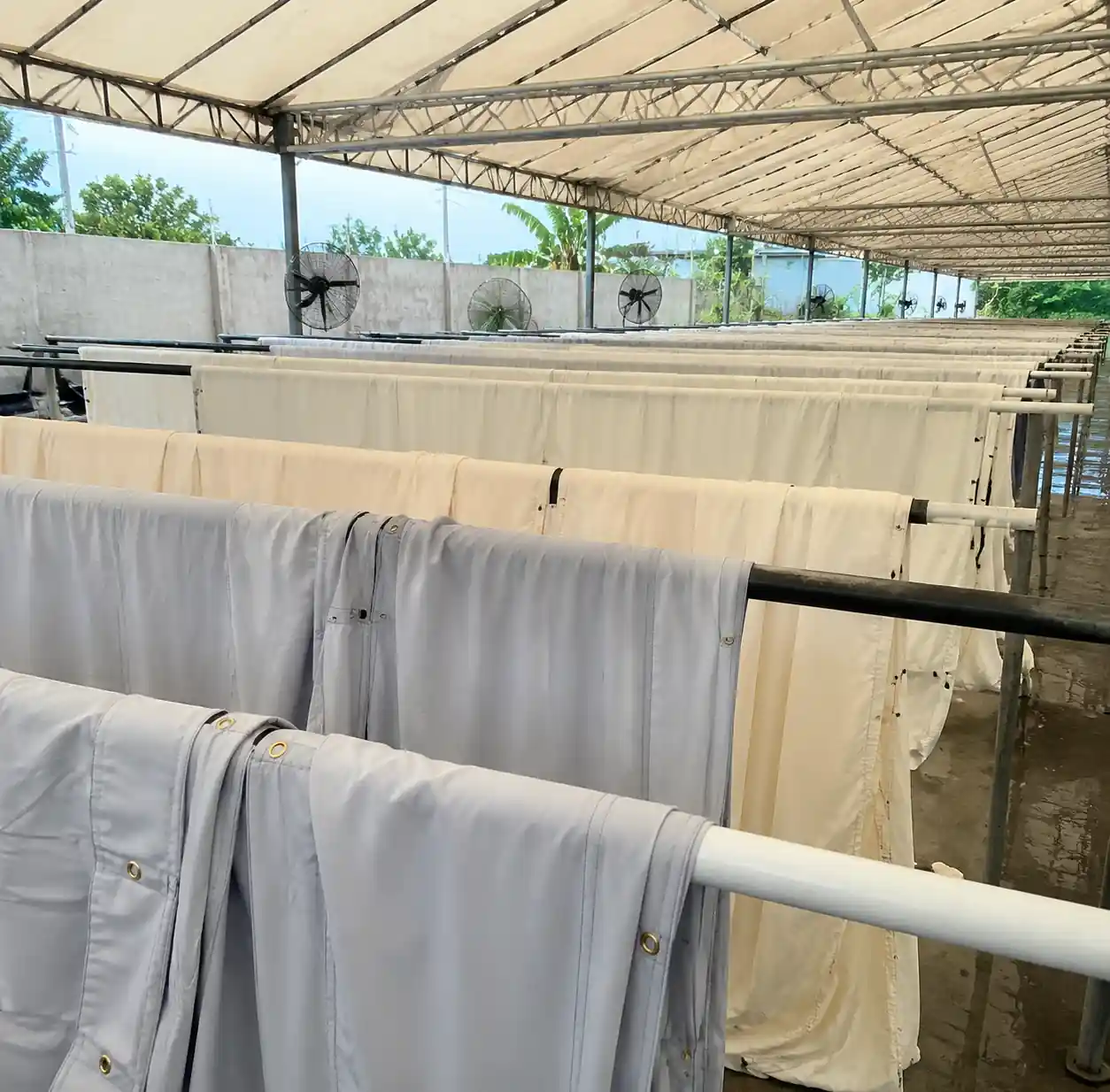 Event tent fabric hung for air drying with industrial fan ventilation
Air Drying Protocol Hang tent sections over clean horizontal supports that distribute weight evenly across fabric panels. Avoid folding or bunching fabric during drying, as this traps moisture in fabric layers. Position tents in shaded, well-ventilated areas where air circulation promotes evaporation without UV exposure that weakens fabrics.
Accelerated Drying For commercial operations requiring rapid turnaround, industrial fans provide forced-air circulation that reduces drying time by 60-70%. Position fans to create cross-ventilation patterns that move air across all tent surfaces. According to professional storage guidelines, fan-assisted drying should continue for minimum 4-6 hours after visible moisture disappears to ensure complete drying.
Frame Component Drying Aluminum frame components require separate drying attention, particularly in connection joints and telescoping sections where water accumulates. Wipe frame tubes with dry cloths and stand vertical sections upright to drain trapped water. Compressed air effectively removes water from difficult-to-reach joint areas.
You must verify complete dryness before proceeding to storage. Check fabric weight by lifting sections, as damp fabric feels noticeably heavier than dry material. Inspect seams and hem edges where multiple fabric layers trap moisture. For wedding marquees with clear panel windows, ensure both interior and exterior surfaces dry completely.
Proper Folding Techniques
Folding techniques significantly impact long-term fabric condition and storage efficiency. Proper folding distributes stress evenly across fabric sections, prevents permanent creases that compromise waterproof coatings, and minimizes storage volume for efficient warehouse management.
Standard Accordion Fold The accordion fold method works best for rectangular tent sections and sidewalls. Lay the fabric flat and create parallel folds approximately 30-40cm wide, stacking each fold on top of the previous one. This technique creates uniform fold lines that distribute stress evenly and allow easy unfolding during setup.
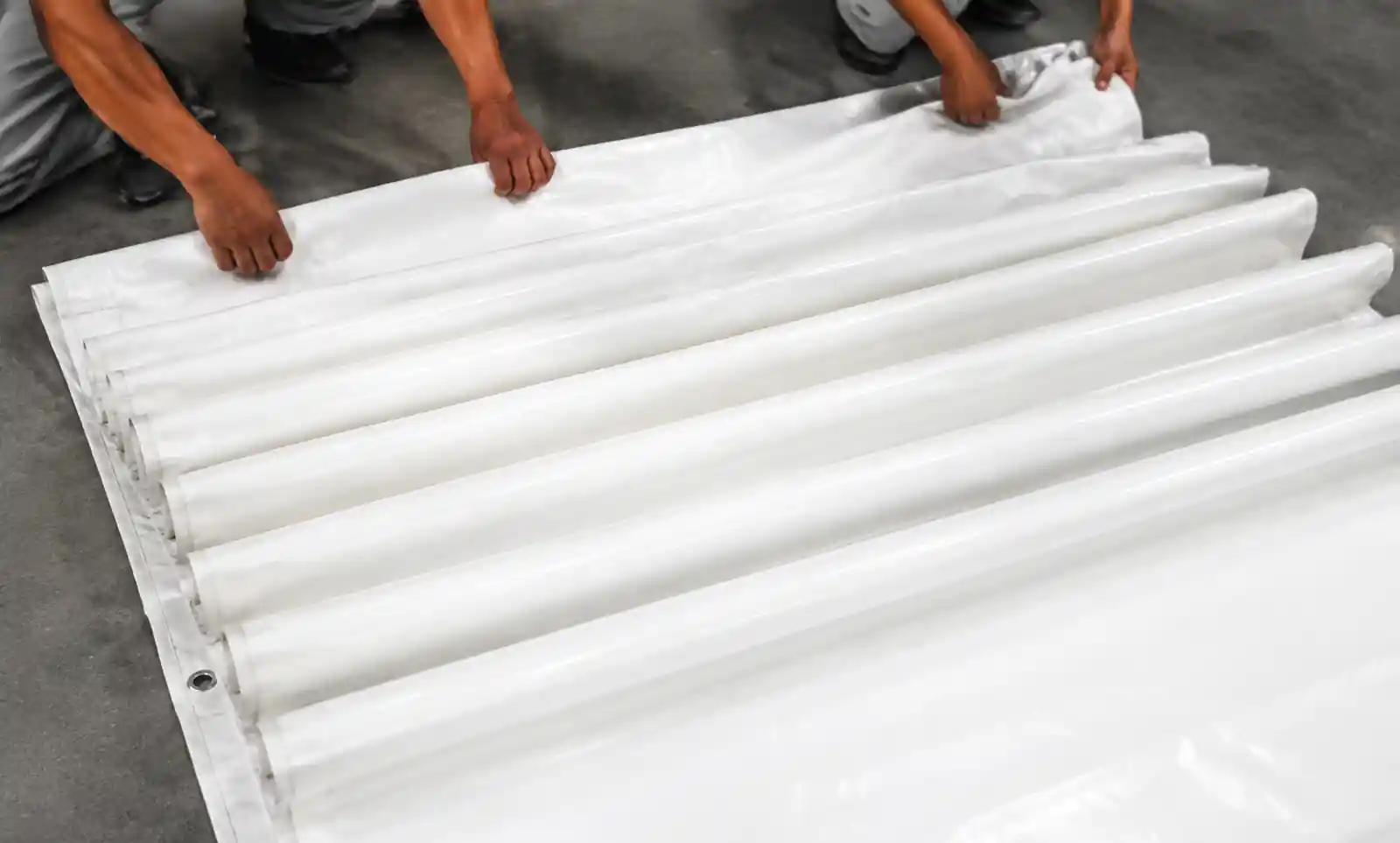 Demonstration of proper accordion fold technique for event tent storage
Loose Roll Method For tent tops and roof sections, the loose roll technique prevents sharp creases in high-stress areas. Start at one end and roll the fabric around a cardboard core or PVC pipe, maintaining consistent tension without pulling tight. Loose rolling allows fabric to relax and breathe during storage while protecting waterproof coatings from crease-induced delamination.
Variable Fold Pattern According to REI tent storage recommendations, varying your fold pattern between storage periods prevents permanent creasing at identical stress points. Alternate between accordion folds and loose rolls, or shift fold line positions by 10-15cm each time you store the tent. This practice extends fabric life by distributing wear across different areas.
You should avoid "stuffing" tent fabric into storage bags without systematic folding. Random stuffing creates sharp stress points, twisted fabric sections, and tangled components that complicate setup operations. While stuffing works for camping tents weighing 2-3kg, commercial event tents weighing 50-200kg require organized folding for handling efficiency and fabric preservation.
Storage Conditions and Requirements
Proper storage conditions protect your investment during off-season periods and between events. Climate-controlled storage extends tent lifespan by preventing moisture accumulation, UV exposure, and pest damage that occur in uncontrolled environments.
Temperature and Humidity Control Store event tents in spaces maintaining 15-25°C temperature and 40-50% relative humidity. Extreme temperature fluctuations cause PVC coatings to become brittle in cold or sticky in heat, while humidity above 60% promotes mildew growth even in cleaned tents. Use dehumidifiers or silica gel packets in storage areas that lack climate control.
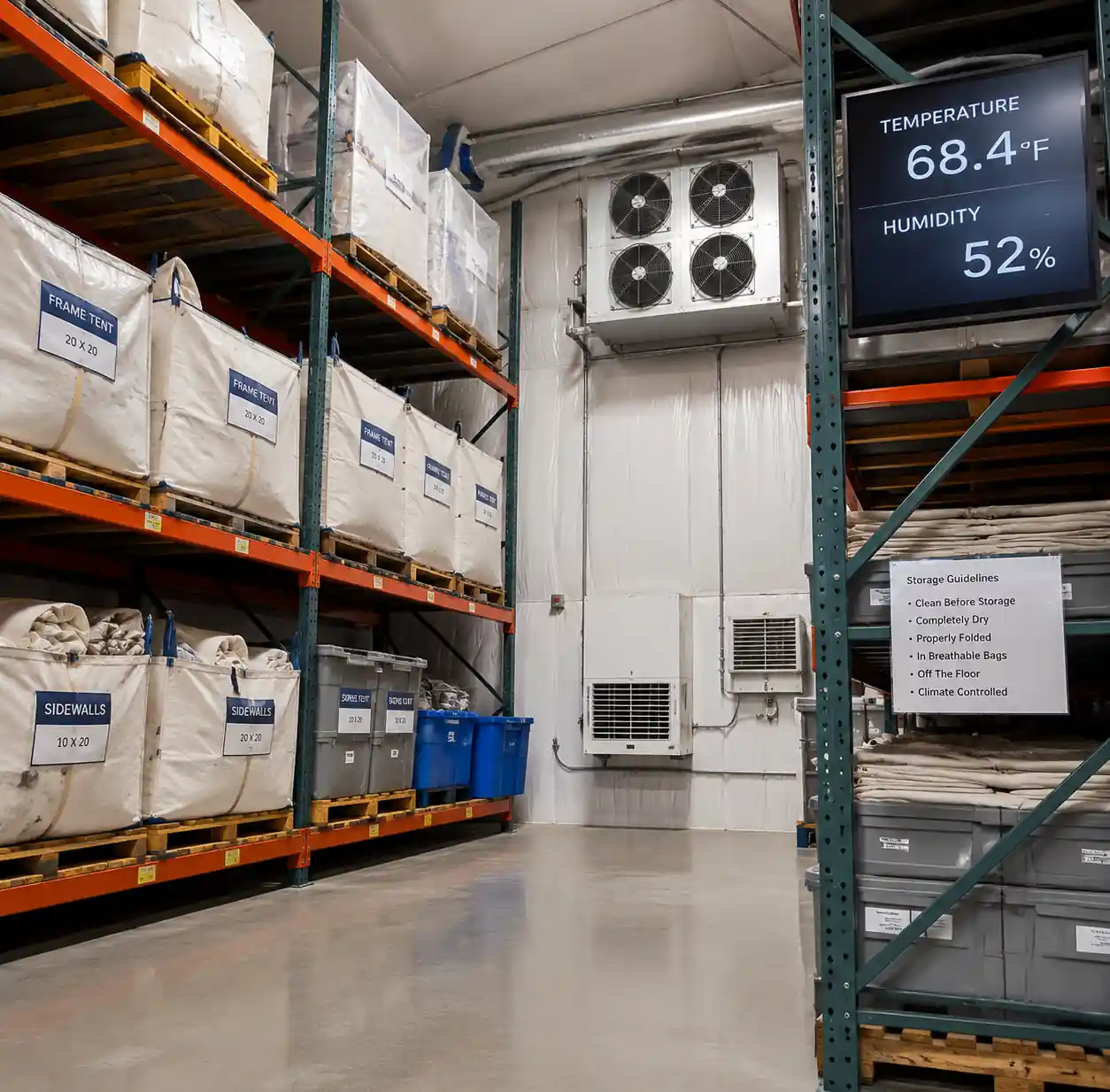 Climate-controlled warehouse with organized event tent storage on pallet racks
Storage Container Selection Choose between breathable fabric storage bags and sealed plastic containers based on your environmental conditions. Breathable bags allow fabric to relax and air circulation prevents moisture accumulation, ideal for climate-controlled warehouses. Sealed containers protect against pest infiltration and dust accumulation in less controlled storage areas, but require verified complete dryness before sealing to prevent trapped moisture issues.
| Storage Method | Best For | Ventilation | Pest Protection | Cost |
|---|---|---|---|---|
| Breathable Mesh Bags | Climate-controlled spaces | Excellent | Moderate | Low |
| Heavy-Duty Plastic Bins | Uncontrolled environments | None (requires dry tents) | Excellent | Moderate |
| Custom Tent Bags | Professional operations | Good | Moderate | High |
| Pallet Rack Storage | Large commercial inventory | Excellent | Requires separate control | Moderate |
Physical Storage Location Position stored tents on elevated platforms or pallet racking systems that keep fabric off floor surfaces where moisture accumulates. Separate damaged equipment requiring repair from ready-to-use inventory to prevent deployment of compromised structures. Store frame components separately from fabric sections, organizing by tent model for efficient retrieval during busy event seasons.
According to professional event rental storage protocols, maintaining organized inventory systems with clear labeling reduces setup time by 30-40% while preventing equipment mix-ups that delay event operations. Label each storage container with tent type, size, and last inspection date.
For exhibition marquees and sports event structures used seasonally, implement quarterly inspection protocols during storage periods. Unfold and inspect fabric for moisture, mildew, or pest damage every 90 days, refolding in different patterns to prevent permanent creases.
Maintenance Schedule
Systematic maintenance scheduling prevents emergency repairs and extends equipment service life. Professional event companies implement three maintenance tiers based on usage frequency and exposure conditions.
Post-Event Maintenance (After Each Use)
- Remove debris and visible dirt while tent is erected
- Inspect for tears, damaged seams, or frame issues
- Clean according to soiling level using appropriate solutions
- Dry completely before storage
- Document any damage requiring repair
Quarterly Deep Maintenance
- Complete disassembly and thorough cleaning of all components
- Inspect frame joints for corrosion or wear
- Reapply water repellent treatments to fabric surfaces
- Check and repair any seam tape lifting or separation
- Update equipment maintenance logs
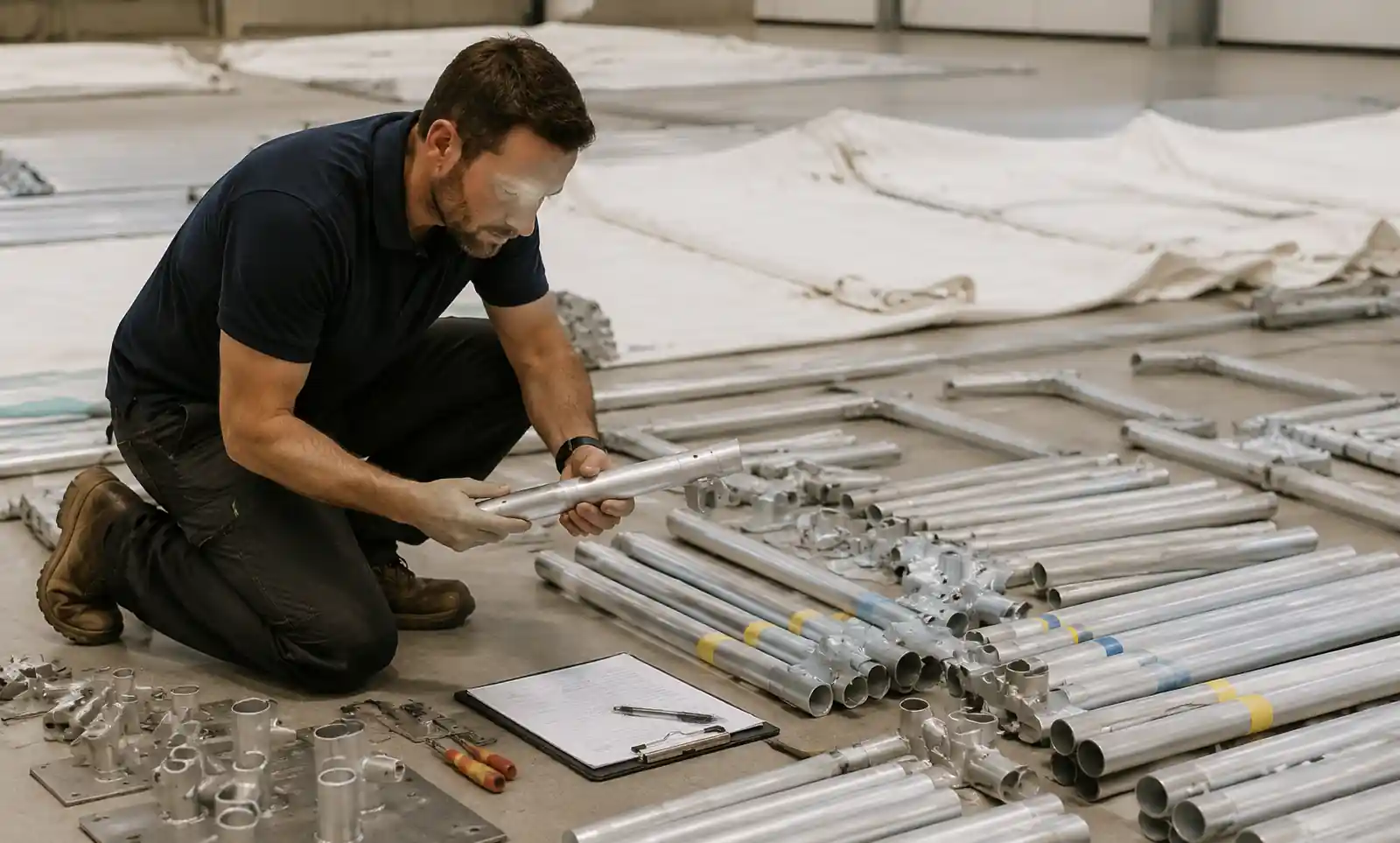 Technician performing comprehensive tent maintenance inspection with frame components
Annual Comprehensive Inspection
- Professional structural assessment of frame integrity
- Fabric tensile strength testing for high-use tents
- Complete waterproofing reapplication
- Hardware replacement (clips, straps, anchors showing wear)
- Recertification for tents used in regulated environments
You should adjust maintenance frequency based on usage intensity. Tents deployed 2-3 times monthly require quarterly deep maintenance, while tents used weekly need monthly comprehensive cleaning. Environmental factors also affect schedules—tents used in coastal salt-air environments or dusty industrial sites need more frequent maintenance than those used in controlled urban settings.
Common Mistakes to Avoid
Understanding common maintenance errors helps you implement best practices that protect your tent investment. These mistakes account for 70% of premature tent failures according to event equipment rental industry data.
Mistake 1: Storing Damp Tents Even minimal moisture triggers mildew growth within 48-72 hours. Always verify complete dryness before storage, checking fabric weight and inspecting multi-layer seam areas where water accumulates. According to outdoor gear storage research, moisture-related damage causes 45% of tent replacement needs in rental operations.
Mistake 2: Using Harsh Cleaning Chemicals Chlorine bleach, industrial degreasers, and enzyme detergents destroy protective fabric coatings. These chemicals provide immediate cleaning results but cause long-term coating degradation that compromises waterproofing and UV resistance. Use tent-specific or manufacturer-approved cleaning solutions that preserve factory treatments.
Mistake 3: Power Washing at High Pressure Power washers operating above 40-50 PSI force water through seams, delaminate coatings, and damage fabric weave structures. Hand washing with soft brushes and low-pressure rinsing provides adequate cleaning without structural damage. Reserve power washing only for frame components, never for fabric surfaces.
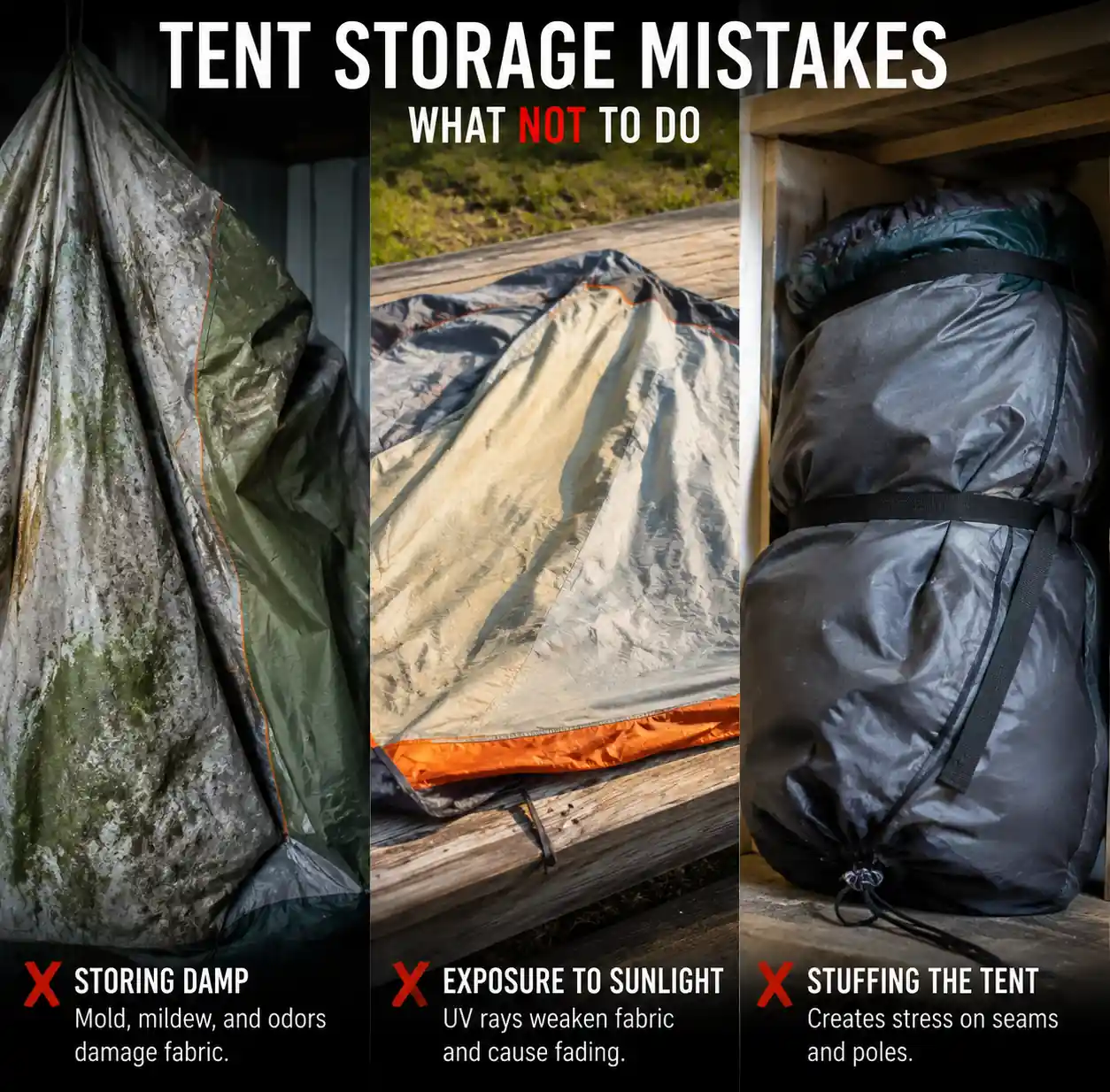 Examples of improper tent storage showing common mistakes to avoid
Mistake 4: Storing in Direct Sunlight UV radiation degrades fabric strength and waterproof coatings even during storage. Warehouse storage areas should block direct sunlight through windows or skylights. For outdoor storage facilities, use opaque storage containers and position them in shaded locations to minimize UV exposure.
Mistake 5: Neglecting Frame Maintenance Aluminum frames require cleaning and inspection equal to fabric components. Accumulated dirt in joints causes binding and corrosion that compromises structural integrity. Disassemble connection points during annual maintenance to clean and inspect for wear or damage.
FAQ
How often should I clean my event tent? Clean your event tent after each use to remove dirt, stains, and environmental contaminants before they set permanently. For tents in regular rotation (2-4 events monthly), implement deep cleaning every 3 months with quarterly fabric treatments and annual comprehensive inspections. Tents used in harsh environments like beaches or dusty locations require more frequent cleaning.
Can I use bleach to remove mildew stains? Never use chlorine bleach on event tent fabrics. Bleach destroys protective UV coatings, weakens fabric fibers, and causes permanent discoloration. Instead, use calcium hypochlorite-based mildew removers specifically formulated for tent fabrics, or apply vinegar solutions for mild cases. Professional-grade products like Dynamite Vinyl Shine provide effective mildew removal without coating damage.
What temperature should I store my tent at? Store event tents in climate-controlled environments maintaining 15-25°C (59-77°F) with 40-50% relative humidity. Extreme cold causes PVC coatings to become brittle and crack, while high heat makes coatings sticky and promotes degradation. Temperature fluctuations above 15°C daily range accelerate coating failure and fabric aging.
How do I know if my tent is completely dry? Verify dryness through three methods. First, lift fabric sections to check weight—damp fabric feels noticeably heavier than dry material. Second, inspect multi-layer seams and hem edges where moisture hides. Third, check frame connection points for trapped water. Allow minimum 24 hours air drying in well-ventilated spaces, or 4-6 hours with industrial fan assistance.
Should I fold or roll my tent for storage? Use accordion folding for sidewalls and rectangular sections, and loose rolling for roof sections and tent tops. Vary your fold pattern between storage periods to prevent permanent creasing at identical stress points. Never stuff large event tents randomly into bags, as this creates sharp stress points that damage coatings and complicate setup operations.
How long can event tents last with proper maintenance? Professional-grade event tents with proper maintenance protocols last 8-10 years in commercial rental operations. Tents used occasionally for private events can exceed 12-15 years when cleaned thoroughly after each use and stored in climate-controlled conditions. Neglected tents typically fail within 3-4 years due to mildew damage, coating degradation, or frame corrosion.
Conclusion
Proper event tent cleaning and storage protocols protect your equipment investment while ensuring reliable performance across multiple seasons. The systematic approach outlined in this guide—thorough cleaning with appropriate solutions, complete drying, strategic folding, and climate-controlled storage—extends tent lifespan by 5-7 years compared to neglected equipment.
The critical factors for success include using fabric-safe cleaning solutions that preserve protective coatings, verifying complete dryness before storage to prevent mildew growth, and implementing climate-controlled storage conditions that protect against temperature extremes and moisture accumulation. These practices prevent the three primary failure modes: mildew penetration, coating degradation, and frame corrosion.
If you need professional-grade event tents engineered for durability and easy maintenance, Velaria Spatia offers premium wedding marquees, exhibition structures, and versatile event solutions built with high-quality PVC-coated fabrics and corrosion-resistant aluminum frames. Our manufacturing capabilities deliver structures from compact pagoda tents to expansive 60-meter clear span designs that withstand demanding commercial use while maintaining appearance and performance through proper care protocols.
Contact us today for custom event tent solutions with comprehensive maintenance guidance and competitive factory-direct pricing.