


Outdoor Event Lighting for Tents: Design & Technical Guide
When I first started designing lighting systems for tented events, power requirements weren't intuitive—until a 200-guest corporate gala nearly went dark mid-event. That night taught me what most rental specs won't tell you: outdoor tent lighting isn't just about aesthetics, it's about calculating electrical loads, understanding generator capacity, and layering light sources to create depth without overloading your system.
This guide walks you through the technical foundation that separates amateur setups from professional event production. You'll learn exact power calculations, installation methods that account for wind load and structural integrity, and design strategies that transform basic frame tents into sophisticated event spaces.
Table of Contents
- 1. Understanding Event Lighting Power Requirements
- 2. LED vs. Incandescent: Power Draw Comparison
- 3. Lighting Types for Tented Events
- 4. Generator Sizing and Electrical Infrastructure
- 5. Installation Methods and Structural Considerations
- 6. Creating Layered Lighting Design
- 7. Color Temperature and Ambiance Control
- 8. Safety Regulations and Load Calculations
- 9. FAQ
- 10. Conclusion
Understanding Event Lighting Power Requirements
The single most common mistake in tent lighting is underestimating power needs. Based on field data from hundreds of installations, here's what actual events consume:
- 50-guest intimate gathering: 6,200W minimum
- 100-150-guest reception: 10,000-12,000W
- 200+ guest gala: 17,600W or more
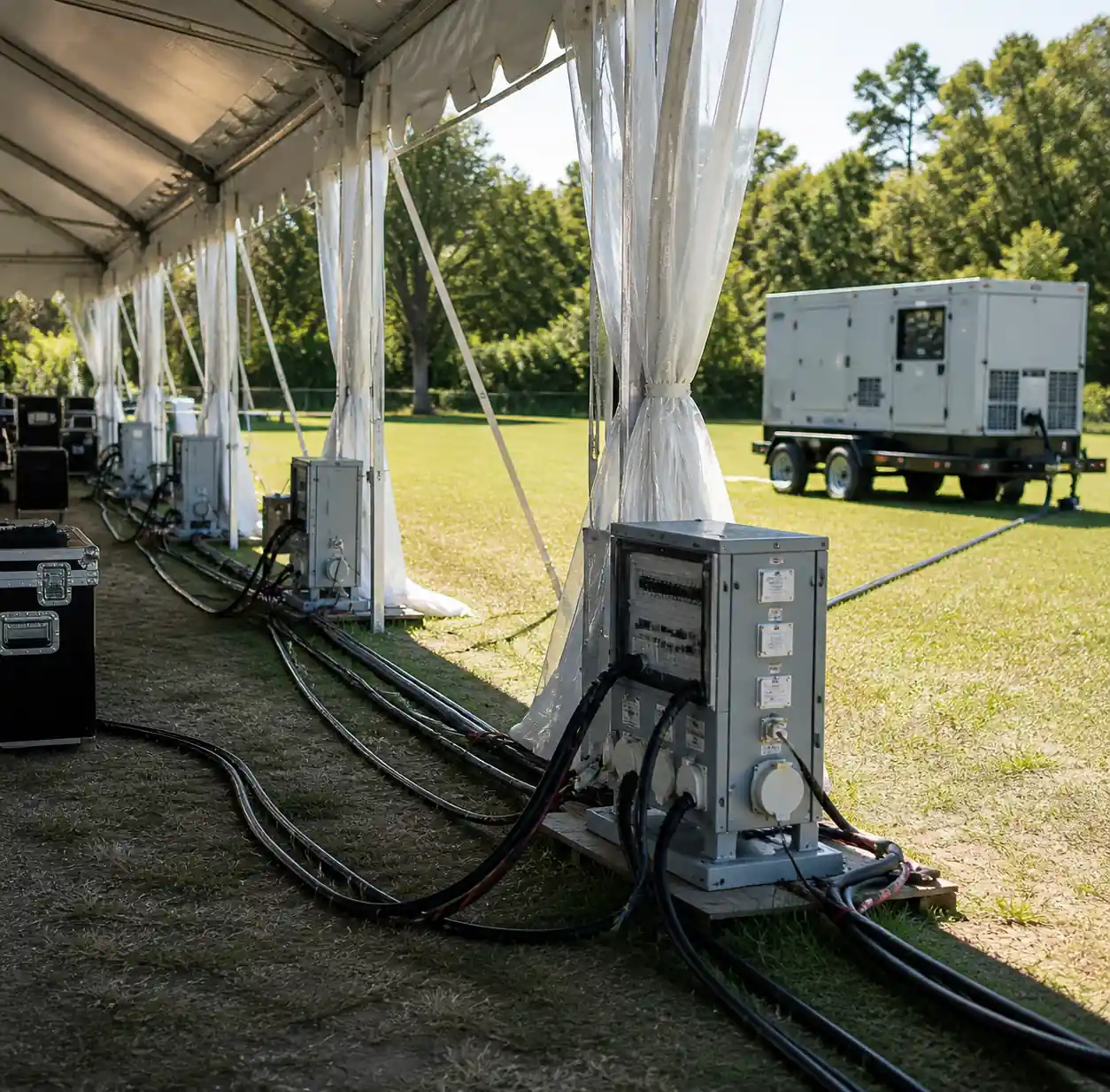 Commercial event tent with visible power distribution boxes and generator positioning for 200-guest reception
These numbers account for perimeter bistro lights, centerpiece illumination, DJ/band equipment, and catering warmers—not just decorative fixtures. The 6,200W figure for 50 guests breaks down as approximately 4,000W for lighting fixtures (string lights, uplights, pin spots) and 2,200W for ancillary equipment (sound system, catering equipment, HVAC fans in climate-controlled tents).
For events in clear tent structures where natural daylight transitions to evening, your lighting system must compensate for the transparency—you'll need 20-30% more wattage than opaque tent fabrics to achieve equivalent brightness levels after sunset.
LED vs. Incandescent: Power Draw Comparison
The transition from incandescent to LED technology fundamentally changed outdoor event economics. Here's the actual difference:
| Fixture Type | Incandescent Power | LED Equivalent Power | Brightness (Lumens) | Heat Output |
|---|---|---|---|---|
| String Light Strand (25 bulbs) | 175W | 25W | 2,000-2,500 | Minimal vs. High |
| Chandelier (6-arm) | 360W | 48W | 4,800-5,400 | Minimal vs. Extreme |
| Uplight (per unit) | 150W | 12W | 1,200-1,500 | Minimal vs. Moderate |
| Pin Spot (centerpiece) | 75W | 8W | 600-800 | Minimal vs. Moderate |
A 100-guest reception using traditional incandescent fixtures consumes approximately 14,000W. Switching to LED drops that to 2,100W—an 85% reduction. This isn't just about generator rental costs (though that's significant). LED efficiency means:
- Smaller, quieter generators positioned farther from event spaces
- Reduced fuel consumption and runtime logistics
- Lower heat emissions in enclosed tent structures
- Extended fixture lifespan (50,000 hours vs. 1,200 hours for incandescents)
For wedding solution projects where multi-day installations are common, LED technology eliminates the need for mid-event bulb replacements that plague incandescent setups.
Lighting Types for Tented Events
Professional tent lighting relies on four distinct categories, each serving specific functional and aesthetic purposes:
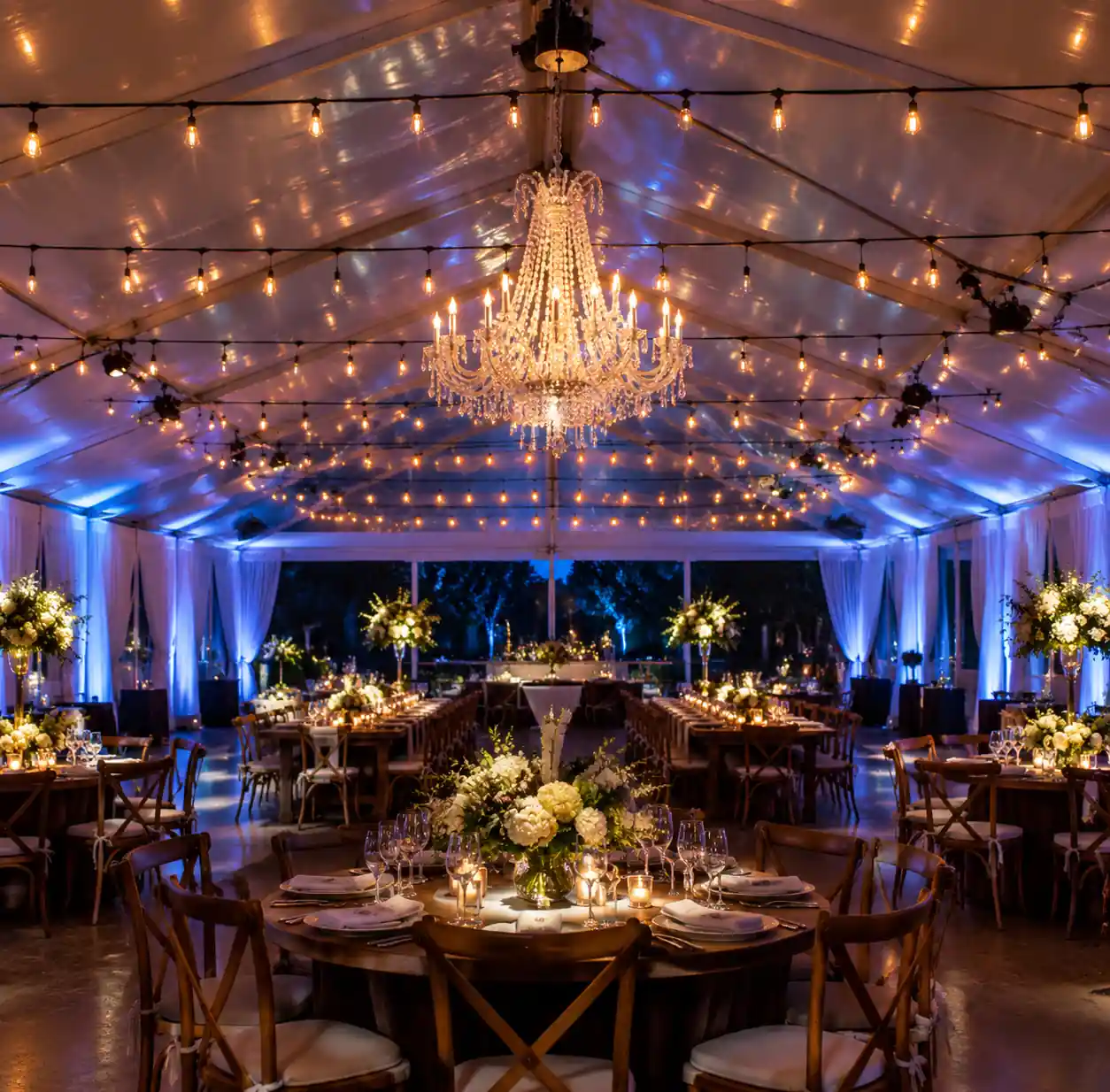 Layered tent lighting showing bistro string lights, crystal chandelier, and perimeter uplights in wedding reception tent
Bistro/String Lights: Commercial-grade C9 or Edison bulbs on 12-14 gauge wire. Installation patterns include grid (perpendicular lines creating ceiling coverage), perimeter (outlining tent structure), and radiant starburst (converging lines to a central chandelier). String lights provide 60-70% of ambient illumination in most tented events.
Chandeliers: Suspended statement pieces that serve as both focal points and primary overhead lighting. Crystal chandeliers work for formal galas, while rustic wood-beam fixtures suit vineyard or barn-style tents. Typical suspension height is 8-10 feet above finished floor, ensuring clearance while maintaining intimate scale.
Uplighting: Battery-powered or wired LED fixtures positioned at tent perimeter, washing sidewalls with colored or white light. Proper uplight spacing is 8-10 feet apart for seamless coverage. These define vertical space and prevent the "floating ceiling" effect common in poorly lit tents.
Specialty Fixtures: Pin spots highlight centerpieces, gobo projectors add texture to fabric walls, and fairy lights create delicate accent layers. These represent 15-20% of total lighting but deliver disproportionate visual impact.
For events requiring VIP reception solution aesthetics, layering all four categories creates depth and sophistication that single-source lighting cannot achieve.
Generator Sizing and Electrical Infrastructure
Generator capacity must account for startup surge (inrush current) and sustained load. Use this formula:
Required Generator Capacity = (Total Wattage × 1.25 surge factor) ÷ 0.8 efficiency
For a 10,000W lighting system:
(10,000W × 1.25) ÷ 0.8 = 15,625W = 16kW generator minimum
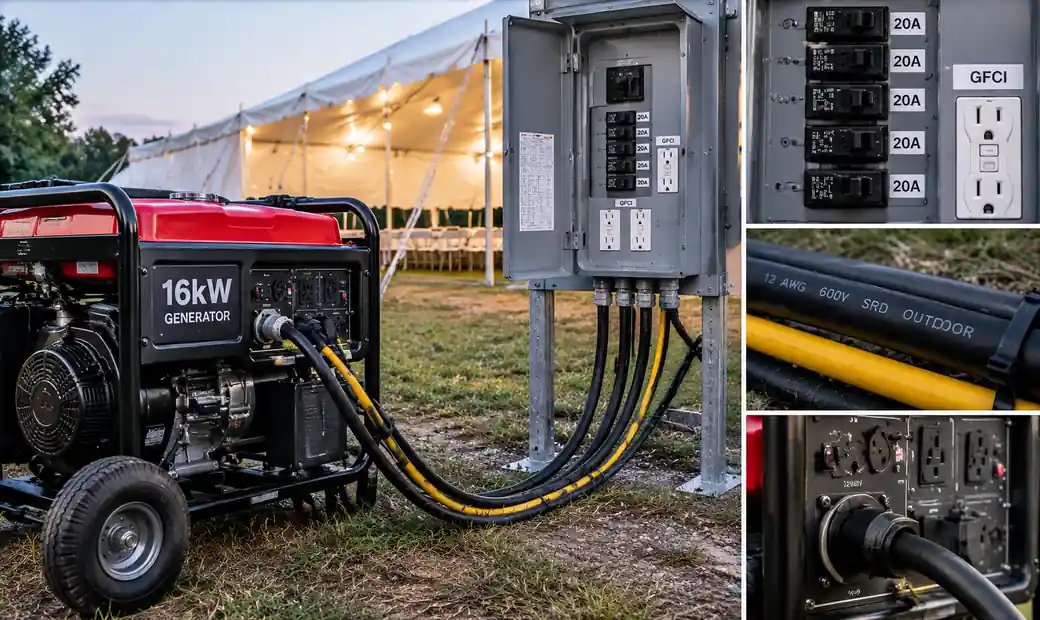 16kW generator connected to GFCI-protected distribution panel with dedicated 20A circuits for tent lighting zones
Undersizing generators causes voltage drops that flicker lights and damage equipment. The 1.25 surge multiplier accounts for transformer-based fixtures and motor-driven equipment (fans, sound systems) that draw 2-3× rated power during startup.
Distribution Strategy: Run dedicated 20A circuits for each lighting zone. A 100-foot tent typically requires 3-4 distribution boxes positioned at quarter-points along the perimeter. Use 12-gauge outdoor-rated cable for runs under 100 feet; upgrade to 10-gauge beyond that to minimize voltage drop.
Alternative Power Solutions:
- Battery-operated LED systems (viable for 4-6 hour events under 100 guests)
- Solar-charged battery banks (requires 48-hour advance setup for full charge)
- Hybrid generator/battery systems (generator charges battery banks during daytime setup, batteries power silent evening event)
These alternatives work when generator noise exceeds site restrictions or when electrical hookups are unavailable.
Installation Methods and Structural Considerations
Tent lighting installation follows three primary methods, each with distinct structural requirements:
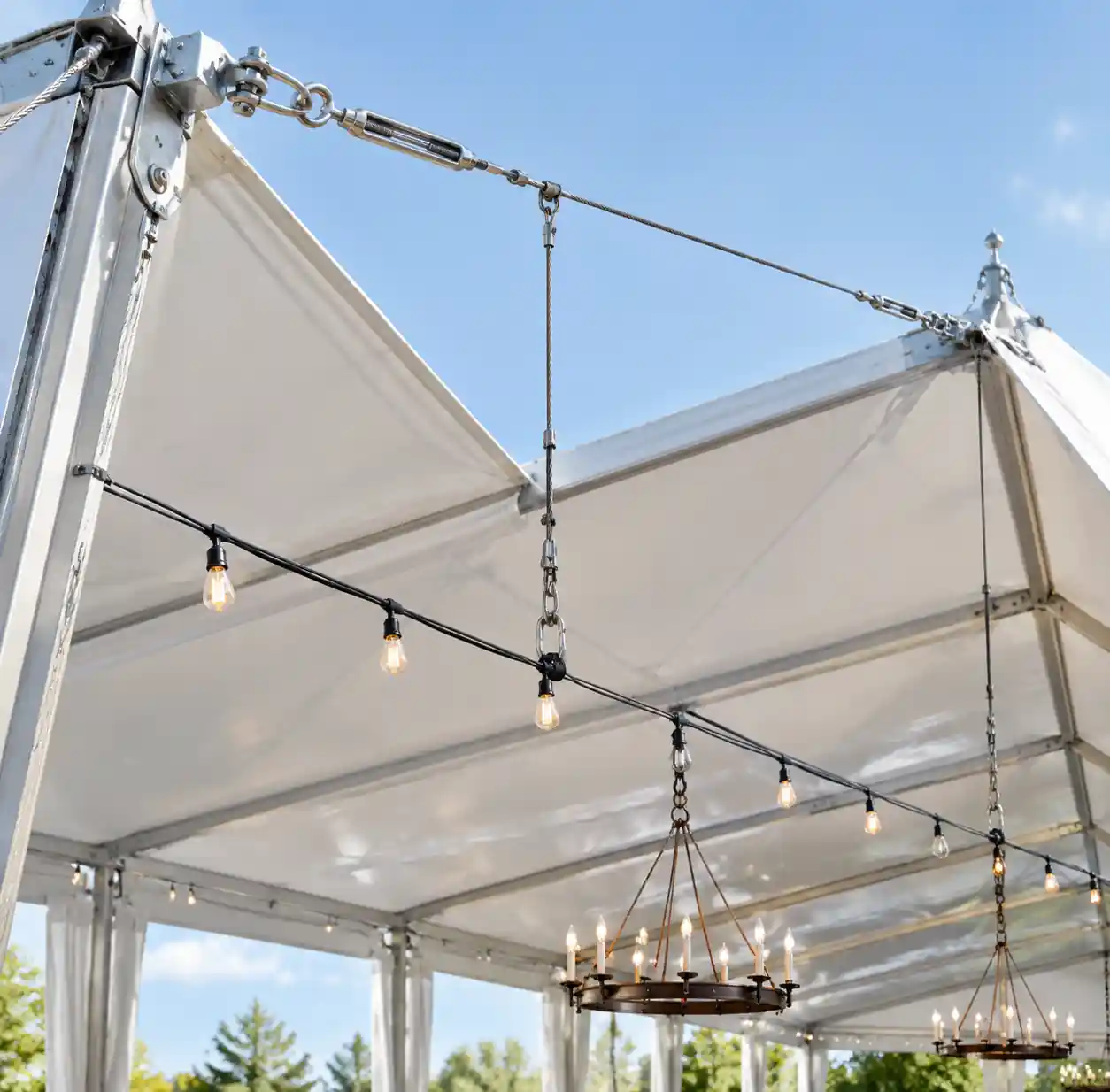 Aircraft cable rigging system with turnbuckles and drop lines for suspended tent lighting installation
Pole-Mounted Systems: Fixtures attach directly to tent poles via clamps or brackets. This method suits frame tents with rigid aluminum poles capable of bearing 50-75 lbs per connection point. Advantage: no additional rigging required. Limitation: lighting layout constrained by pole locations.
Suspended Cable Systems: Install aircraft cable or guide wire across tent peaks, then hang fixtures from drop lines. Requires 1/8" or 3/16" stainless steel cable rated for 2,000 lbs working load, tensioned to 200-300 lbs with turnbuckles. This method enables custom lighting patterns independent of tent structure. Critical consideration: anchor points must resist 500+ lbs horizontal pull—verify tent manufacturer load ratings before installation.
Truss Systems: Aluminum box truss creates elevated grid structures for complex lighting rigs. Used primarily for concerts, corporate stages, or events requiring precision fixture aiming. Truss installation demands certified rigging professionals and increases setup time by 4-6 hours.
Wind Load Calculations: Outdoor installations must account for wind pressure on suspended fixtures. A 30-foot bistro light run with 25 bulbs presents approximately 3 square feet of wind surface area. At 30 mph winds (common in evening conditions), this generates 20-25 lbs of lateral force. Multiply by the number of runs and add 40% safety factor to determine total anchor point requirements.
String lights installed in grid patterns distribute wind load across multiple attachment points, while perimeter installations concentrate force on tent corner poles—plan accordingly.
Creating Layered Lighting Design
Professional tent lighting operates in layers, each controlled independently to shift ambiance throughout event progression.
Layer 1: Ambient Base (60-70% of total light)
String lights or distributed chandeliers provide even, soft illumination across the entire space. Aim for 10-15 foot-candles at table height—bright enough to read menus, soft enough to feel intimate.
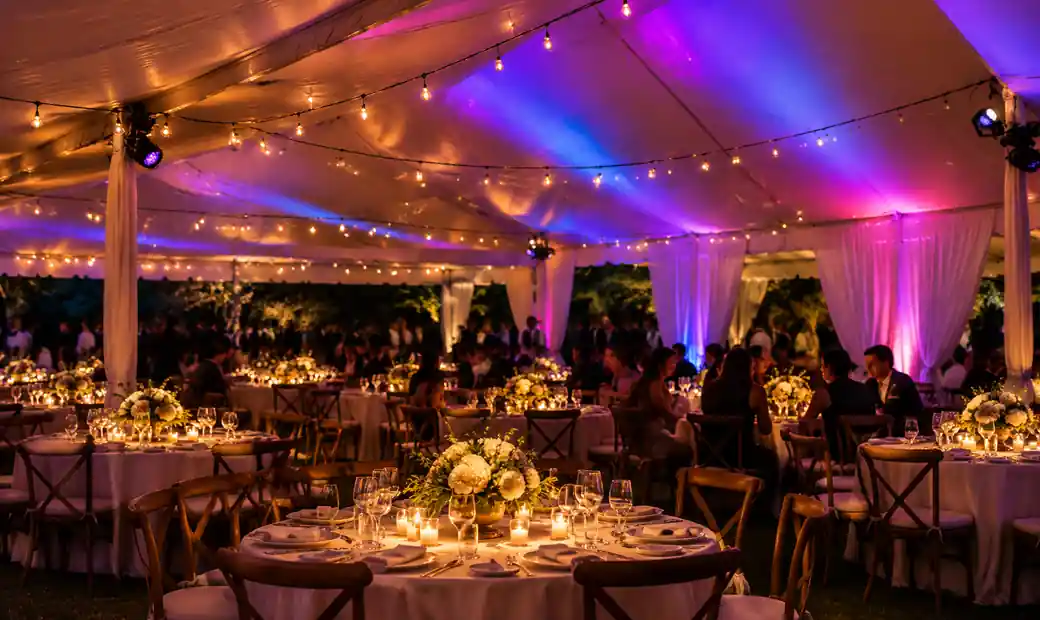 Three-layer lighting design in action showing ambient bistro lights, accent uplights, and programmable color-changing LEDs
Layer 2: Accent Lighting (20-25% of total light) Uplights, pin spots, and directional fixtures highlight architectural features, centerpieces, and focal areas. Position uplights 3-4 feet from tent walls, angled at 45 degrees to maximize fabric texture. Pin spots over centerpieces should mount 12-15 feet overhead with 15-degree beam angles to avoid spill onto guests.
Layer 3: Dynamic/Programmable (10-15% of total light) Color-changing LED systems adapt throughout event phases—cool whites during cocktails, warm amber for dinner, saturated colors for dancing. DMX-controlled systems enable programmed transitions, but even battery-powered fixtures with remote control deliver this flexibility.
Timing Strategy: Introduce artificial lighting 20-30 minutes before the tent becomes noticeably dark. Gradual transition prevents harsh contrast and maintains guest comfort. For sunset events, activate Layer 1 at 80% capacity during late afternoon, then bring Layers 2-3 online as natural light fades.
This approach prevents the common mistake of "switching on" lights at full intensity once darkness falls—which creates jarring adjustment for guests and exposes how little natural light remains.
Color Temperature and Ambiance Control
Color temperature selection determines whether your tent feels like an elegant restaurant or a construction site. Measured in Kelvin (K), here's how different temperatures perform:
| Color Temperature | Kelvin Range | Optimal Application | Psychological Effect |
|---|---|---|---|
| Warm White | 2700-3000K | Dinner service, lounges, intimate gatherings | Relaxing, romantic, inviting |
| Neutral White | 3500-4000K | Cocktail hours, registration areas | Energizing, social, approachable |
| Cool White | 4500-5500K | Task lighting, catering prep zones | Alert, functional, clinical |
| Daylight | 5500-6500K | Avoid for guest spaces (use for back-of-house only) | Harsh, utilitarian |
Professional Standard: Use 2700-3000K warm white as your ambient base (Layer 1), then add 3500-4000K neutral white accents (Layer 2) for bars and buffet lines where guests need clear visibility. Never mix color temperatures within the same visual zone—the human eye perceives mismatched temperatures as "off" even when guests can't articulate why.
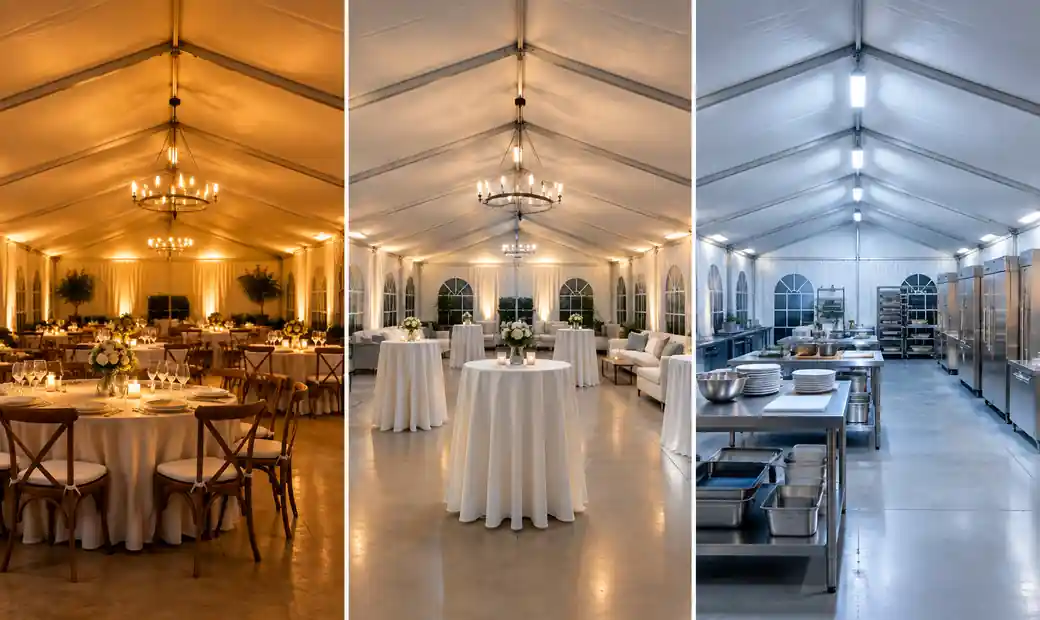 Side-by-side comparison of 2700K warm white, 3500K neutral white, and 4500K cool white lighting in identical tent setups
RGB vs. Fixed White: Color-changing RGB fixtures offer flexibility but often sacrifice light quality. Cheap RGB LEDs produce inferior color rendering index (CRI) ratings below 80, making skin tones appear sallow and food look unappetizing. If using RGB systems, specify fixtures with CRI 90+ ratings and calibrate to warm white for dining periods.
For multi-day events or clear tent installations where daytime visibility matters, install fixtures on dimmer circuits rather than relying on on/off switches. Dimming to 30-40% during twilight periods maintains visual continuity without wasting power.
Safety Regulations and Load Calculations
Outdoor event lighting falls under NFPA 70 (National Electrical Code) and OSHA 1926 construction standards when temporary power systems are involved. Key requirements:
Ground Fault Protection: All outdoor circuits require GFCI protection within 12 inches of the power source. Standard 15A GFCI breakers handle up to 1,800W; larger lighting systems need 20A or 30A GFCI-protected distribution panels.
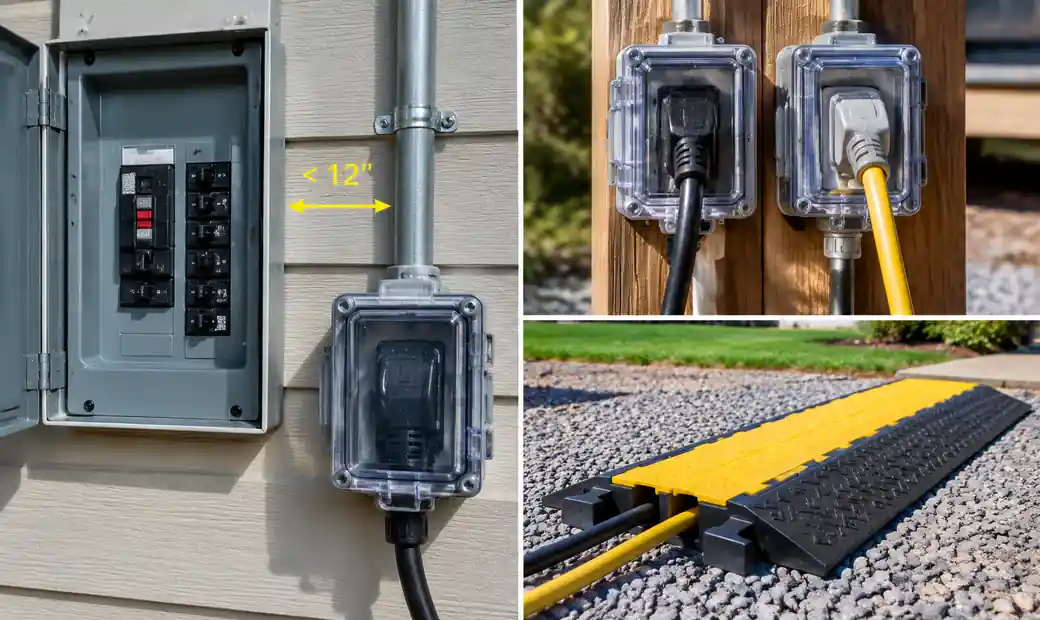 GFCI-protected outdoor electrical connections with IP65-rated weatherproof junction boxes for tent lighting circuits
Overcurrent Protection: Circuit breakers must be sized to 125% of continuous load. A lighting system drawing 12A continuous requires a 15A breaker minimum (12A × 1.25 = 15A). Running at 100% breaker capacity for extended periods (3+ hours) violates code and creates fire risk.
Cable Management: Overhead cables must maintain 10-foot clearance above finished floor in pedestrian areas, 12 feet over vehicle pathways. Ground-level cable runs require UL-listed cord covers (yellow rubber ramps) rated for both pedestrian and vehicle traffic when crossing walkways.
Weather Protection: All connections (plug-to-receptacle, fixture-to-cable) must be rated IP65 or higher for outdoor use, or enclosed in weatherproof junction boxes. Exposed connections without proper sealing fail electrical inspection and present shock hazards in wet conditions.
Structural Load Verification: Before attaching lighting systems to tent frames, verify manufacturer load ratings. Standard 40×60 frame tents support 50-75 lbs per pole connection point, but tension fabric structures and clearspan designs have different capacities. When in doubt, consult the tent supplier's engineering specifications—verbal assurances from setup crews aren't sufficient documentation.
FAQ
How much power does a 100-person wedding tent need for lighting? Plan for 10,000-12,000 watts minimum, requiring a 15-16kW generator. This includes bistro lights (4,000W), uplighting (800W), chandeliers or centerpiece lighting (2,000W), DJ equipment (2,000W), and catering equipment (2,200W). LED fixtures reduce this by 60-80% compared to incandescent systems.
Can I use regular extension cords for outdoor tent lighting? No. Outdoor tent lighting requires UL-listed SJTW or SJOOW cable rated for wet locations, with ground fault protection. Household extension cords lack weather sealing and proper gauge for sustained outdoor loads. Use 12-gauge minimum for runs under 100 feet, 10-gauge beyond that.
What's the difference between battery-powered and plug-in uplights? Battery-powered uplights offer 8-12 hour runtime and eliminate cables (cleaner aesthetic), but cost 3-4× more to rent and require individual programming. Plug-in fixtures provide unlimited runtime and lower cost but demand visible power cables and distribution boxes. For events under 6 hours with budgets allowing, battery systems deliver superior results.
How do I prevent lights from flickering during events? Flickering indicates voltage drops from undersized generators, overloaded circuits, or loose connections. Solutions: size generator to 125% of total load, run dedicated 20A circuits per zone, verify all connections are tight and weatherproofed, and use LED fixtures with built-in voltage regulation (most commercial units above $50/fixture include this).
When should I turn on lights for an outdoor evening event? Activate lighting systems 20-30 minutes before the tent becomes noticeably dark—typically 45-60 minutes before official sunset. Start at 60-70% intensity during twilight, then gradually increase to full power as darkness falls. Sudden lighting changes at full intensity feel jarring and expose how dark it has become.
Do string lights provide enough light for dinner service? String lights alone deliver 30-50% of recommended illumination for dining (target: 10-15 foot-candles at table height). Supplement with pin spots over centerpieces or uplights bounced off tent ceilings to reach proper levels. Alternatively, use string lights with higher-wattage bulbs (11W LED instead of 7W) and tighter spacing (18-inch vs. 24-inch intervals).
Conclusion
Outdoor event lighting transforms basic tent structures into sophisticated venues, but success depends on engineering fundamentals most decorators overlook. Power requirements scale non-linearly—doubling guest count often triples electrical demand when you account for expanded tent footprints and increased equipment. LED technology has fundamentally changed the economics, cutting generator requirements by 70-85% while improving reliability and eliminating mid-event maintenance.
The layered approach—ambient base, targeted accents, and dynamic programmable systems—creates depth that single-source lighting cannot match. Control each layer independently, time your lighting activation before darkness becomes noticeable, and specify warm color temperatures (2700-3000K) as your foundation. When designing installations for premium venues, the same principles that elevate wedding solution projects apply across corporate events, galas, and private celebrations: calculate loads accurately, verify structural capacity before rigging, and build redundancy into critical systems. Professional event production means your lighting never becomes the story—it creates the environment where your client's story unfolds.