


Latin America Festival Tent Guide: Humidity & Rain Solutions
Latin America's festival industry generates over $4.2 billion annually, with outdoor events facing unique challenges from tropical humidity levels reaching 80-95% and rainfall rates exceeding 2,500mm per year in regions like the Amazon Basin and Central America. If you want to host successful festivals in Brazil, Mexico, Colombia, or other Latin American countries, then you will need to understand specialized tent solutions that combat moisture, prevent mold, and maintain structural integrity during intense tropical storms.
In today's guide, we will explain the critical humidity-resistant tent systems, rain protection strategies, ventilation requirements, and drainage engineering needed for Latin American festival infrastructure. This comprehensive guide will help you select, install, and maintain event tents that perform reliably in hot-humid climates while ensuring guest comfort and event safety.
Table of Contents
Understanding Latin America's Festival Climate Challenges
Latin America spans diverse climate zones, but festival hotspots in Brazil, Mexico, Colombia, and Central America share common environmental challenges that demand specialized tent engineering.
Climate Data by Region
| Region | Average Humidity | Annual Rainfall | Peak Festival Season | Primary Challenge |
|---|---|---|---|---|
| Amazon Basin (Brazil) | 85-95% | 2,300-3,000mm | June-September | Extreme humidity + daily afternoon storms |
| Mexico (Coastal) | 75-85% | 1,000-1,500mm | November-April | Hurricane season moisture + heat |
| Colombia (Andean) | 70-80% | 1,800-2,400mm | December-March | High-altitude rain + temperature swings |
| Central America | 80-90% | 2,000-3,500mm | January-April | Intense rainy season + consistent moisture |
You can see from this data that traditional event tents designed for temperate climates fail rapidly in Latin American conditions. The combination of sustained high humidity and intense rainfall requires specialized fabric treatments, enhanced ventilation, and engineered drainage systems that standard festival infrastructure simply cannot provide.
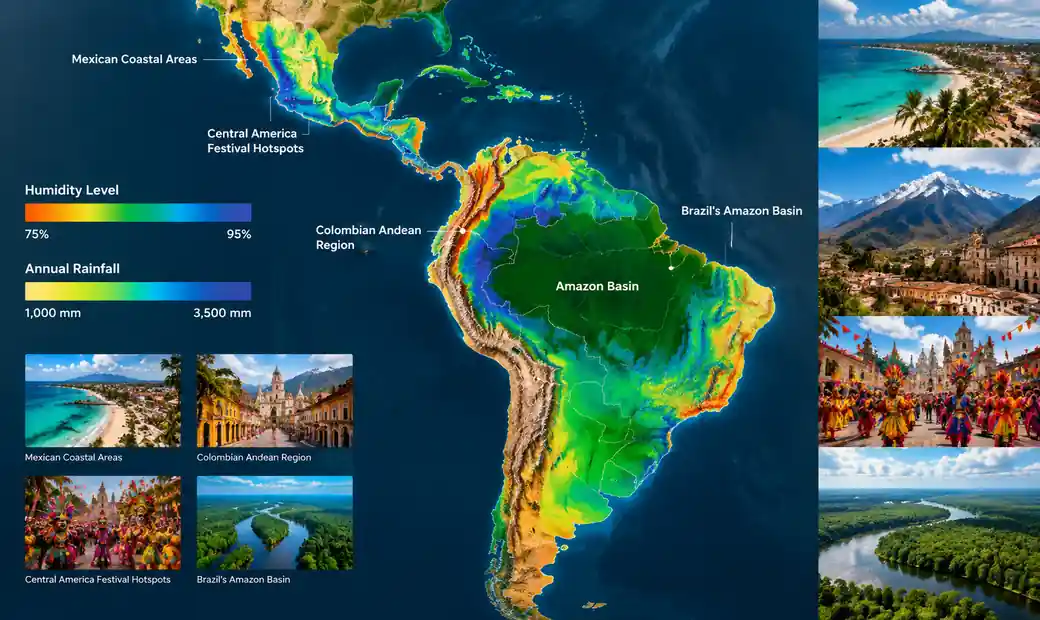 Latin America festival climate zones showing humidity and rainfall patterns across Brazil, Mexico, Colombia, and Central America
Humidity-Resistant Tent Fabric Systems
Specialized PVC Coating for Moisture Resistance
Festival tents in Latin America require PVC-coated polyester fabric with minimum 850g/m² weight and anti-fungal treatments. Standard 650g/m² fabrics absorb moisture and develop mold within 48-72 hours of continuous 80%+ humidity exposure.
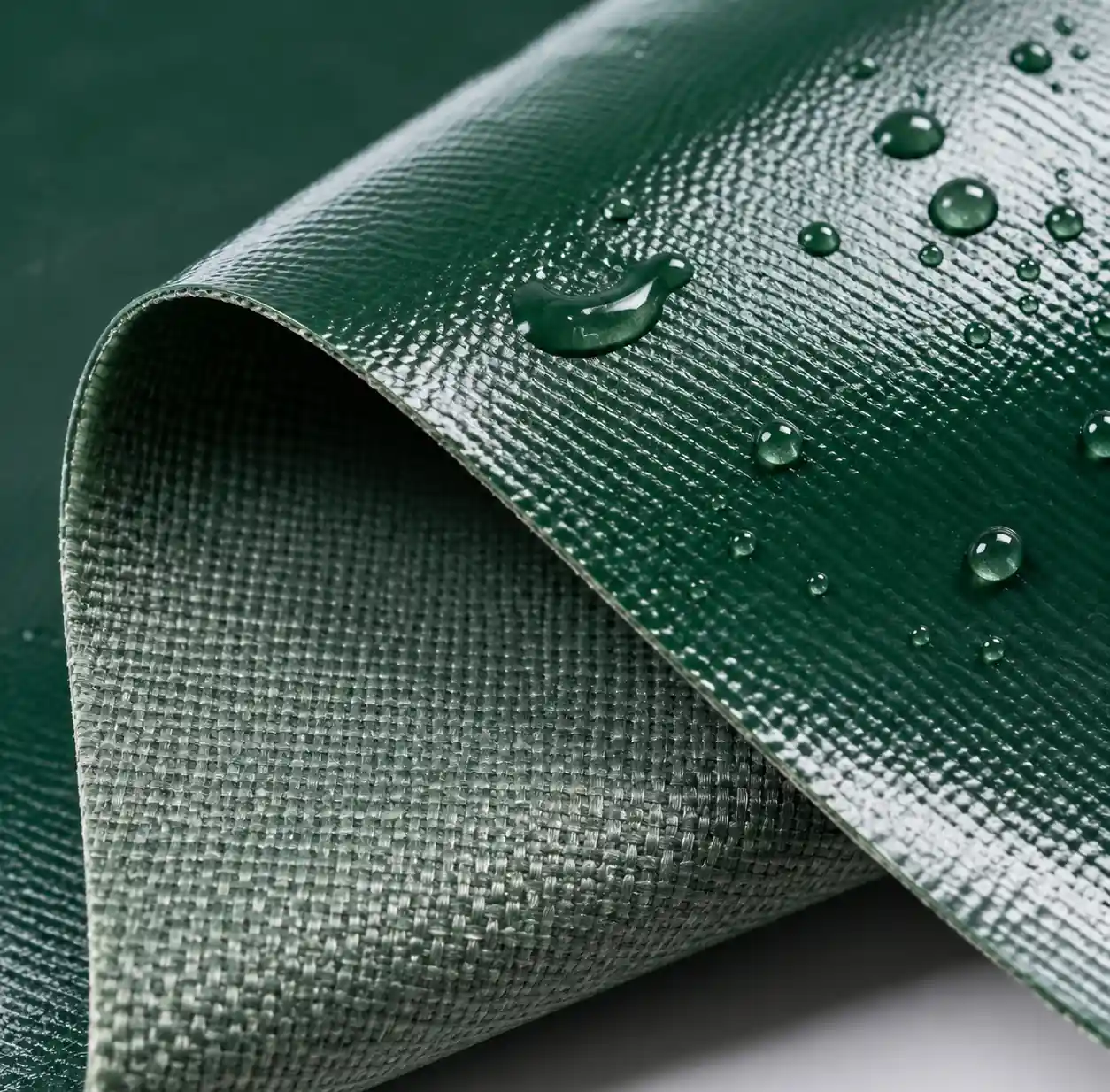 Close-up of 850g/m² PVC-coated polyester tent fabric with anti-fungal treatment for humid climates
Key Fabric Specifications:
- Weight: 850-1,000g/m² PVC-coated polyester
- Water Resistance: Minimum 3,000mm hydrostatic head rating
- UV Resistance: Class 4 UV stabilization
- Anti-Fungal Treatment: Silver ion or copper-based coating
Fabric Types Comparison
| Fabric Type | Humidity Performance | Rain Resistance | Mold Resistance | Cost per m² | Best Application |
|---|---|---|---|---|---|
| Heavy PVC (850g/m²) | Excellent | 3,000mm+ | High with treatment | $18-25 | Main festival stages, VIP areas |
| PVDF-Coated | Superior | 4,000mm+ | Very High | $28-35 | Long-duration festivals (5+ days) |
| Breathable PVC | Very Good | 2,500mm+ | Medium-High | $22-30 | Vendor areas, hospitality zones |
| Standard Canvas | Poor | 1,500mm | Low | $12-18 | NOT recommended for Latin America |
You should specify heavy-duty PVC with anti-fungal treatment for festivals lasting more than 2 days. This reduces fabric replacement costs by 60% over 3 years compared to standard materials.
Rain Protection & Drainage Engineering
Roof Pitch & Water Management
Latin American tropical storms deliver rainfall rates up to 100mm per hour. Standard tent roof pitches of 15-20 degrees are insufficient for these conditions.
Engineering Requirements:
- Minimum Roof Pitch: 25-30 degrees for effective water runoff
- Reinforced Valleys: Double-layer fabric at valley joints to handle water concentration
- Gutter Systems: Integrated aluminum gutters with 150mm diameter capacity
- Drainage Capacity: Design for 120mm/hour rainfall rate (20% safety margin)
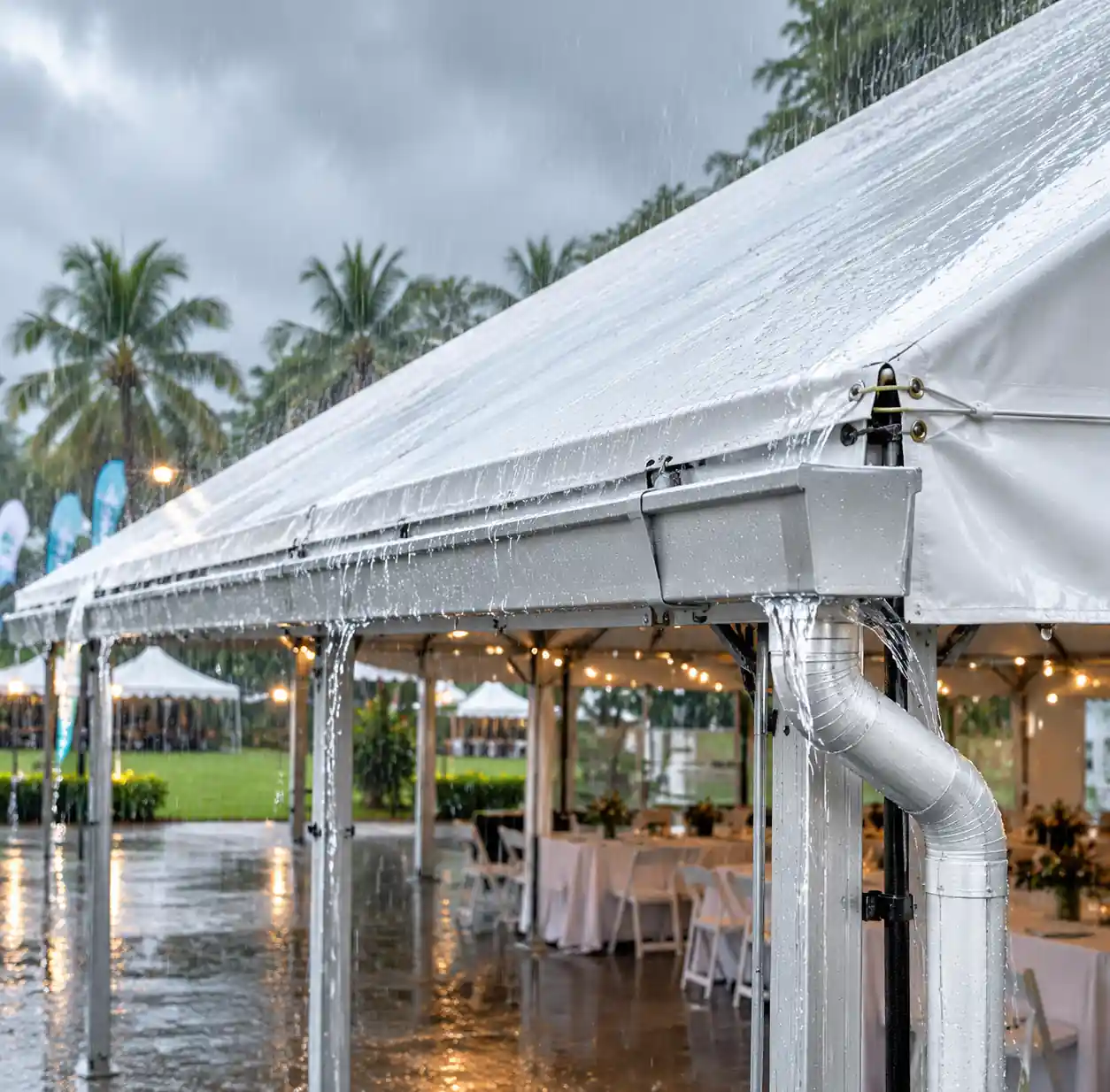 Festival tent roof drainage system with 25-30 degree pitch and integrated gutters during tropical rainstorm
Ground Drainage Solutions
Tropical soil saturation creates unique anchoring challenges. Festival sites in Brazil's coastal regions can experience ground water levels rising 30-40cm during multi-day events.
You can implement elevated flooring systems with integrated drainage to prevent water pooling inside wedding marquees and festival structures. Aluminum-framed raised floors with 150mm clearance allow water to flow beneath the structure while maintaining comfort.
Ground Preparation:
- Install perimeter French drains 500mm deep
- Grade site with 2-3% slope away from tent center
- Use crushed stone base (100mm depth)
- Deploy sandbag barriers at entrances during rain
Ventilation Systems for Hot-Humid Climates
Natural Ventilation Engineering
High humidity combined with temperatures of 28-35°C creates oppressive conditions inside sealed tents. You need minimum 12 air changes per hour to maintain guest comfort.
Ventilation Specifications:
- Sidewall Vents: Mesh panels covering 15-20% of sidewall area
- Ridge Vents: Continuous 300mm ridge opening with rain protection
- Cross-Flow Design: Opposing vent placement for natural circulation
- Clearance Height: Minimum 4.5m interior height
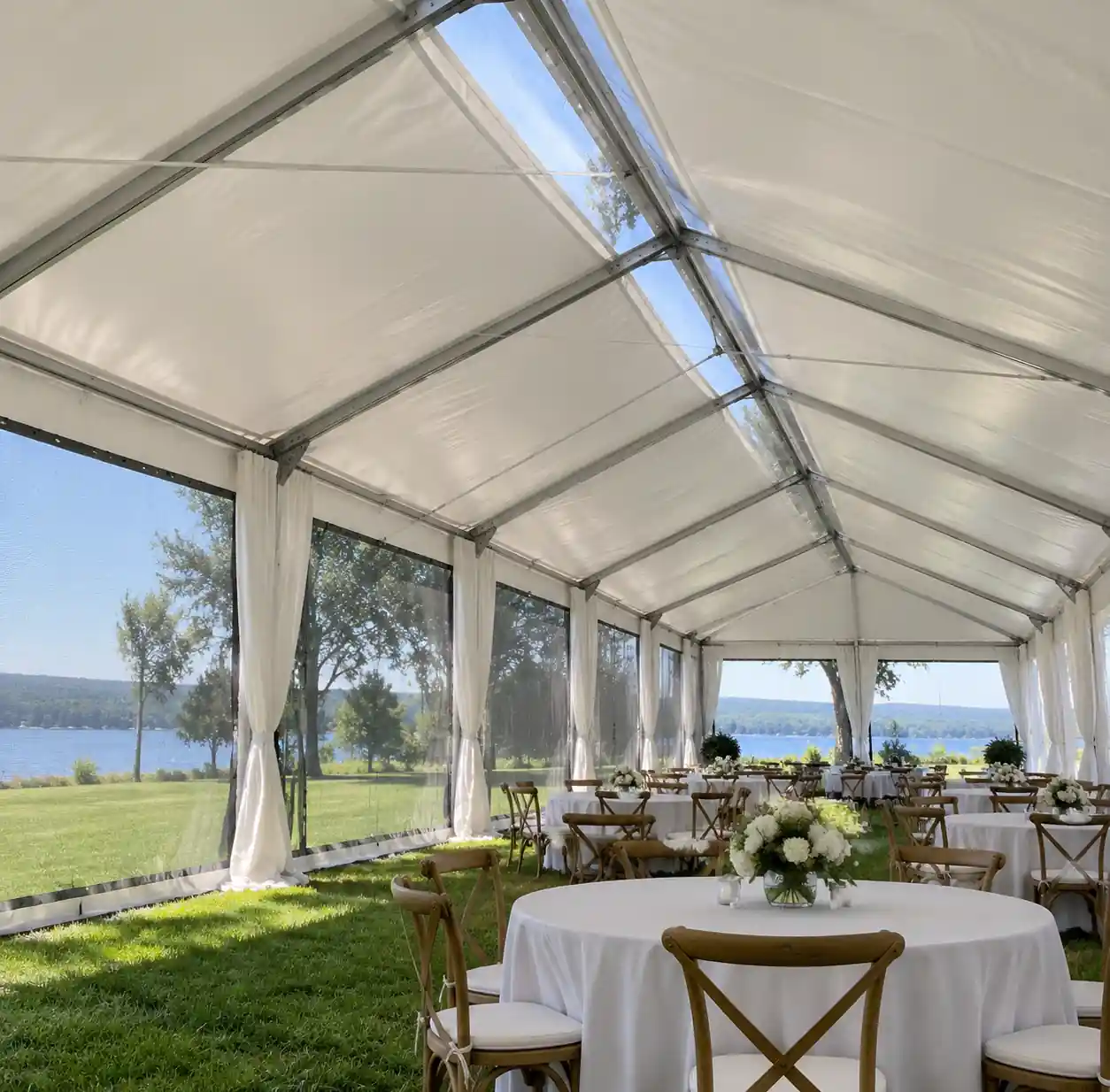 Festival tent sidewall mesh ventilation panels and ridge vents for hot-humid climate air circulation
You can use clear span tents with transparent roof sections to reduce heat absorption. This lowers interior temperatures by 8-12°C compared to solid-roof configurations.
Mechanical Ventilation Options
| System Type | Air Flow Capacity | Power Required | Coverage Area | Cost | Best For |
|---|---|---|---|---|---|
| Evaporative Coolers | 18,000 m³/hour | 1.5 kW | 200-300 m² | $800-1,200 | Main festival areas |
| Industrial Fans | 12,000 m³/hour | 0.75 kW | 150-200 m² | $400-600 | VIP zones, vendor areas |
| HVAC Systems | Variable | 5-15 kW | 400-600 m² | $3,500-6,000 | Premium events only |
| Misting Systems | N/A | 0.5 kW | 100-150 m² | $600-900 | Outdoor transition zones |
For multi-day festivals exceeding 2,000 attendees, combining natural ventilation with evaporative cooling provides optimal cost-to-performance ratio. This hybrid approach reduces power consumption by 40% compared to full HVAC.
Mold Prevention & Fabric Maintenance
Anti-Fungal Treatment Protocols
Mold growth begins within 24-48 hours when fabric moisture exceeds 20% in 80%+ humidity. Untreated tents develop visible mold after just 3 days of continuous use.
Prevention Strategies:
- Pre-Event Treatment: Apply quaternary ammonium anti-fungal spray 48 hours before installation
- Daily Inspection: Check fabric tension and moisture at valley joints
- Rapid Drying: Deploy portable fans after rain events
- Preventive Rotation: Alternate tent sections for multi-week festivals
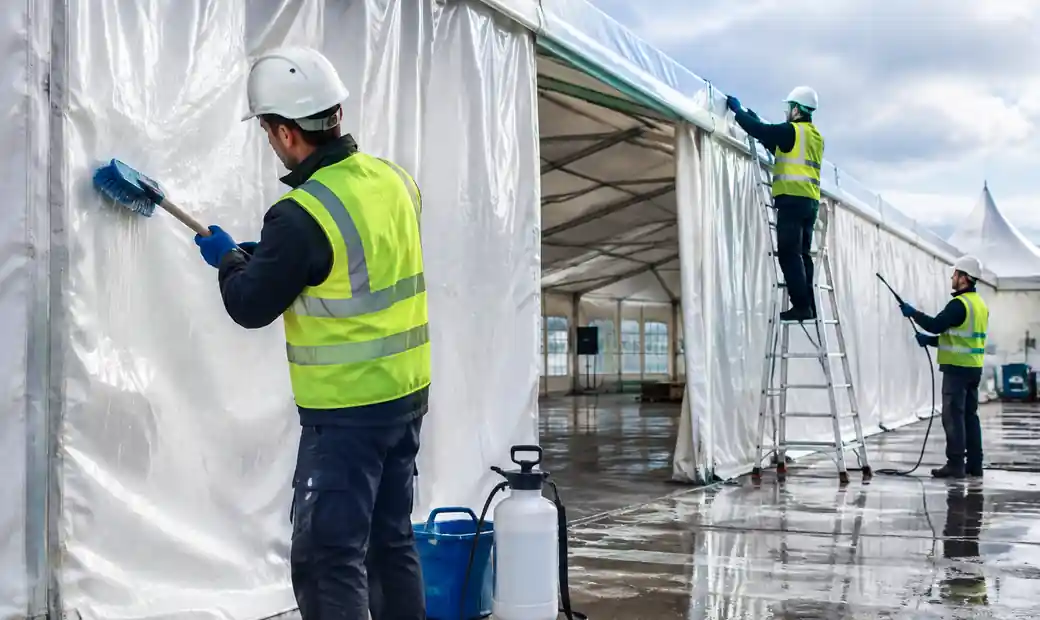 Professional crew cleaning and treating festival tent fabric for mold prevention after humid climate event
Post-Event Cleaning Requirements
Implement thorough cleaning immediately after teardown to prevent permanent mold damage.
Cleaning Process:
- Step 1: Brush off loose dirt while fabric is erected
- Step 2: Wash with mild detergent solution (pH 7-8)
- Step 3: Rinse thoroughly with clean water
- Step 4: Apply anti-fungal treatment during final rinse
- Step 5: Ensure 100% dryness before storage (moisture <15%)
This process extends geodesic dome tent lifespan from 3-4 years to 8-10 years in humid climates, reducing ownership costs by 55%.
Regional Permit Requirements
Brazil Festival Regulations
Brazilian municipalities require specific certifications for temporary structures exceeding 100m² or hosting 200+ people.
Required Documentation:
- Structural Engineering Report: CREA-registered engineer stamp, including wind load (minimum 80 km/h) and rain load analysis
- Fire Safety Certificate: Fabric must meet ABNT NBR 14432 flame-retardant standards
- Insurance: Minimum R$500,000 liability coverage
- Timeline: Submit 45-60 days before event
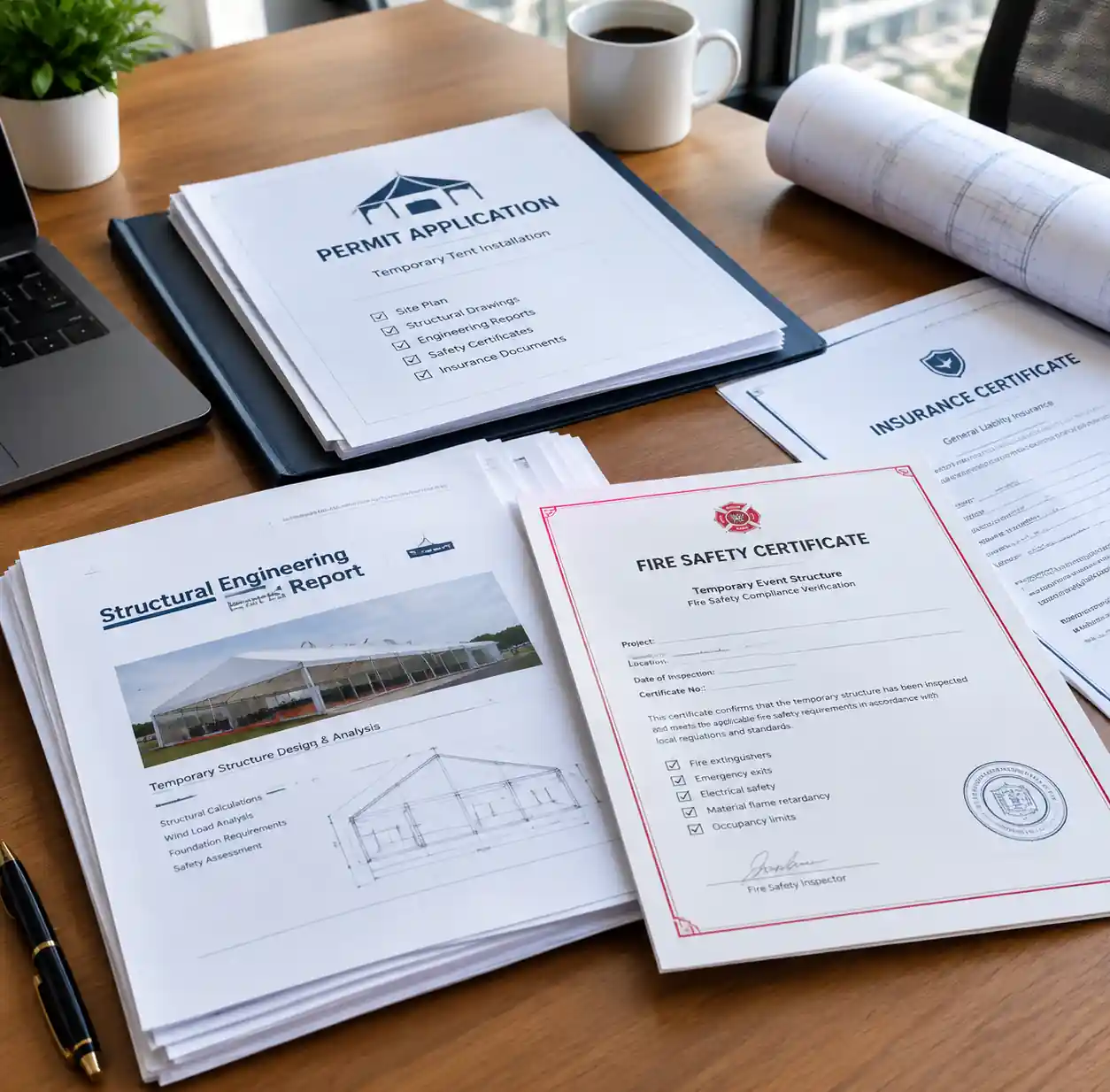 Festival tent structural engineering certification and permit documents for Brazil and Mexico events
Mexico Permit Process
Mexico's requirements vary by state but follow federal Protección Civil guidelines.
Key Requirements:
- Municipal Permit: Required for events exceeding 500 attendees
- Fire Marshal Inspection: Mandatory for tented structures over 200m²
- Structural Certification: Engineer must certify NTC compliance
- Processing Time: 30-45 days in major cities, 15-20 days in smaller municipalities
Work with local permit expeditors who understand regional variations, especially in Quintana Roo, Jalisco, and México State.
Compliance Checklist
- [ ] Obtain structural engineering certification from locally-registered professional
- [ ] Verify fabric fire-retardant certification meets national standards
- [ ] Secure liability insurance with country-specific minimum coverage
- [ ] Submit permit applications within required timeline (45-60 days recommended)
- [ ] Schedule pre-event inspections with local fire and safety authorities
- [ ] Prepare emergency evacuation plans for approval
- [ ] Ensure anchoring systems meet local wind load requirements (typically 100-120 km/h)
For exhibition marquees and sports event tents, additional accessibility and capacity documentation may be required depending on venue location and attendee count.
FAQ
What humidity level requires specialized festival tent fabric?
Any sustained humidity above 75% for more than 8 hours daily requires anti-fungal treated PVC fabric with minimum 850g/m² weight. Standard 650g/m² fabrics develop mold within 48-72 hours in these conditions.
How much does humidity-resistant tent installation cost?
Heavy-duty PVC festival tents cost $22-35 per m² compared to $15-22 for standard tents. However, this 30-40% premium delivers 60% longer lifespan in humid climates, making it cost-effective for regular use.
What ventilation rate prevents condensation in humid tents?
You need minimum 12 air changes per hour to prevent condensation buildup. This requires mesh sidewall panels covering 15-20% of wall area plus continuous ridge vents for natural airflow.
How quickly can mold develop on tent fabric?
Visible mold colonies form within 24-48 hours when fabric moisture exceeds 20% in 80%+ humidity. Daily fabric inspection and rapid post-rain drying prevent this growth.
Do I need special anchoring for wet Latin American soil?
Yes. Saturated tropical soil reduces anchoring capacity by 40-50%. Use helix anchors rated 50% higher than standard calculations, or switch to concrete ballast systems for critical structures.
What roof pitch handles tropical storm rainfall?
Minimum 25-30 degree pitch handles rainfall rates up to 120mm/hour. Standard 15-20 degree pitches create dangerous water pooling and potential structural failure during intense storms.
How long does permit processing take in Brazil?
Brazilian permits require 45-60 days for processing in major cities. Rural municipalities may approve faster (30-40 days) but often lack clear guidelines, requiring additional consultation time.
Can standard event tents work for short festivals?
For single-day events under 8 hours, standard tents may suffice if humidity stays below 80%. Multi-day festivals absolutely require specialized humidity-resistant systems regardless of duration.
Conclusion
Latin America's festival infrastructure demands specialized engineering for extreme humidity, intense rainfall, and high temperatures. Successful organizers specify heavy-duty PVC fabrics with anti-fungal treatment, design drainage for 120mm/hour rainfall, and implement ventilation achieving 12+ air changes per hour.
Humidity-resistant tent systems cost 30-40% more initially but deliver 60% longer lifespan and 55% lower total ownership costs. Allocate 45-60 days for permit processing in Brazil and Mexico, working with local engineers to meet structural and fire safety requirements.
If you need festival tent solutions engineered for Latin American climates, Velaria Spatia offers specialized manufacturing including heavy-duty PVC systems, enhanced drainage engineering, and ventilation-optimized designs up to 60-meter clear spans. Our experience with major festivals across tropical regions ensures reliable performance in the most challenging humid conditions.
Contact us today for custom festival tent solutions, humidity-resistant specifications, and competitive factory-direct pricing for Latin American events.