

Tent or Marquee: What's the Difference? Complete Terminology Guide
Understanding temporary event structure terminology can be confusing when "tent" and "marquee" seem interchangeable in some regions yet mean entirely different things in others. This guide clarifies the distinctions based on regional usage, structure types, size conventions, and professional industry standards.
Table of Contents
- 1. Regional Terminology: UK vs US vs International Markets
- 2. Structure-Based Definitions: What Actually Makes a Marquee Different
- 3. Size and Scale Conventions in Professional Use
- 4. Industry Standards: How Manufacturers Define Them
- 5. Consumer vs Commercial Naming Patterns
- 6. Making the Right Choice for Your Project
- 7. FAQ
- 8. Conclusion
Regional Terminology: UK vs US vs International Markets
The confusion between "tent" and "marquee" stems largely from regional language differences that evolved over decades in the event industry.
United Kingdom and Commonwealth Markets
In British English, "marquee" refers to any large temporary fabric structure used for events, regardless of construction method. The term derives from the Middle French word "marquise" and has been standard UK terminology since the early 20th century. When a British client requests a "marquee," they're referring to structures ranging from garden party shelters to massive exhibition halls.
In the UK, "tent" typically suggests smaller recreational structures like camping tents or pop-up shelters. The industry distinction is clear: if it's large enough for an event with seated guests, it's called a marquee.
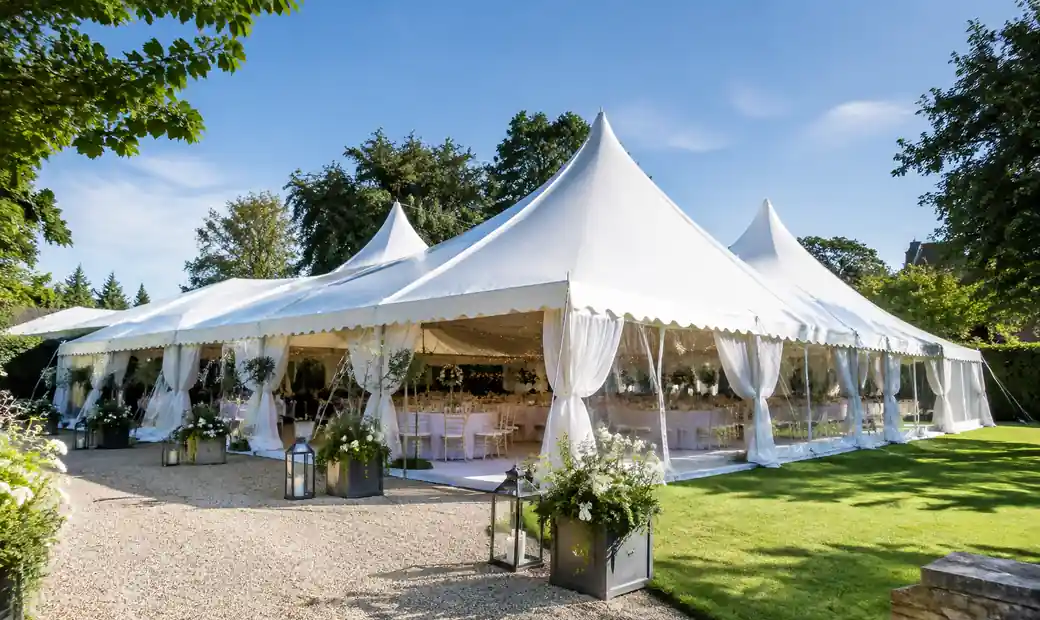 Large white wedding marquee set up in a UK garden venue with peaked roof and elegant entrance
United States Market
American terminology takes the opposite approach. In the US, "tent" is the universal term for temporary fabric structures of all sizes. The Industrial Fabrics Association International (IFAI) defines a tent as "a temporary structure composed of a covering made of a pliable membrane or fabric, supported by mechanical means such as poles, metal frames, beams, columns, arches, ropes and/or cables."
In American English, "marquee" historically referred to the permanent canopy over a theater entrance—not an event structure. However, some US rental companies have adopted "marquee tent" as a specific product category, typically for frame tents with high-peaked roofs.
International Markets: Canada, Australia, and Beyond
Canadian usage blends UK and US conventions. Many rental companies use "marquee" to describe frame-style tents with peaked roofs while using "tent" as the general category term.
Australian terminology follows British conventions, with "marquee" being standard industry language. However, US manufacturer influence has introduced "tent" into common usage, particularly in consumer markets.
In emerging markets across Africa, Asia, and the Middle East, terminology depends on colonial or trade history. Former British colonies tend toward "marquee," while markets with stronger US commercial ties use "tent." Multinational manufacturers like Velaria Spatia adapt terminology to match local expectations.
| Region | Primary Term | Structure Size Implication | Industry Standard |
|---|---|---|---|
| United Kingdom | Marquee | Large event structures | Marquee Hire Association standards |
| United States | Tent | All sizes | IFAI Tent Rental Division standards |
| Canada | Both (context-dependent) | "Marquee" often implies peaked frame | Varies by province |
| Australia/NZ | Marquee | Large event structures | Follows UK conventions |
| Europe (non-UK) | Varies by country | Germany: "Zelt", France: "Chapiteau" | EU EN 13782 standards apply |
Structure-Based Definitions: What Actually Makes a Marquee Different
Beyond regional terminology, genuine structural characteristics distinguish marquees from other tent types in some professional contexts.
Frame Construction: The Core Distinction
In markets where "marquee" has specific structural meaning, it typically refers to frame-supported structures with these characteristics:
- Aluminum or steel frame systems creating clear-span interiors without center poles
- Peaked or high-pointed roof profiles rather than flat or curved designs
- Modular bay systems allowing extension in standardized increments (3m, 5m, or 10m bays)
- Commercial-grade PVC or canvas fabric rated for semi-permanent installation
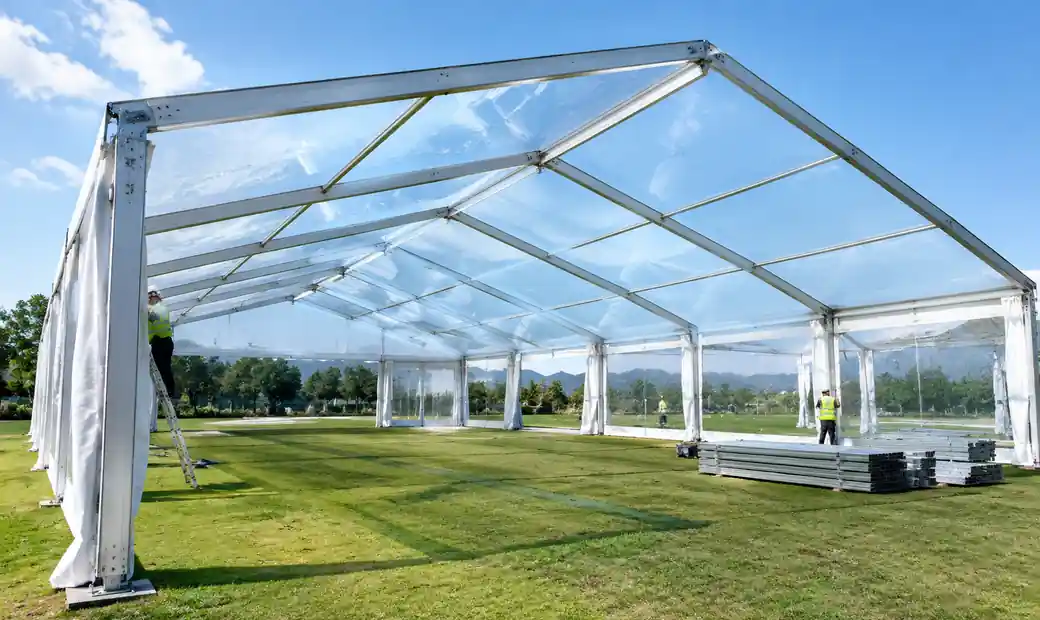 Aluminum frame clear-span tent structure showing modular bay system and frame constructio
This contrasts with pole tents relying on center poles and perimeter tensioning, or tension structures using fabric prestressing for support.
The Clear-Span Advantage
One practical distinction: marquees (frame tents) provide clear-span interiors, meaning no interior poles obstruct the space. A 20m x 30m clear-span marquee offers full freedom for table arrangements, dance floors, and staging. A traditional pole tent of identical size requires working around support poles every few meters.
Structural Engineering Standards
From an engineering perspective, European standard EN 13782 classifies temporary structures by engineering characteristics, not names. Structures are categorized by wind load capacity, snow load rating, and anchoring method. However, structures marketed as marquees tend toward higher load ratings because they target commercial event markets with stricter safety standards.
Size and Scale Conventions in Professional Use
Size conventions represent another layer of the tent vs marquee distinction, though these are informal industry patterns rather than official definitions.
The "Marquee Threshold"
In UK and Commonwealth markets, there's an unspoken size threshold below which structures are rarely called marquees. Garden gazebos, pop-up canopies, and small frame shelters under 3m x 3m are almost never referred to as marquees.
The practical "marquee threshold" typically begins around 6m x 6m—large enough to seat 20-30 guests. Below this, even British suppliers often default to "gazebo," "canopy," or "small tent."
Professional Event Categories
| Structure Size | UK Term | US Term | Typical Capacity | Common Applications |
|---|---|---|---|---|
| Under 3m x 3m | Gazebo/Canopy | Pop-up tent | 4-8 standing | Market stalls, shade |
| 3m x 6m to 6m x 6m | Small Marquee | Frame tent | 15-30 guests | Garden parties |
| 10m x 10m to 15m x 20m | Marquee | Event tent | 50-150 guests | Weddings, corporate |
| 20m x 30m+ | Large marquee | Large frame tent | 200+ guests | Festivals, exhibitions |
| 40m+ width | Exhibition marquee | Clear span structure | 1000+ guests | Trade shows, concerts |
Size-based terminology reflects market positioning more than structural differences. Calling something a "marquee" in UK marketing signals professional, upscale offerings, while "tent" might sound too casual for luxury weddings.
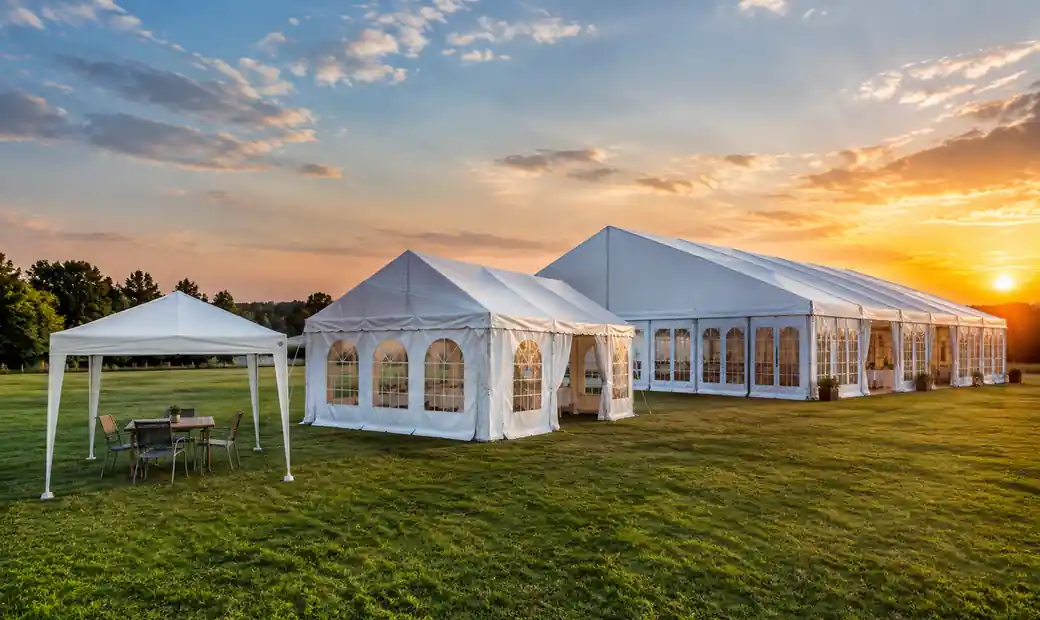 Multiple event tents of different sizes at outdoor venue showing scale comparison
Industry Standards: How Manufacturers Define Them
Professional manufacturers and rental operators use terminology strategically, and their definitions often clarify practical distinctions better than dictionary definitions.
Manufacturing Industry Classifications
Major manufacturers segment product lines by structure type, not arbitrary naming. Velaria Spatia organizes structures into A-frame tents, pagoda tents, and clear-span structures. Whether marketing materials call these "tents" or "marquees" depends entirely on target market region.
Manufacturing specifications remain identical: aluminum extrusion profiles meeting specific load ratings, PVC fabric weights rated by grams per square meter, and anchoring systems designed for certified wind speeds. A 10m x 20m A-frame structure shipped to London becomes a "wedding marquee," while the identical unit going to Texas becomes a "frame tent."
Rental Industry Conventions
Rental companies adapt terminology to customer expectations. UK-based rental companies almost exclusively use "marquee" in customer-facing communications, even if internal inventory systems use "frame tent" for technical specifications.
US rental companies typically reserve "marquee tent" for premium frame products with high-peaked profiles. Standard frame tents remain "frame tents," while pole-supported structures are "pole tents" or "sailcloth tents."
Professional Trade Associations
Trade bodies reflect regional terminology:
- UK: The Marquee Hire Association (MUTA) exclusively uses "marquee"
- US: The Tent Rental Division of IFAI uses "tent" as the umbrella term
- Europe: The European Membrane Structures Association uses technical terms like "temporary textile structures"
All organizations apply identical safety standards. The terminology difference is linguistic and marketing-driven, not technical.
Consumer vs Commercial Naming Patterns
The consumer/commercial divide adds another dimension to terminology.
Consumer Market Language
Individual consumers planning private events use whatever terminology is common in their region. A bride in Manchester searches for "wedding marquee hire," while a bride in Texas searches for "wedding tent rental." Both seek the same product category.
Consumer language is also influenced by what sounds upscale. "Marquee" carries connotations of elegance and sophistication in English-speaking markets, which is why some US consumers have adopted the term for high-end events.
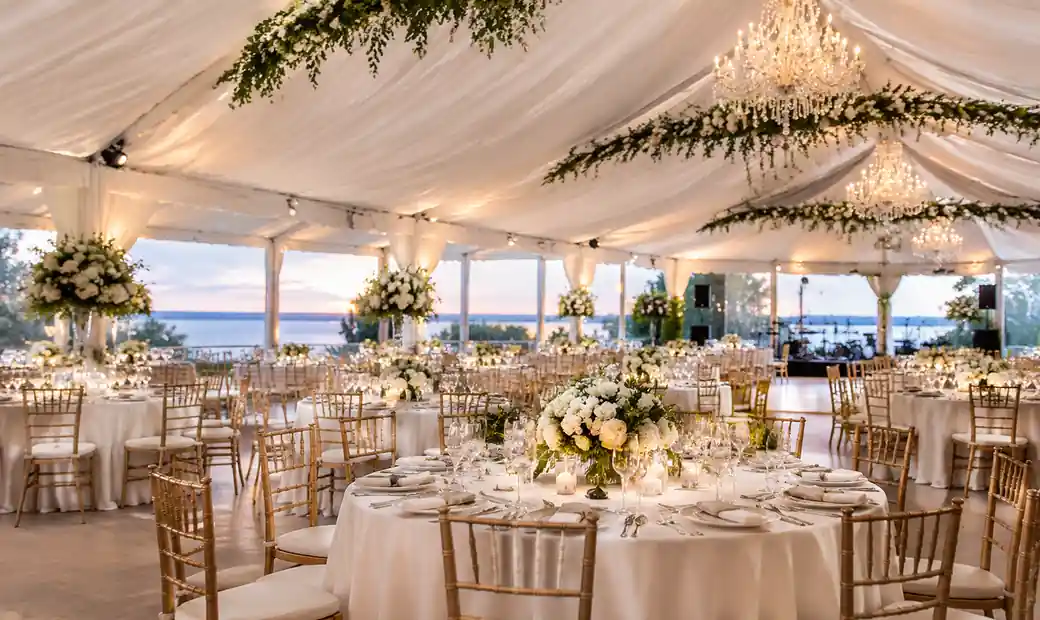 Elegant wedding tent interior with tables, lighting, and professional event setup
Commercial and Industrial Terminology
Commercial buyers—event management companies, exhibition organizers, corporate planners—use more technical terminology. They specify structure types, span widths, load ratings, and installation requirements. Commercial clients typically say "clear-span frame structure, 15m width, 30m length, wind load rating 100km/h" rather than debating tent vs marquee terminology.
For industrial storage applications, terminology shifts again. These structures are called "storage tents," "warehouse tents," or "industrial shelters" in all markets. "Marquee" rarely appears in industrial contexts because it implies events and celebrations.
Making the Right Choice for Your Project
Understanding terminology helps you communicate effectively with suppliers and set appropriate expectations.
When Searching for Suppliers
Use terminology common in your market:
- UK, Australia, South Africa: Search "marquee hire" or "marquee rental"
- United States: Search "tent rental" or "event tent"
- Canada: Try both terms, or "frame tent" for specific types
- International projects: Use "event structure" or "temporary structure"
Specifying Your Requirements
Rather than getting stuck on terminology, focus on structural specifications:
- Structure type: Frame (clear-span), pole-supported, tension, or hybrid
- Dimensions: Width, length, eave height, ridge height
- Capacity: Number of seated or standing guests
- Engineering requirements: Wind load rating, snow load, ground conditions
- Application: Wedding, corporate event, exhibition, storage
This specification-based approach works universally, regardless of regional terminology.
Working With International Suppliers
When sourcing structures internationally, terminology becomes critical. Major manufacturers maintain multilingual documentation and adapt terminology to client preferences. Always confirm you're discussing the same product by referencing structure type, dimensions, and photos rather than relying solely on tent/marquee distinction.
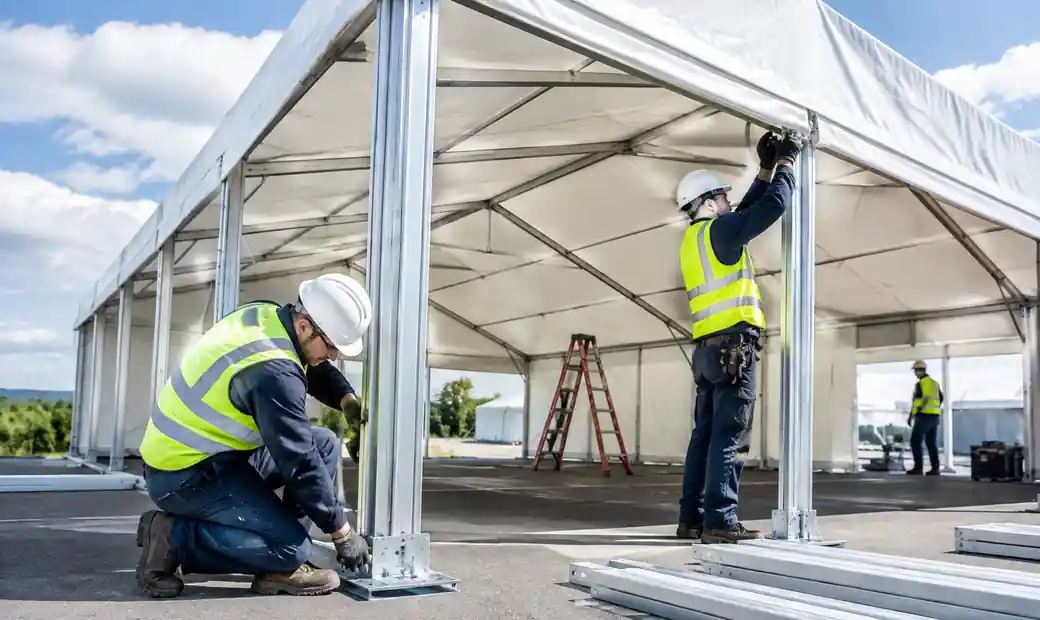 Professional tent installation crew working with technical specifications and measurements
When requesting a quote, specify: "We need a clear-span frame structure with aluminum extrusion, 12m width x 25m length, for a 150-guest wedding reception" rather than "We need a marquee," which could mean different things to different readers.
FAQ
Is a marquee bigger than a tent?
Not necessarily. In UK terminology, "marquee" simply means a large event tent, so size-wise they're equivalent. The term doesn't specify dimensions—it's the British word for event tents above small gazebos. In US contexts where "marquee tent" refers to peaked frame tents, they're typically mid-to-large structures but not inherently bigger than other tent types.
Can you use tent and marquee interchangeably?
It depends on your audience and location. In the UK, Australia, and South Africa, "marquee" is standard for event structures. In the United States, "tent" is correct, and "marquee" may cause confusion since Americans associate it with theater canopies. When communicating internationally, use both terms together or default to technical specifications.
What do Americans call marquees?
Americans typically call them "tents" or "event tents." When Americans use "marquee," they usually mean the permanent canopy over a theater entrance, not a temporary event structure. Some US rental companies market "marquee tents" as premium peaked-roof frame tents, but this is adopted terminology. For clear communication with US suppliers, use "frame tent," "pole tent," or "event tent."
Why is it called a marquee in the UK?
The term comes from the Middle French word "marquise," which referred to a canopy or awning. It entered British English in the 17th century and evolved to specifically mean large temporary event structures by the early 20th century. The UK event hire industry standardized around "marquee" as professional terminology, distinguishing upscale event structures from basic camping tents.
Do marquees and tents have different structures?
Not inherently. Both terms can describe identical structures—the difference is linguistic and regional, not engineering-based. However, when "marquee" is used as a specific product category, it often implies frame-supported, clear-span structures with peaked roofs. A clear tent could equally be called a clear marquee in the UK or a clear-span tent in the US despite being the exact same aluminum-framed transparent structure.
Which term should I use for my event?
Use terminology common in your market. UK-based events: "marquee." US-based events: "tent" or "event tent." If marketing to an international audience or working with overseas suppliers, include both terms or use technical structure descriptions. For specifications, focus on structure type, dimensions, and engineering requirements rather than terminology.
Conclusion
The tent vs marquee distinction reflects regional language conventions more than fundamental structural differences. In British English, "marquee" is the standard term for event structures that Americans call "tents."
For practical project planning, focus on technical specifications—structure type, dimensions, load ratings, and application. The engineering requirements, quality standards, and installation processes remain identical regardless of terminology. When working across international markets, adapt your terminology to match local expectations, but always confirm mutual understanding through detailed specifications and visual references.
The key to successful event structure procurement isn't using the "right" word—it's clearly communicating your specific requirements to suppliers who can deliver structures meeting your performance, aesthetic, and budget needs.