


Temporary Warehouse Permit Requirements: Global Guide
Navigating temporary warehouse permits can feel overwhelming when you're racing against project deadlines. Whether you're establishing industrial storage in Lagos, expanding capacity in Bangkok, or setting up a seasonal facility in Berlin, understanding permit requirements upfront prevents costly delays. This guide breaks down the essential permit processes across Africa, Asia, and Europe, helping you secure approvals faster and avoid common regulatory pitfalls.
Table of Contents
- 1. Why Temporary Warehouse Permits Matter
- 2. Global Permit Categories Explained
- 3. Africa: Regional Permit Requirements
- 4. Asia: Navigating Diverse Regulations
- 5. Europe: EN Standards and Compliance
- 6. Application Process: Step-by-Step Timeline
- 7. Fire Safety and Inspection Requirements
- 8. Common Permit Delays and How to Avoid Them
- 9. FAQ
- 10. Conclusion
Why Temporary Warehouse Permits Matter
Temporary warehouse permits aren't just bureaucratic paperwork—they're your legal foundation for operations. Operating without proper permits exposes you to fines, forced shutdowns, and insurance voidance. In South Africa, customs violations carry penalties up to ZAR 1 million, while Singapore's Building Control Act imposes fines reaching SGD 200,000 for unauthorized structures.
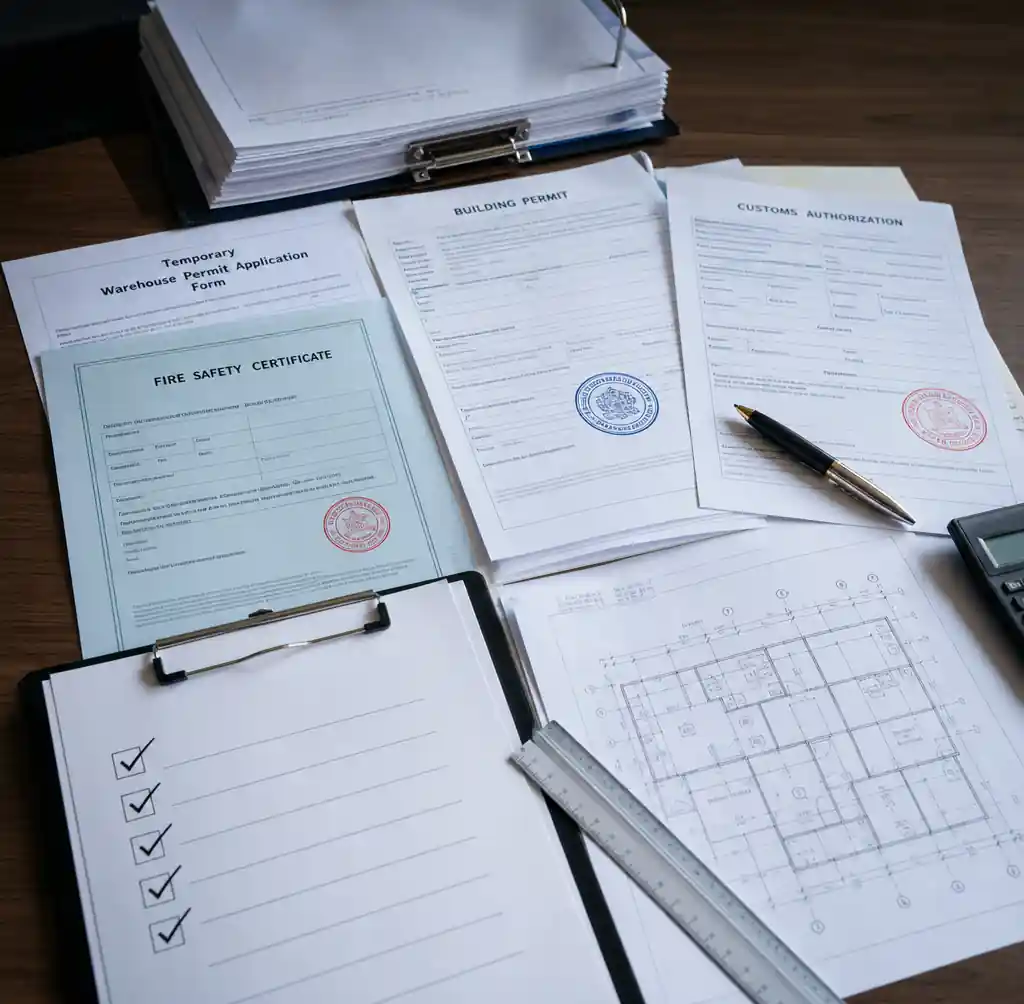 Temporary warehouse permit application documents and certificates
Beyond compliance, permits demonstrate to insurers, suppliers, and clients that your facility meets safety standards. Fire safety regulations mandate specific equipment placement and egress routes—standards that protect both your inventory and personnel. When you're storing client goods or operating near residential areas, permits prove you're a responsible operator.
Global Permit Categories Explained
Temporary warehouse permits fall into distinct categories depending on your operation type. Understanding which applies to your situation determines your application pathway and timeline.
| Permit Type | Purpose | Typical Duration | Key Requirements |
|---|---|---|---|
| Structural/Building Permit | Erecting temporary warehouse structures (tents, portable buildings) | 30-180 days | Engineered drawings, wind load calculations, foundation plans |
| Operational/Use Permit | Operating storage activities within existing or approved structures | 90 days-1 year | Certificate of Occupancy, fire safety plan, insurance proof |
| Customs Warehouse License | Storing imported goods before duty payment | Annual, renewable | Customs bond, security systems, inventory tracking systems |
| Fire Safety Certificate | Confirming compliance with fire codes | Valid until structure removal | Fire extinguishers, egress routes, sprinkler systems (if required) |
Most warehouse tent installations require both structural and operational permits. The structural permit application covers the physical installation, while operational permits govern how you use the space. Customs licenses add a third layer for import/export operations.
Africa: Regional Permit Requirements
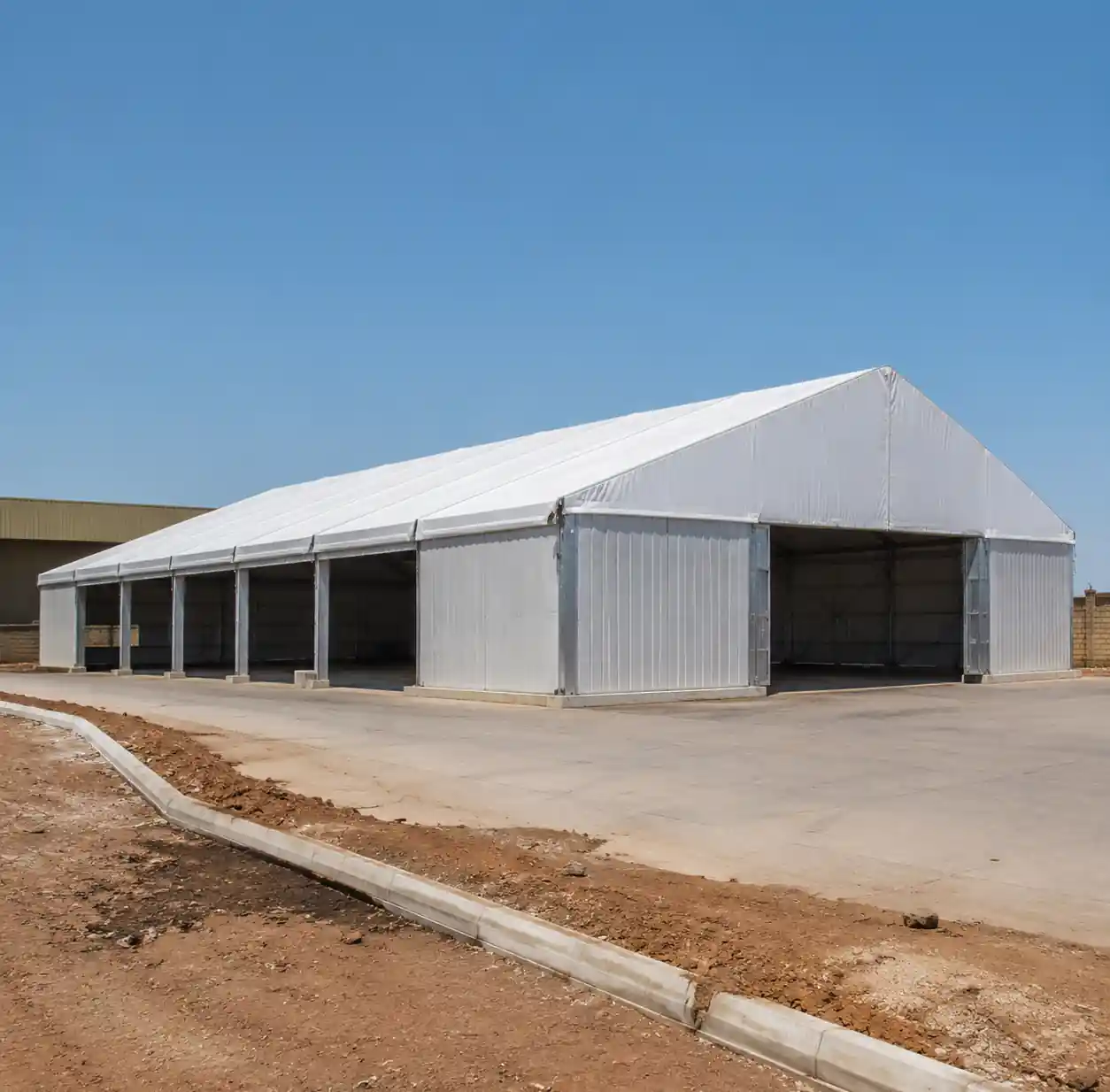 Industrial warehouse tent structure in African setting
Africa's permit landscape varies dramatically by country, with South Africa maintaining the most formalized system and West African nations requiring more direct engagement with local authorities.
South Africa: The South African Revenue Service (SARS) administers customs storage warehouse licenses through a structured classification system. Application form DA-185 covers general storage warehouses, while specialized facilities use form DA-185.4B4. Processing typically takes 4-6 weeks, and you'll need comprehensive security plans, inventory management systems, and proof of suitable premises.
Nigeria: While Nigeria's customs framework exists, practical permit acquisition often requires working with local customs brokers who navigate the National Assembly's regulatory requirements. Budget 6-8 weeks for initial approvals, and expect in-person visits to customs offices.
Kenya and East Africa: Kenya's permit process involves county-level building approvals combined with national customs registration. The Kenya Revenue Authority handles customs warehouse licensing, but local county governments control structural permits for temporary buildings. This dual-authority system adds complexity—start applications 8-10 weeks before your target installation date.
Key Success Factors for Africa:
- Engage local customs brokers early who understand regional nuances
- Prepare for in-person submissions and follow-up visits
- Budget extra time for document authentication and notarization
- Ensure all foreign-language documents have certified translations
Asia: Navigating Diverse Regulations
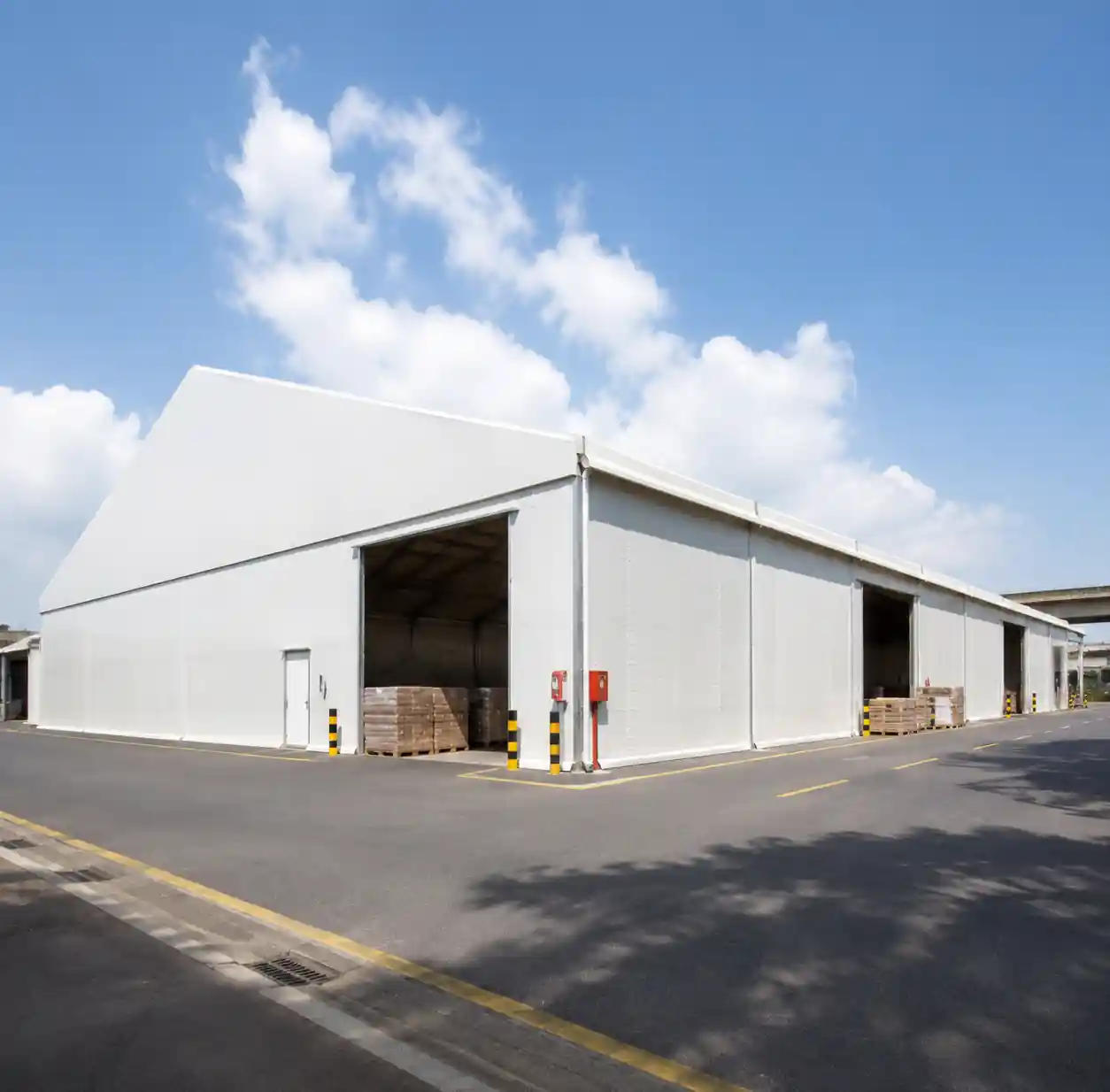 Modern temporary warehouse structure in Asian industrial park
Asia presents the widest regulatory variation globally. City-states like Singapore impose strict building codes, while developing markets offer more flexibility with less formal oversight.
Singapore: Singapore's comprehensive system requires permits from multiple agencies. The Land Transport Authority (LTA) controls structures near railways, while the Singapore Civil Defence Force (SCDF) issues Temporary Change of Use permits for warehouse conversions. Processing takes 2-4 weeks for standard applications. Singapore requires Temporary Occupation Permits (TOP) confirming that structures meet environmental and pollution control standards before operations begin.
Hong Kong (China): The Town Planning Board requires planning permission for temporary warehouses on agricultural land, typically granted for three-year periods. Applications submitted with complete site plans and traffic impact assessments process within 8-12 weeks. Expect public consultation requirements if your facility affects neighboring properties.
Southeast Asia (Thailand, Malaysia, Indonesia): These markets operate with provincial or municipal building departments handling structural permits. Thailand's Department of Public Works controls temporary structures exceeding 200 square meters, while Malaysia delegates authority to local councils. Processing varies wildly—urban areas like Bangkok and Kuala Lumpur process permits in 3-4 weeks, while rural districts may take 8-12 weeks.
India: India's permit process involves state-level building departments and municipal corporations. The complexity varies by state—Maharashtra's online portal processes applications in 4-6 weeks, while other states require multiple in-person submissions. Fire No Objection Certificates (NOC) from local fire departments are mandatory before occupancy.
| Region | Primary Authority | Average Processing Time | Digital Application Available |
|---|---|---|---|
| Singapore | SCDF, LTA, BCA | 2-4 weeks | Yes (CORENET system) |
| Hong Kong | Town Planning Board | 8-12 weeks | Yes (online submission) |
| Thailand | Provincial Public Works | 3-8 weeks | Limited (Bangkok only) |
| Malaysia | Local Municipal Council | 4-12 weeks | Varies by state |
| India | State Building Dept + Municipal Corp | 4-6 weeks | Yes (major cities) |
Europe: EN Standards and Compliance
Europe's regulatory framework centers on Union Customs Code (UCC) compliance and EN structural standards. Consistency across the European Union simplifies multi-country operations, though individual nations add specific requirements.
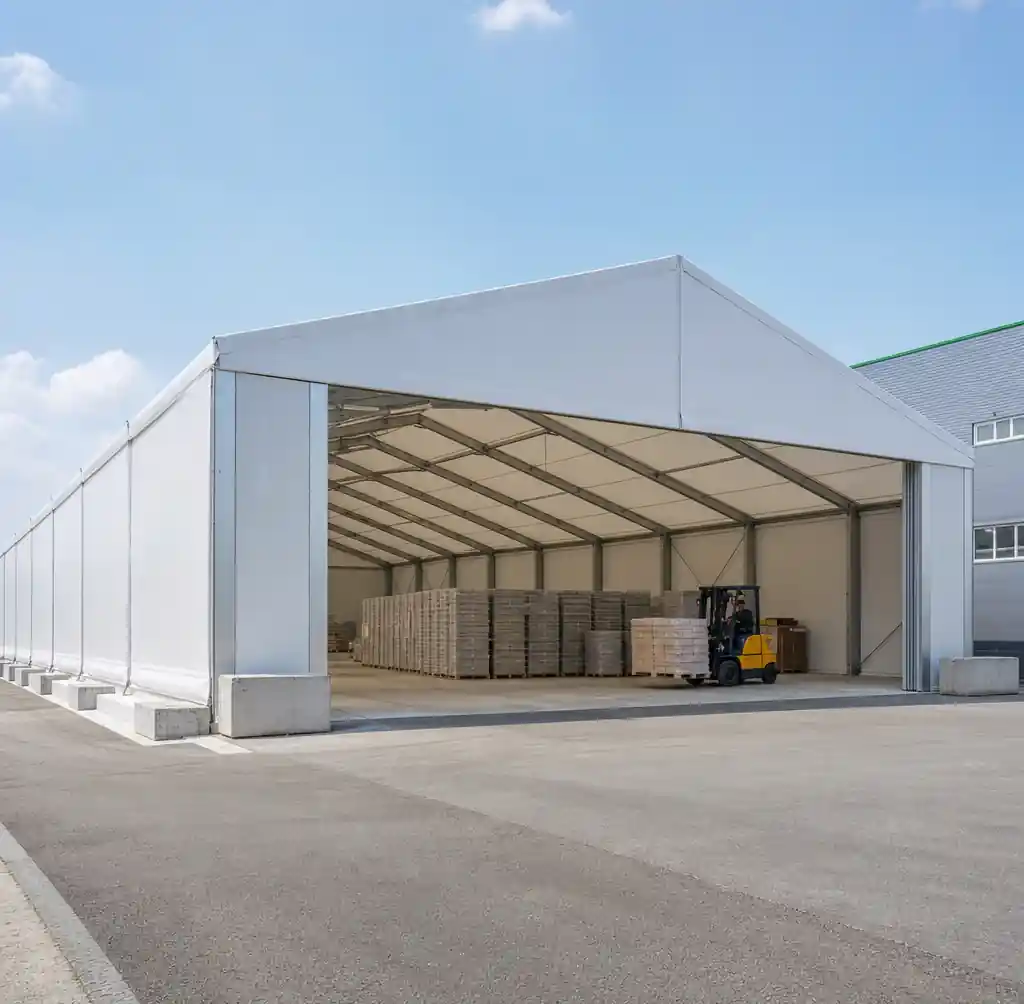 European industrial storage tent facility with EN standard compliance
Customs Temporary Storage: The European Commission's temporary storage regulations under the UCC allow goods to remain in authorized facilities for up to 90 days before customs declaration. Facilities require authorization under Article 148, with electronic arrival notifications through the New Computerised Transit System (NCTS). Authorization applications process within 30 days through national customs authorities.
Structural Standards: Temporary warehouse structures must meet EN 13782 standards covering structural safety, wind load resistance, and fire retardancy. Structures exceeding 50 square meters typically require building permits from local authorities, though thresholds vary—Germany sets limits at 75 square meters in some states, while France requires permits for any commercial temporary structure exceeding 30 days installation.
United Kingdom: Post-Brexit, the UK maintains similar standards but processes applications independently. UK temporary storage facilities must register with HMRC, and structural permits follow local council requirements. Processing takes 2-4 weeks for council building permits, plus 4-6 weeks for customs facility authorization.
Fire Safety Certification: Most European jurisdictions require fire marshal inspections before occupancy. Fire safety regulations mandate specific equipment based on structure size—facilities over 400 square meters typically need monitored fire alarm systems, while smaller structures require portable extinguishers at minimum.
Application Process: Step-by-Step Timeline
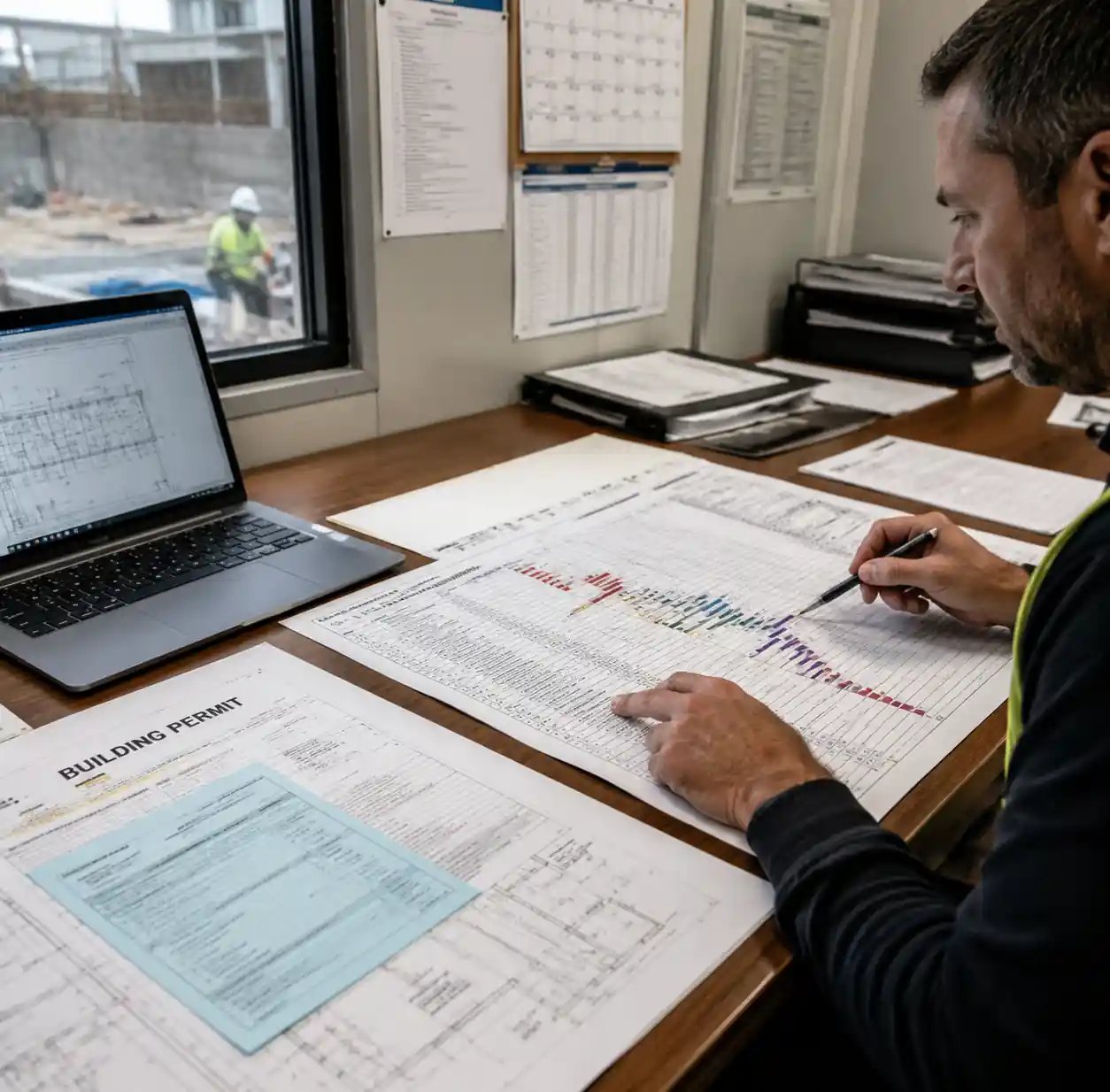 Professional reviewing warehouse permit application timeline and documents
Understanding the application sequence prevents bottlenecks. Most jurisdictions process permits in parallel tracks—structural, operational, and specialized (customs/fire)—but each has dependencies.
Weeks 1-2: Pre-Application Preparation
- Secure site control documentation (lease agreements, property owner authorization letters)
- Engage structural engineer for load calculations and drawings if using tent structures
- Obtain preliminary site survey showing utilities, drainage, access routes
- Contact local building department for jurisdiction-specific requirements checklist
Weeks 3-4: Document Assembly and Submission
- Submit structural permit application with engineered drawings showing foundation plans, anchoring systems, and wind load calculations
- File operational permit application with proposed site layout, fire safety plan, and insurance certificates
- For customs warehouses, submit security protocols and inventory management system documentation
- Pay application fees (typically $50-$500 for structural permits, $200-$2,500 for customs authorizations)
Weeks 5-6: Review and Clarifications
- Respond to reviewer questions within 48-72 hours to maintain timeline
- Provide supplemental documentation if requested (geotechnical reports, traffic impact studies)
- Schedule pre-installation inspections if required by jurisdiction
Weeks 7-8: Approval and Installation
- Receive conditional approvals with installation requirements specified
- Coordinate installation with certified contractors meeting local licensing requirements
- Request inspection appointments for foundation work (if applicable) and final occupancy
Week 9: Final Inspections and Certificate of Occupancy
- Pass fire marshal inspection confirming extinguisher placement, egress marking, and emergency lighting
- Receive final Certificate of Occupancy or equivalent authorizing operations
- Post required permits visibly on-site as mandated by local regulations
Standard warehouse permit applications process within 2-4 weeks, while specialized customs facilities take 4-6 weeks. Factor an additional 2-3 weeks buffer for unexpected reviewer questions or document revisions.
Fire Safety and Inspection Requirements
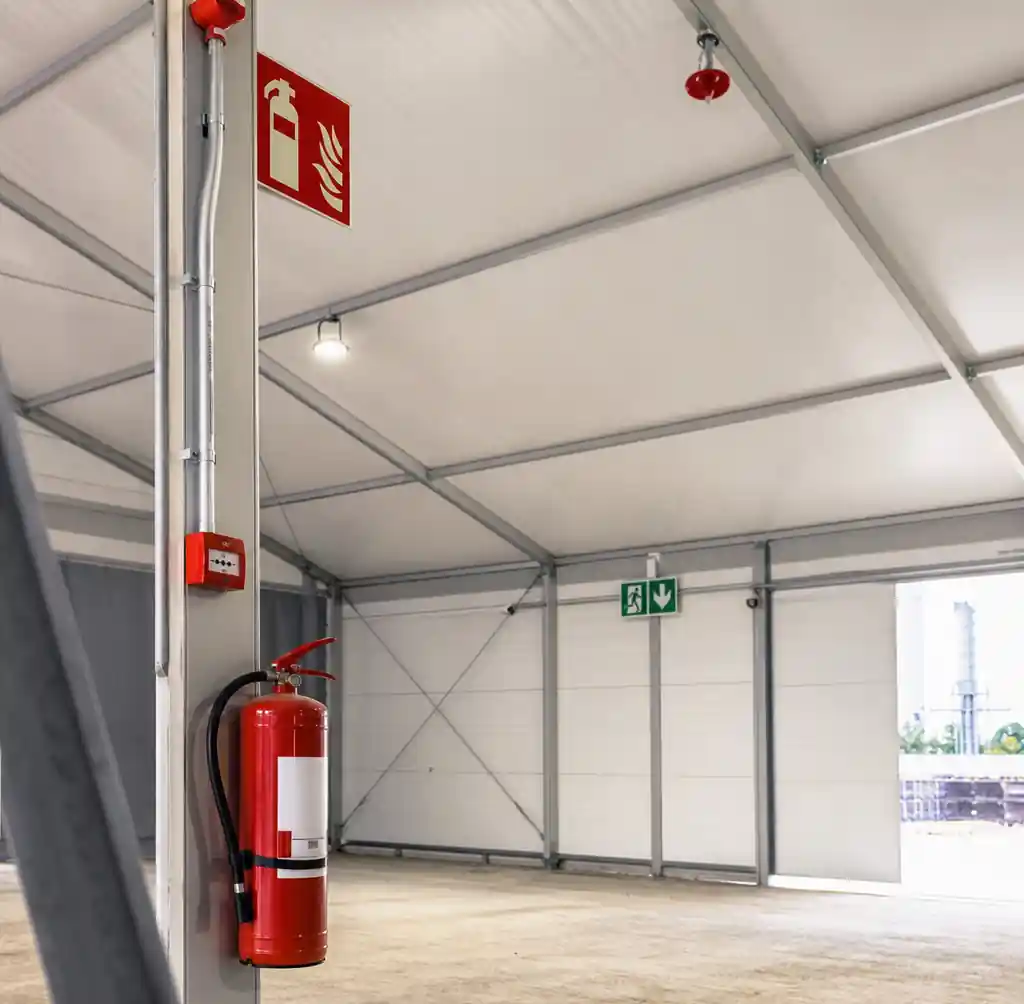 Fire safety equipment and emergency systems in temporary warehouse
Fire safety represents the most critical permit component affecting insurance validity and operational authorization. Temporary structures face heightened scrutiny because their materials and rapid installation increase fire risk.
Mandatory Fire Equipment by Structure Size:
- Under 400 sq ft (37 sq m): Minimum one 2A-rated fire extinguisher visible from any point, maximum 100 feet travel distance
- 400-3,000 sq ft (37-280 sq m): One 2A extinguisher per 3,000 sq ft plus emergency exit signage
- Over 3,000 sq ft (280 sq m): Monitored fire alarm system, multiple extinguishers, illuminated exit signs, and emergency lighting on backup power
Inspection Documentation: Fire authorities require on-site fire safety plans showing extinguisher locations, egress routes, assembly points, and emergency contact procedures. Plans must be accessible to inspectors at all times. Most jurisdictions mandate inspections within 7 days of installation completion, and compliance deficiencies must be corrected before occupancy authorization.
Material Requirements: Warehouse fabric must meet fire-retardant standards—typically NFPA 701 or equivalent national standards. Certificates proving material compliance must accompany permit applications. Non-compliant materials result in automatic permit denial.
Clearance Standards: Structures require minimum 12-foot clearance from other buildings, property lines, and flammable material storage. Fire safety codes also restrict activities inside temporary warehouses—open flames, cooking equipment, and smoking are typically prohibited unless specifically permitted with additional safety measures.
Common Permit Delays and How to Avoid Them
Most permit delays stem from incomplete applications or missing prerequisite approvals. Warehouse permitting delays average 2-4 weeks beyond planned timelines, but specific pitfalls are predictable.
Incomplete Engineering Documentation: Structural permits require stamped drawings from licensed engineers showing load calculations, foundation details, and wind resistance specifications. Generic manufacturer drawings are insufficient—hire local engineers familiar with jurisdiction requirements. This single issue causes 40% of permit delays.
Missing Property Owner Authorization: If you're leasing the site, applications must include signed letters from property owners authorizing the temporary structure. Verbal agreements don't satisfy permit requirements. Secure written authorization before application submission.
Insufficient Site Clearances: Temporary warehouses near railways, airports, or utility corridors require additional clearances. Singapore's LTA, for example, prohibits temporary structures within railway protection zones without specific authorization—a separate 3-4 week process. Identify site constraints during pre-application research.
Customs Bond Delays: Customs warehouse licenses require surety bonds or bank guarantees securing potential duty obligations. Bond applications through insurance companies take 1-2 weeks, and many applicants overlook this requirement until permit reviewers request it. Initiate bond applications simultaneously with permit submissions.
Fire Marshal Scheduling Conflicts: Final occupancy depends on passing fire inspections, but inspectors often book 1-2 weeks out. Request inspection appointments when submitting applications, provisionally scheduling for expected approval dates. You can always reschedule if approvals take longer.
FAQ
How long does a temporary warehouse permit last?
Duration varies by jurisdiction and permit type. Structural permits for temporary warehouse tents typically allow 30-180 days of installation before renewal is required. Operational permits for storage activities commonly last 90 days to one year. Customs warehouse licenses are usually annual with renewal options. Check your specific jurisdiction's regulations—some areas like California limit temporary structures to 180 consecutive days maximum.
Do I need permits for temporary warehouse tents under 400 square feet?
Most jurisdictions exempt structures under 200-400 square feet from building permits, but fire safety permits may still apply. Chicago requires permits for tents exceeding 600 square feet, while other cities set thresholds at 400 square feet or lower. Even if building permits aren't required, you still need property owner permission and must maintain fire safety equipment. Contact your local building department to confirm size exemptions.
What happens if I operate without permits?
Operating without permits exposes you to immediate shutdown orders, daily fines (typically $100-$500 per day), and potential criminal charges for serious violations. Insurance policies void coverage for unpermitted structures, leaving you personally liable for accidents or property damage. Customs violations for unauthorized storage of imported goods carry severe penalties including goods seizure and fines reaching $250,000 in some jurisdictions.
Can I transfer temporary warehouse permits to a new location?
No—permits are site-specific and non-transferable. Moving your temporary warehouse to a new location requires completely new permit applications for that site. Some jurisdictions allow permit renewals at the same location, but even moving 100 meters requires fresh applications. Factor permitting timelines into any relocation planning.
How much do temporary warehouse permits cost?
Permit fees range from $50 for basic temporary use permits to over $2,500 for annual customs warehouse authorizations. Typical costs include: structural/building permits ($100-$500), operational permits ($50-$200), fire safety inspections ($75-$150), and customs licenses ($500-$2,500 annually). Engineering drawings add $1,000-$3,000 depending on structure complexity. Budget $2,000-$5,000 total for a complete permit package including professional fees.
Do temporary warehouses need sprinkler systems?
Sprinkler requirements depend on structure size, contents, and local fire codes. Most jurisdictions don't require sprinklers in temporary structures under 5,000 square feet storing low-hazard materials. Structures exceeding 10,000 square feet or storing flammable materials typically need sprinkler systems or equivalent fire suppression. Fire marshals evaluate requirements during permit review—be prepared to install suppression systems if storing high-value or hazardous goods.
How far in advance should I apply for permits?
Apply 8-12 weeks before your planned installation date to allow for processing delays and document revisions. Singapore and other digitally advanced jurisdictions process permits in 2-4 weeks, while manual systems in developing markets take 6-10 weeks. Customs warehouse licenses require longer timelines—start applications 12-16 weeks ahead. Rush processing is rarely available for temporary warehouse permits.
Are international structural standards accepted across borders?
European EN standards are recognized across EU member states, but most countries require compliance with national building codes rather than accepting foreign certifications. International standards like ISO 9001 demonstrate quality management but don't substitute for local permit requirements. You'll need jurisdiction-specific engineering stamps and certifications—foreign engineer stamps are generally not accepted without local co-signature.
Conclusion
Temporary warehouse permits demand strategic planning, but the process becomes manageable when you understand regional requirements and application sequences. Start permit applications 8-12 weeks before installation, engage local engineers and customs brokers early, and prepare comprehensive documentation showing structural safety and operational compliance.
The permit investment protects your business from shutdowns, validates insurance coverage, and demonstrates professional credibility to clients and suppliers. Whether you're establishing industrial storage solutions in emerging markets or expanding seasonal capacity in established economies, proper permits form your operational foundation. Navigate the process systematically, and your temporary warehouse project launches on schedule with full regulatory backing.