


Southeast Asia Wedding Tent Guide: Monsoon-Proof Solutions
Monsoon season wedding disruptions account for over 40% of outdoor event failures in Southeast Asia. Studies show that proper wedding tent selection with monsoon-resistant design can reduce weather-related cancellations by up to 85%. If you want to plan a successful outdoor wedding in Thailand, Malaysia, Indonesia, or the Philippines, then you will need to understand monsoon-proof tent specifications, wind resistance requirements, and tropical climate considerations.
This comprehensive guide covers the essential factors for selecting wedding tents in Southeast Asia's challenging monsoon environment. You will learn about wind load requirements, humidity management, drainage systems, and tropical-grade materials that ensure your celebration proceeds smoothly regardless of weather conditions.
Table of Contents
- 1. Understanding Southeast Asia's Monsoon Challenges
- 2. Wind Resistance Requirements for Wedding Tents
- 3. Waterproofing and Drainage Solutions
- 4. Humidity Control in Tropical Wedding Tents
- 5. Material Selection for Monsoon Conditions
- 6. Tent Structure Types for Tropical Climates
- 7. Anchoring Systems for High Winds
- 8. Climate Control and Ventilation
- 9. FAQ
- 10. Conclusion
Understanding Southeast Asia's Monsoon Challenges
Southeast Asia experiences distinct monsoon patterns from May to October, bringing heavy rainfall, high winds, and humidity levels reaching 80-95%. Wedding planners must account for rainfall intensities exceeding 50mm per hour and wind speeds of 80-120 km/h during tropical storms.
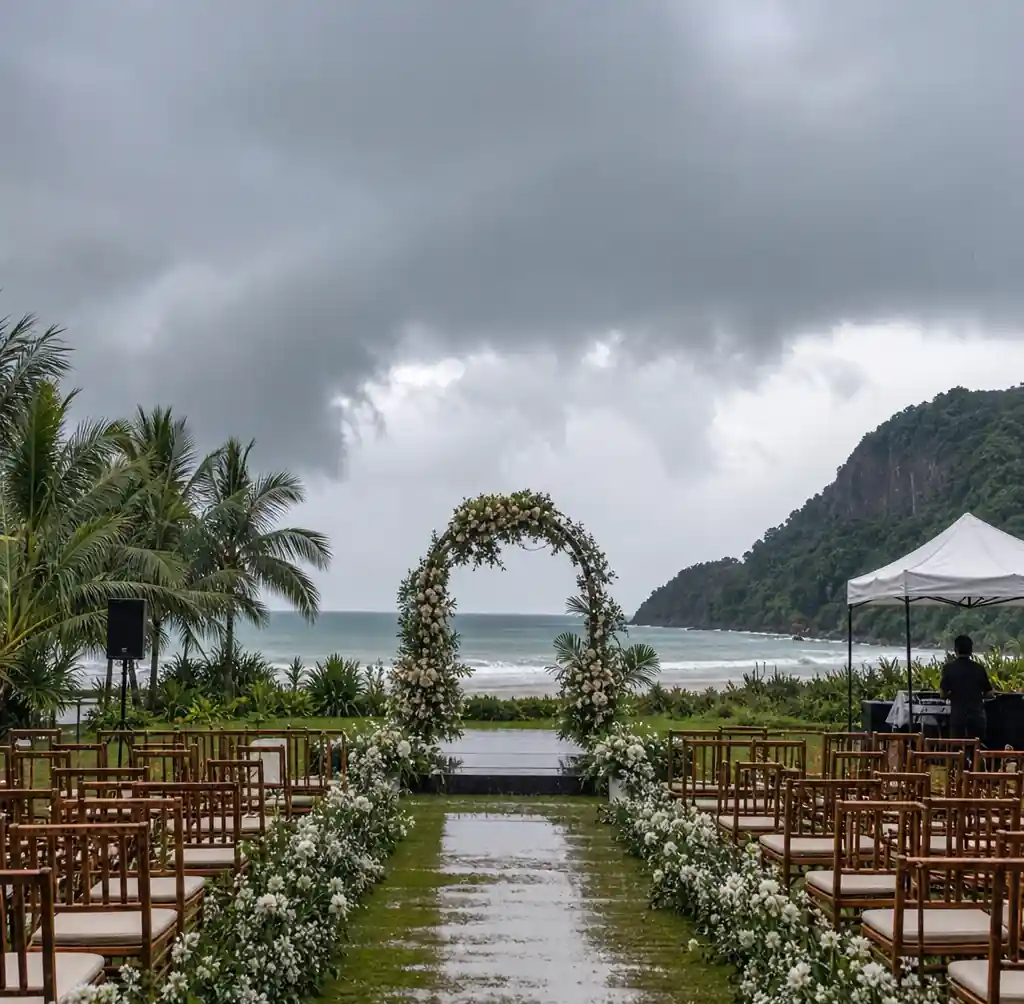 Southeast Asia monsoon season outdoor wedding venue during heavy rainfall
According to wind load engineering standards, temporary structures in tropical climates must meet minimum design thresholds to ensure safety. The combination of heat (28-35°C), humidity, and sudden weather changes means standard tents designed for temperate climates will fail. You need purpose-built monsoon-proof solutions addressing all three environmental factors simultaneously.
Wind Resistance Requirements for Wedding Tents
Wind load capacity is the most critical safety specification for Southeast Asian wedding tents. Structures must withstand sustained winds of 80-100 km/h with gusts up to 120 km/h during monsoon season. This requires aluminum frame systems with reinforced joints and proper load distribution.
Wind Load Comparison by Tent Type
| Tent Structure | Wind Resistance | Frame Type | Best Application | Span Width |
|---|---|---|---|---|
| A-Frame Tent | 80-100 km/h | Aluminum | Medium weddings | 10-20m |
| Clear Span Tent | 100-120 km/h | Reinforced aluminum | Large celebrations | 15-40m |
| Pagoda Tent | 70-90 km/h | Aluminum | VIP areas, small groups | 3-10m |
| Geodesic Dome | 120+ km/h | Steel-reinforced | Extreme weather | 10-30m |
Clear span tents are optimal when wind loads exceed 100 km/h or when you need column-free space for large guest counts. The modular aluminum frame distributes wind pressure across the entire structure rather than concentrating stress at individual points. For peak monsoon season (June-September), structures should be rated to at least 100 km/h, as tropical storms can produce sustained winds of 90+ km/h with minimal warning.
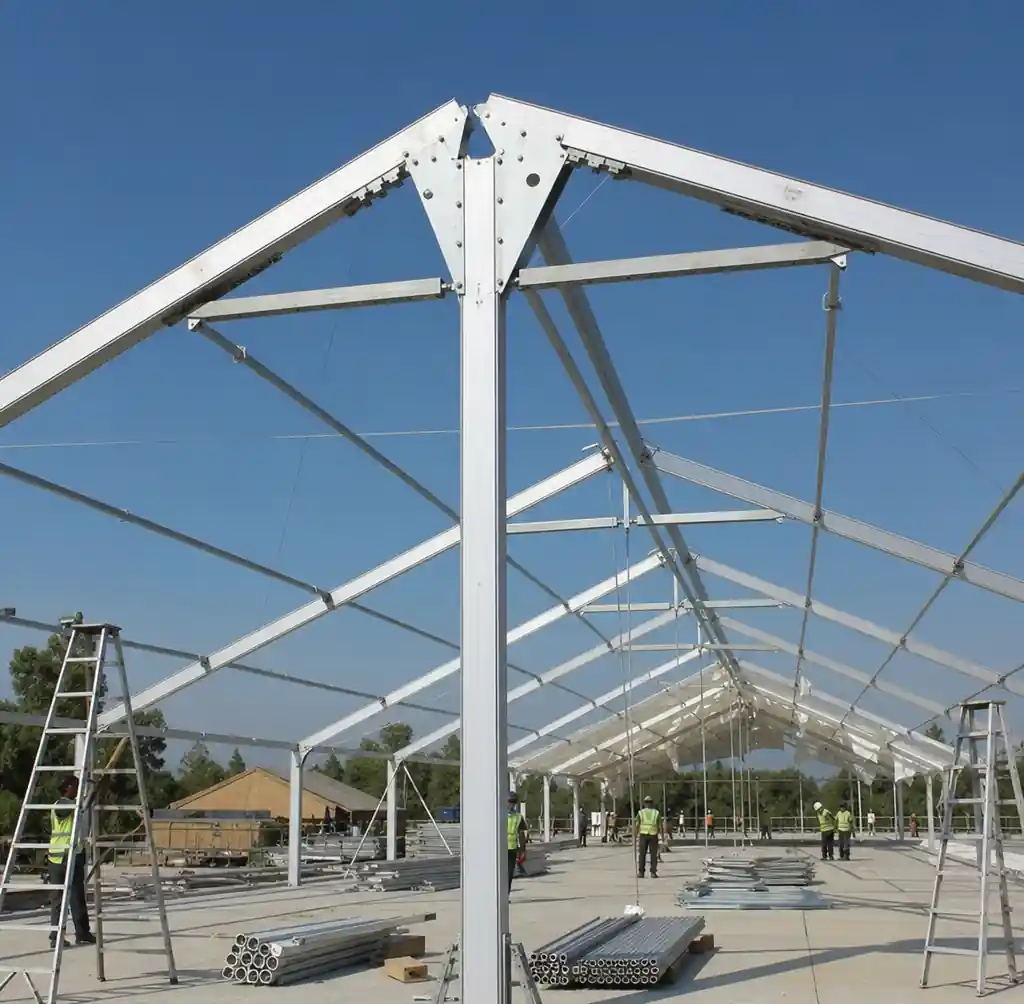 Reinforced aluminum frame clear span wedding tent structure installation
Waterproofing and Drainage Solutions
Monsoon rainfall can exceed 200mm in 24 hours during severe weather. Wedding tents must feature high-grade waterproof fabrics and engineered drainage to prevent flooding.
Professional-grade wedding tents use PVC-coated polyester fabric with minimum 850g/sqm weight, providing waterproof ratings exceeding 3000mm hydrostatic head. The roof must have minimum 15-degree pitch for rapid water runoff, with gutters channeling rainfall away from tent perimeter.
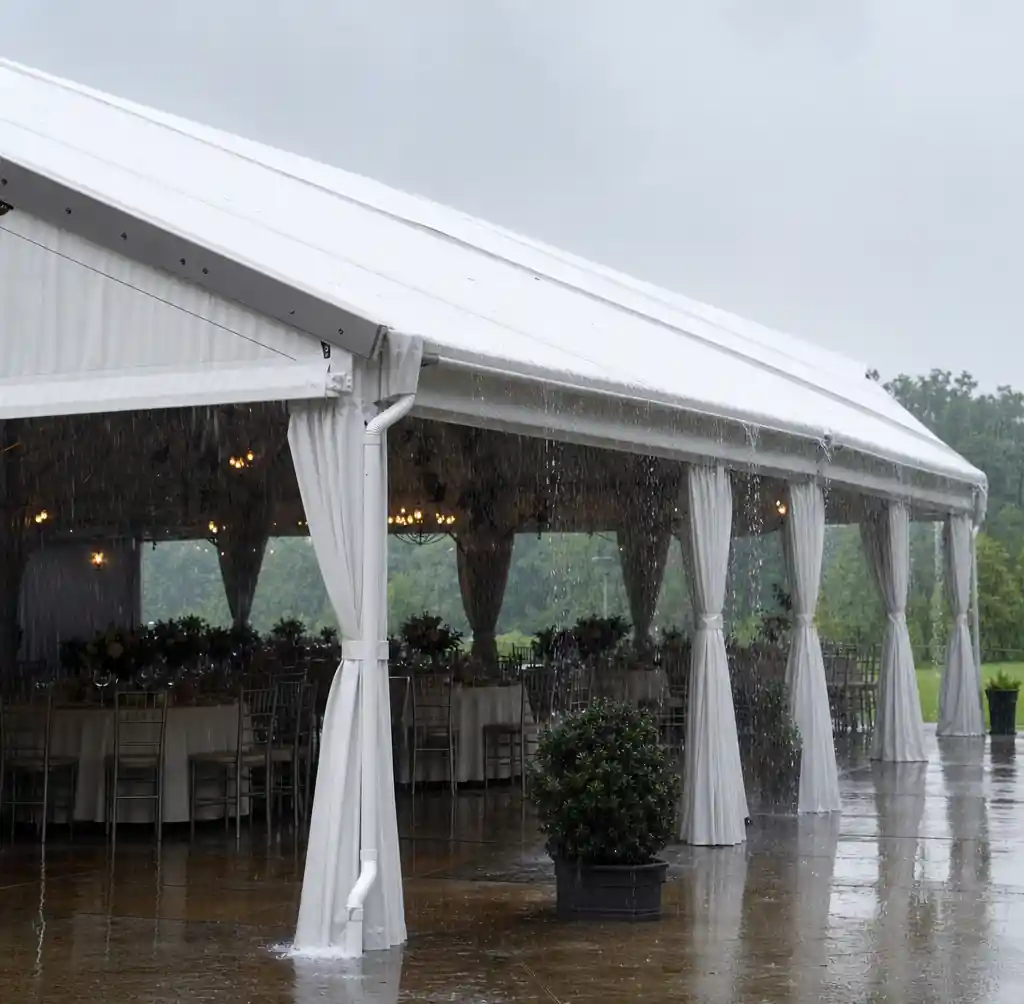 Waterproof PVC fabric wedding tent performing during heavy monsoon rain
Critical waterproofing elements include heat-welded seams (prevents leak points), reinforced roof panels at stress areas, overlap joints with double-sealed connections, and sidewall water barriers with ground seal systems. Tents without proper drainage can accumulate 500+ liters of water on roof sections during heavy downpours, creating dangerous structural loads.
Humidity Control in Tropical Wedding Tents
Humidity levels of 80-95% create guest discomfort and condensation issues. You need active ventilation combined with climate control for comfortable interior conditions.
High-performance tents incorporate large mesh ventilation panels in sidewalls and ridge vents along the roof. According to tropical tent research, breathable fabrics with MVTR exceeding 1000 g/m²/24h significantly reduce interior condensation.
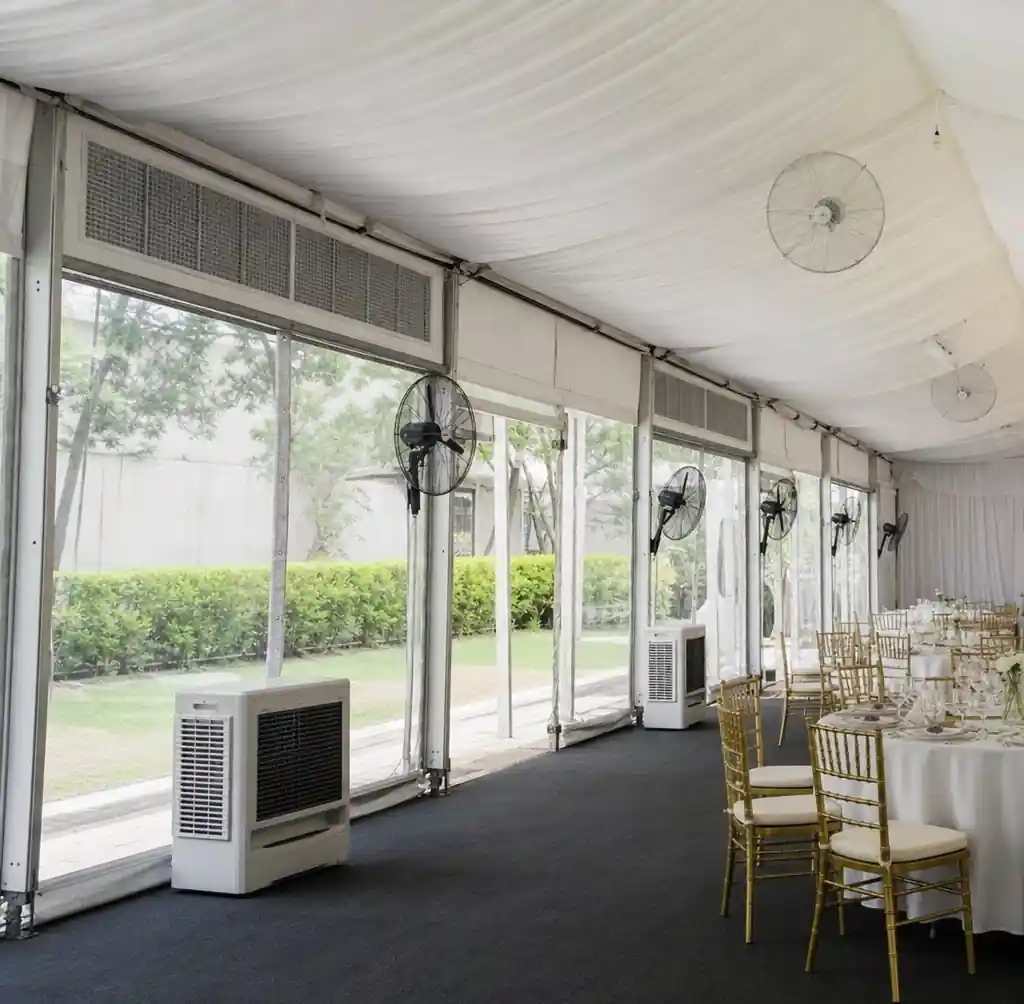 Wedding tent ventilation system with mesh panels and air circulation
Optimal comfort requires passive ventilation (mesh panels covering 20-30% of sidewall area), active air circulation (industrial fans, minimum 4 units per 100 sqm), HVAC integration for guest zones, and dehumidifiers for equipment areas. This combination reduces interior humidity to 60-70% despite exterior conditions exceeding 90%.
Material Selection for Monsoon Conditions
Tropical wedding tents require specialized materials resisting UV degradation, mold growth, and humidity-induced structural fatigue.
Material Specifications for Tropical Climate
| Component | Standard Grade | Tropical Grade | Improvement |
|---|---|---|---|
| Roof Fabric | 650g/sqm PVC | 850g/sqm PVC-coated polyester | 30% stronger, UV-resistant |
| Frame | Standard aluminum | Anodized aluminum 6061-T6 | Corrosion-resistant |
| Connectors | Steel | Hot-dip galvanized steel | 10x rust resistance |
| Anchoring | Standard stakes | Stainless steel ground anchors | No corrosion failure |
PVC coating on tropical-grade fabrics includes UV inhibitors preventing degradation from equatorial sun. Standard fabrics lose 40% strength after 6-12 months in tropical conditions, while UV-resistant grades maintain 90%+ strength for 3-5 years. Aluminum frames must be anodized to prevent oxidation—non-anodized aluminum develops surface corrosion within weeks in coastal locations. Fire retardancy meeting NFPA 701 standards is mandatory for most Southeast Asian venues.
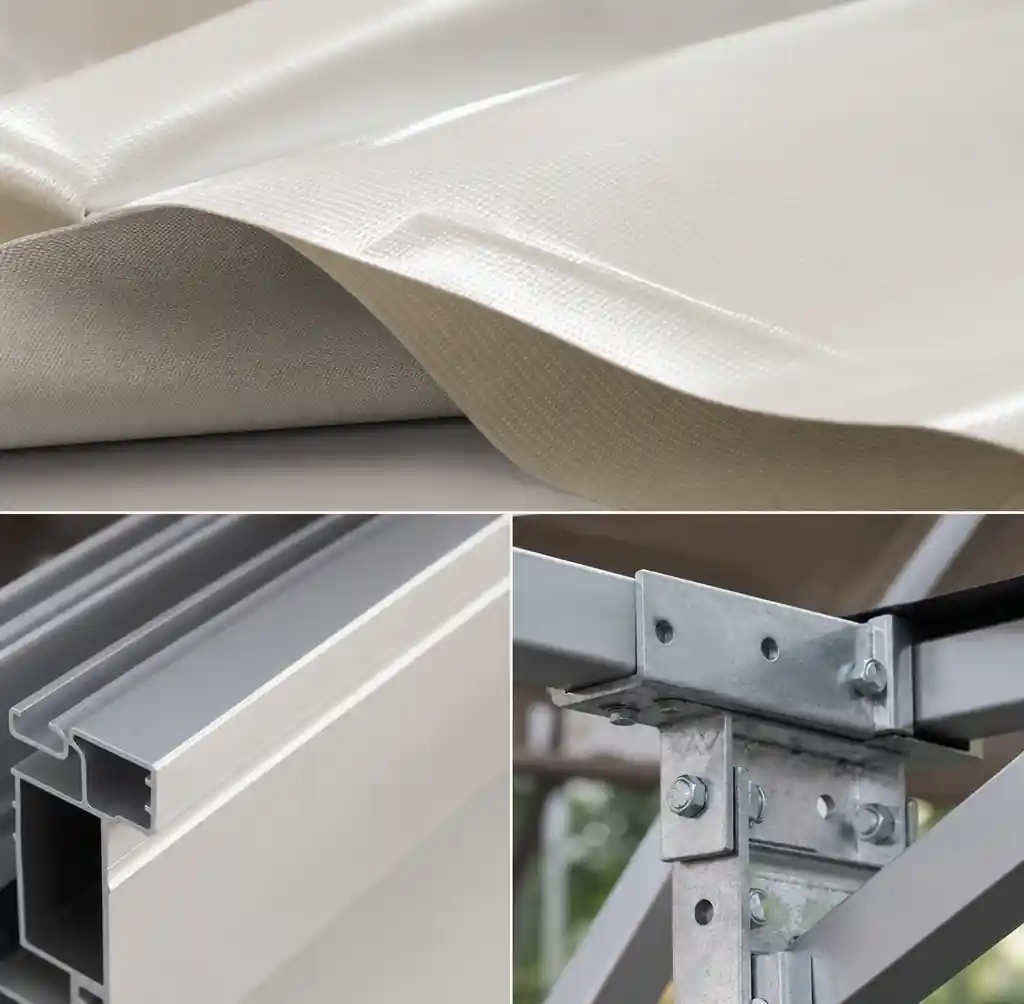 Tropical-grade tent materials showing UV-resistant PVC fabric and anodized aluminum
Tent Structure Types for Tropical Climates
Different tent architectures offer varying advantages for monsoon conditions. Selection should balance wind resistance, space requirements, and budget.
Clear span structures provide optimal wind resistance (100-120 km/h) and maximum interior flexibility for large weddings. The aluminum frame eliminates interior support poles, allowing unrestricted guest movement and furniture arrangement for 200-800 guests depending on span width (15-40m). The rigid frame distributes wind loads across the entire structure.
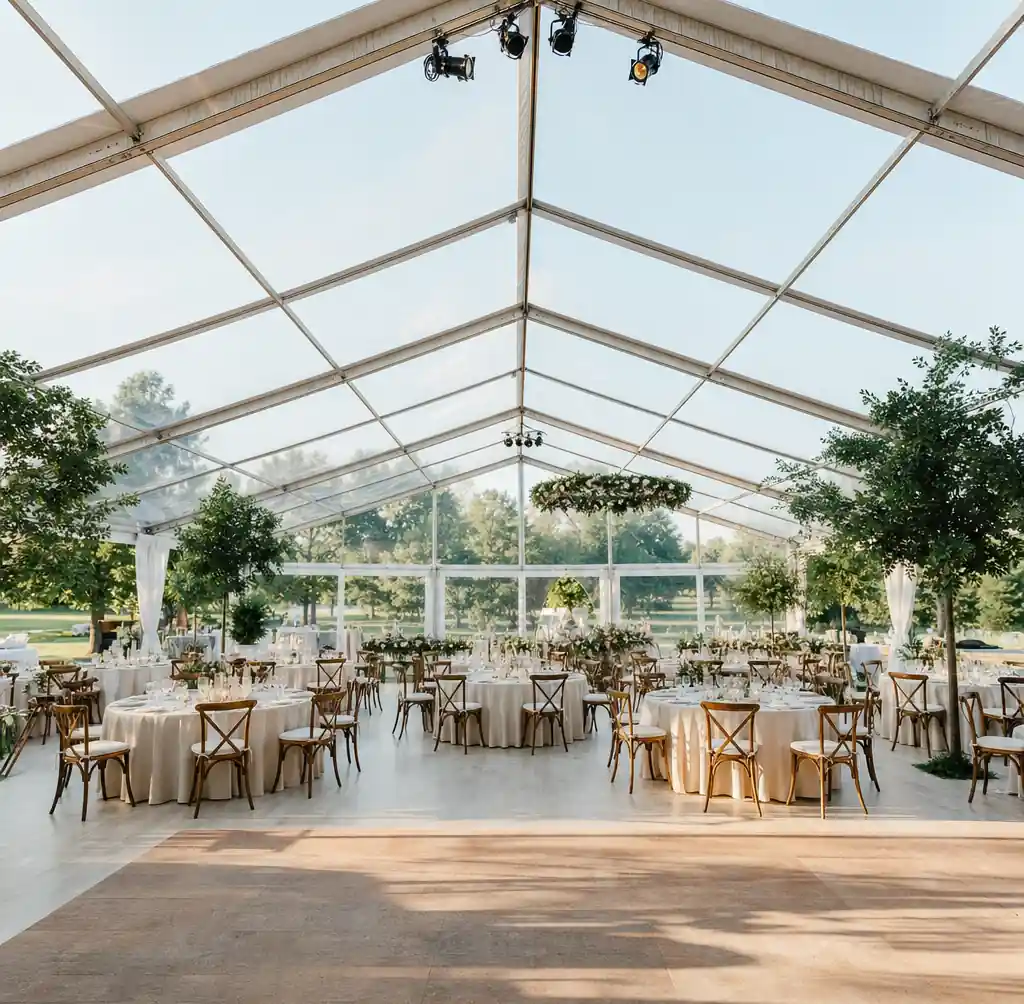 Clear span wedding tent interior showing column-free space with reception setup
Pagoda structures work well for VIP areas and entrance canopies. The peaked roof provides excellent water runoff, though wind resistance is lower (70-90 km/h). Multiple pagoda units connect to create modular spaces adapting to different guest counts. A-frame designs offer cost-effective solutions for medium weddings (100-300 guests) with 80-100 km/h wind resistance, though interior poles create layout restrictions.
Anchoring Systems for High Winds
Proper anchoring prevents catastrophic failure during tropical storms. Southeast Asian venues require specialized ground anchors accounting for saturated soil and extreme wind uplift forces.
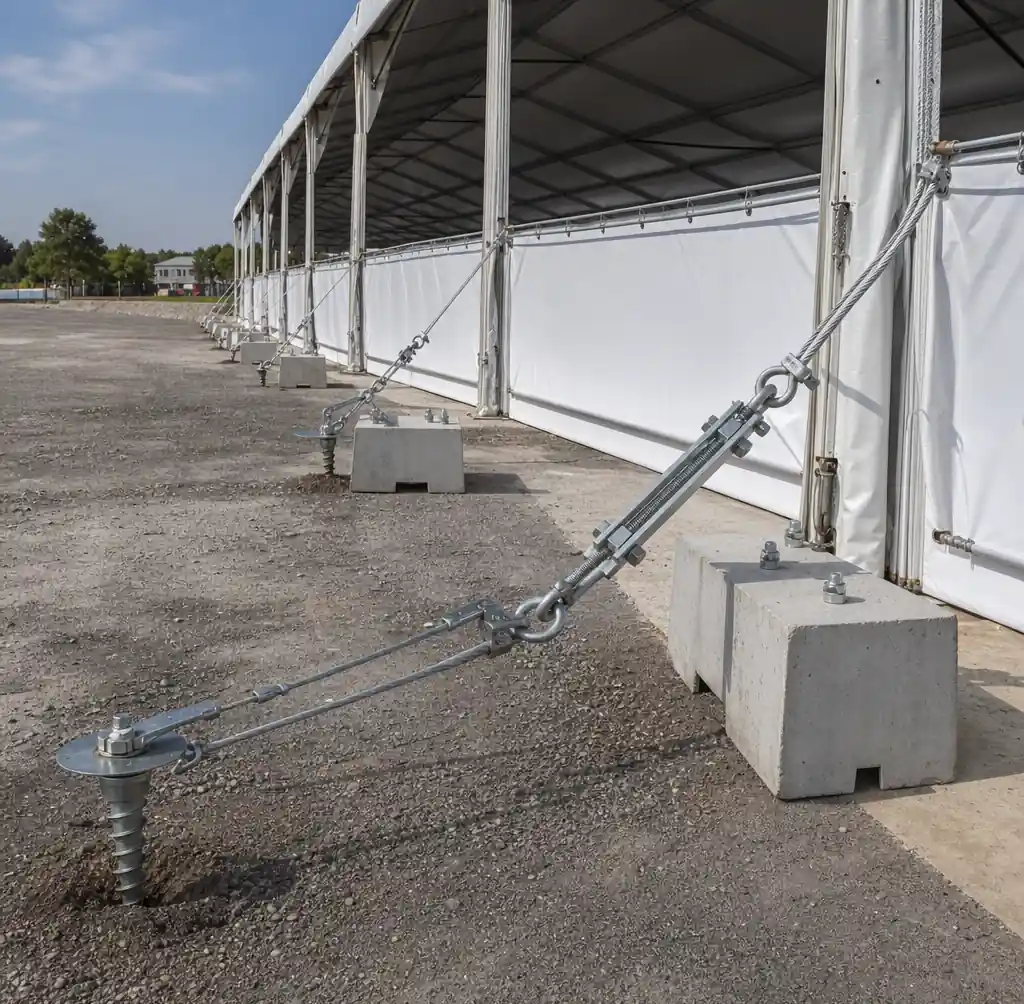 Heavy-duty tent anchoring system with auger anchors and concrete ballast
Wind forces on a 20m x 30m clear span tent can exceed 15 tons of uplift during 100 km/h winds. Standard stakes are insufficient. Heavy-duty solutions include concrete ballast systems (minimum 500kg per anchor point), auger anchors (spiral steel, 1000-1500mm length, 2.5-ton pull-out resistance), and stake clusters (multiple stakes at 45-degree angles, 1000mm long). According to wind load standards, anchor spacing should not exceed 6 meters along tent perimeters.
Climate Control and Ventilation
Managing interior temperature and humidity creates comfortable conditions despite tropical exterior environments.
Professional installations require 1 ton of cooling capacity per 10-12 sqm. A 300-guest tent (500 sqm) needs 40-50 tons of cooling to maintain 22-24°C interior temperature. Climate control systems account for solar radiation (40% of heat load), guest occupancy (100W per person), and lighting systems (15-20W per sqm).
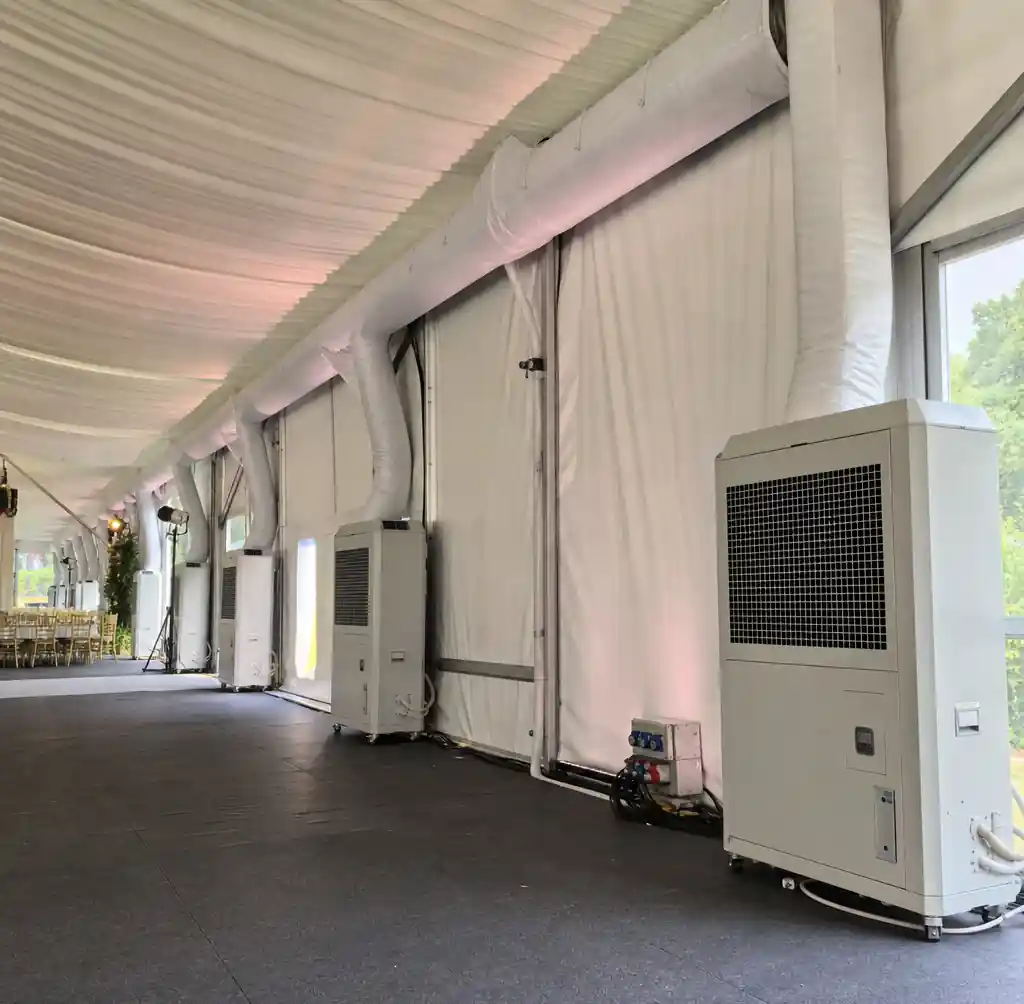 HVAC climate control system integrated with wedding tent cooling
Industrial HVAC units mount externally with ductwork distributing conditioned air. Specify redundant cooling systems for critical events. For budget-conscious gatherings, passive ventilation with large mesh panels (30-40% of sidewall area) and industrial circulation fans provide acceptable comfort during moderate weather months (March-April, October-November).
Regional Regulations and Permits
Wedding tent installations face varying regulations across Southeast Asian countries. Obtain proper permits to avoid event disruptions.
Thailand: Temporary structure permits from local district offices (Amphoe) required for tents exceeding 100 sqm. Wind load calculations and engineer certification may be needed. Processing time: 14-21 days.
Malaysia: Local council approval needed for tents on public or commercial land. Fire safety certifications required for enclosed structures. Fabrics must meet MS fire retardancy standards.
Indonesia: Building permit (IMB) required for structures exceeding 200 sqm. Local RT/RW approval needed for private property. Expect 30+ day processing in major cities.
Philippines: Barangay clearance and mayor's permit required. Fire safety inspection mandatory for enclosed structures accommodating 50+ people.
Engage local event coordinators understanding regional requirements. Begin permit processes at least 60 days before event dates to prevent venue change delays.
FAQ
What wind speed should wedding tents withstand in Southeast Asia? Wedding tents should be rated for minimum 100 km/h wind resistance during monsoon season. Clear span aluminum structures provide highest wind resistance (100-120 km/h) for coastal or exposed locations. Inland venues with windbreaks may use structures rated to 80-100 km/h.
How do I prevent flooding inside wedding tents during monsoons? Proper drainage requires roof pitch of at least 15 degrees, integrated gutter systems to channel water away, and elevated flooring or drainage channels. The site should have natural slope or engineered drainage directing water away from the structure.
What is the best tent type for large Southeast Asian weddings? Clear span tents are optimal for weddings over 200 guests, providing column-free interior space, highest wind resistance (100-120 km/h), and complete layout flexibility. The aluminum frame handles monsoon conditions better than traditional pole tents.
How much does monsoon-proof wedding tent rental cost? Monsoon-proof tent rental ranges from $8,000-$25,000 depending on size and services. A 500 sqm clear span tent with HVAC, lighting, and flooring for 300 guests costs approximately $15,000-$18,000 for a weekend event.
Do wedding tents need air conditioning in tropical climates? Air conditioning is highly recommended for enclosed tents when temperatures reach 30-35°C with 80-95% humidity. You need approximately 1 ton of cooling per 10-12 sqm. For open-sided tents with good ventilation, industrial fans may suffice during cooler months.
What fabric thickness is required for monsoon wedding tents? Professional monsoon-proof tents use PVC-coated polyester fabric weighing minimum 850g/sqm, providing waterproof ratings exceeding 3000mm hydrostatic head with UV inhibitors. Lighter fabrics (650g/sqm) degrade rapidly in monsoon conditions.
Conclusion
Successful outdoor weddings in Southeast Asia's monsoon environment require specialized tent solutions that address wind resistance, waterproofing, and humidity control simultaneously. Clear span aluminum frame structures rated to 100-120 km/h wind loads provide the most reliable performance, while proper anchoring, drainage systems, and climate control ensure guest comfort regardless of weather conditions. Beginning permit applications 60 days in advance and working with experienced local suppliers prevents last-minute disruptions.
If you need monsoon-proof wedding tent solutions for your Southeast Asian celebration, Velaria Spatia offers professional-grade structures engineered specifically for tropical climates. Our clear span tents accommodate events from 100 to 1000+ guests with wind resistance up to 120 km/h and complete climate control integration. We have successfully supplied wedding infrastructure for venues across Thailand, Malaysia, Indonesia, and the Philippines.
Contact us today for custom wedding tent solutions, technical specifications, and regional installation support.