


Event Tent Setup Time: How Long Does Installation Really Take?
Event planners consistently underestimate tent installation timelines, leading to rushed setups, safety compromises, and stressed crews working against impossible deadlines. After managing over 200 large-scale event installations across three continents, I've witnessed the costly consequences of poor time planning—from vendor conflicts and permit violations to structural failures caused by shortcuts taken under time pressure.
Understanding accurate setup timelines for different tent types, crew configurations, and site conditions is critical for successful event planning. This practical guide breaks down real-world installation durations, identifies factors that accelerate or delay setup, and provides contingency planning frameworks that prevent schedule disasters.
Table of Contents
Setup Duration by Tent Type and Size
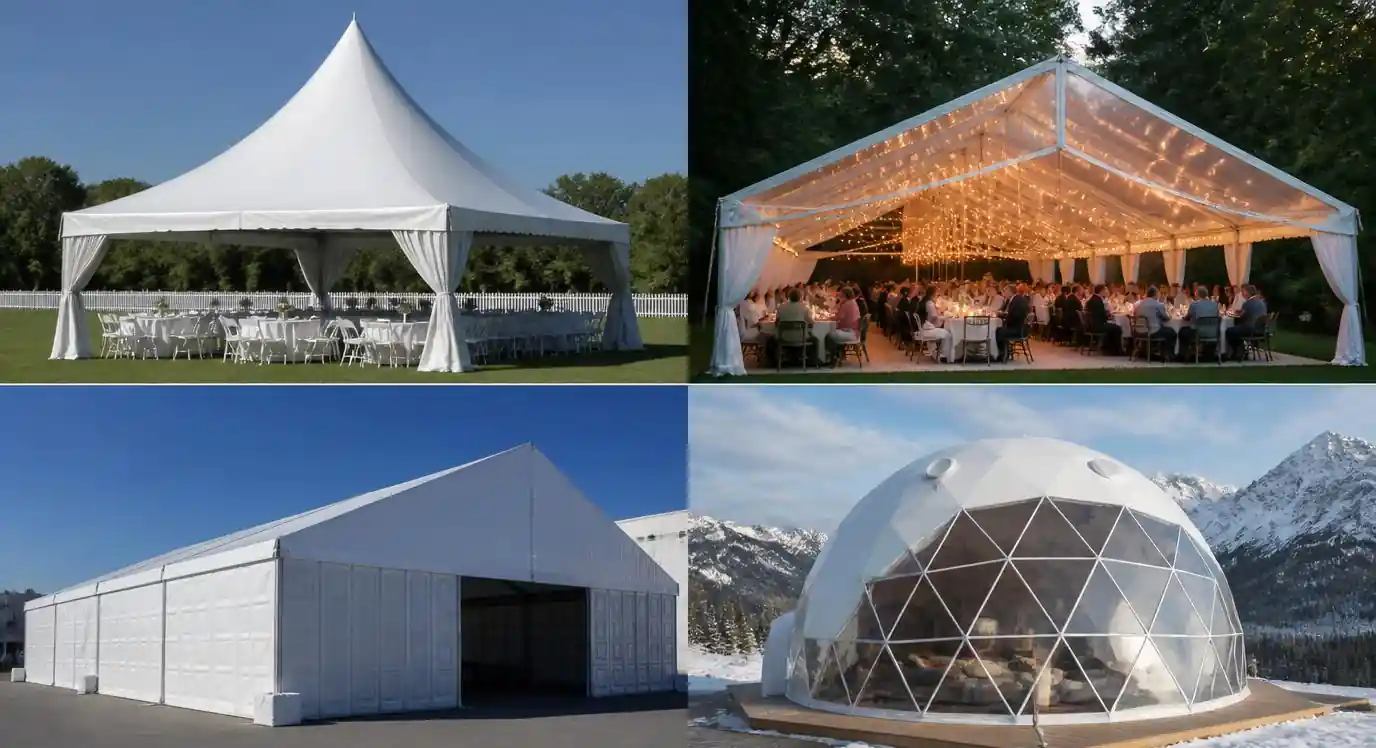 Different event tent types showing pagoda, A-frame, clear span and geodesic dome structures
Tent structure directly determines installation complexity and time requirements. Frame design, span width, and anchoring systems create vastly different setup profiles that inexperienced planners frequently misjudge.
Standard Setup Times for Common Tent Types:
| Tent Type | Size Range | Crew Size | Setup Time | Key Factors |
|---|---|---|---|---|
| Pagoda Tent | 3m × 3m to 6m × 6m | 2-3 people | 30-45 minutes | Modular units, simple assembly, minimal tools required |
| A-Frame Tent | 10m × 10m to 20m × 30m | 4-6 people | 4-8 hours | Medium complexity, standard aluminum frame, guy ropes |
| Clear Span Tent | 10m × 20m to 30m × 60m | 6-12 people | 8-16 hours | Column-free design, heavy frame sections, precise alignment |
| Geodesic Dome | 10m to 30m diameter | 6-10 people | 10-18 hours | Complex geometry, specialized connectors, careful tensioning |
Pagoda tents offer the fastest deployment because of modular design and lightweight components. A 5m × 5m pagoda unit requires just 35-40 minutes with a two-person crew—ideal for VIP areas or vendor booths where rapid setup matters.
A-frame tents represent the mid-range complexity sweet spot for most events. Our A-frame tent installations typically run 6-8 hours for a 15m × 20m structure with a skilled four-person crew. The frame erects in sections, sidewalls attach via keder track systems, and guy ropes provide wind stability.
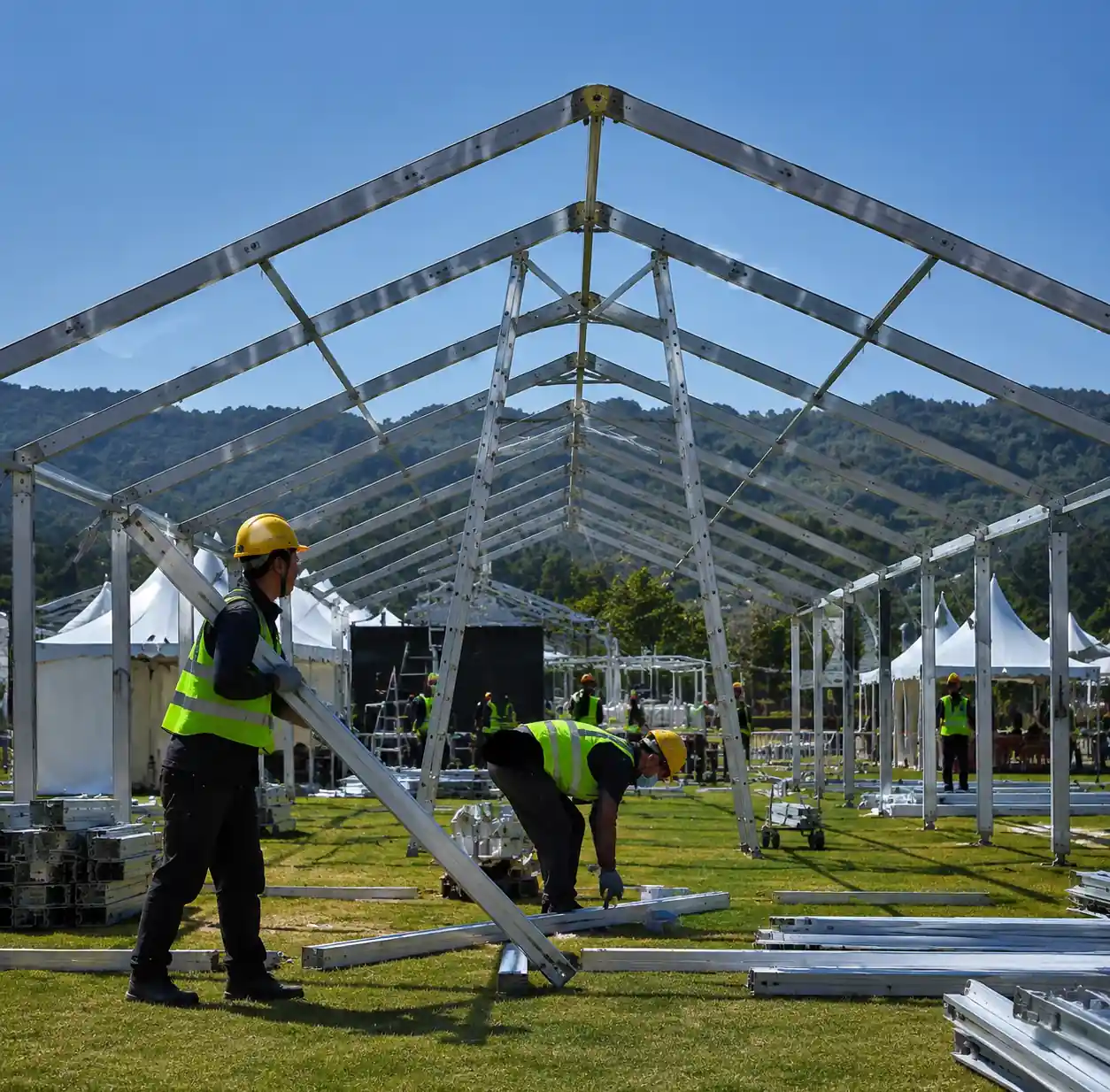 Professional crew installing A-frame tent aluminum frame structure
Clear span structures demand significantly more time due to beam weight and precision requirements. A 20m × 40m clear span tent needs 10-14 hours with an eight-person crew. Frame sections weigh 80-120kg each, requiring coordinated lifting. Beam alignment tolerances stay within 5mm to prevent binding during assembly—rushing this phase causes dangerous structural stress.
Geodesic dome tents present unique timing challenges. The geodesic dome tent installation for a 20m diameter structure takes 12-16 hours with specialized crews. Hub connectors must seat properly at each vertex, and fabric tensioning requires multiple adjustment passes to achieve uniform load distribution.
Critical Time Multipliers:
- First-time site installation: Add 30-40% to standard times for crew familiarization
- Complex flooring systems: Add 3-6 hours for interlocking panels or raised platforms
- Integrated HVAC: Add 4-8 hours for climate control equipment installation
- Custom branding and graphics: Add 2-4 hours for vinyl application or lighting setup
Crew Size Impact on Installation Speed
Crew configuration affects both speed and safety. Too few workers create injury risks from manual handling violations, while excessive crew size causes coordination failures and inefficient staging.
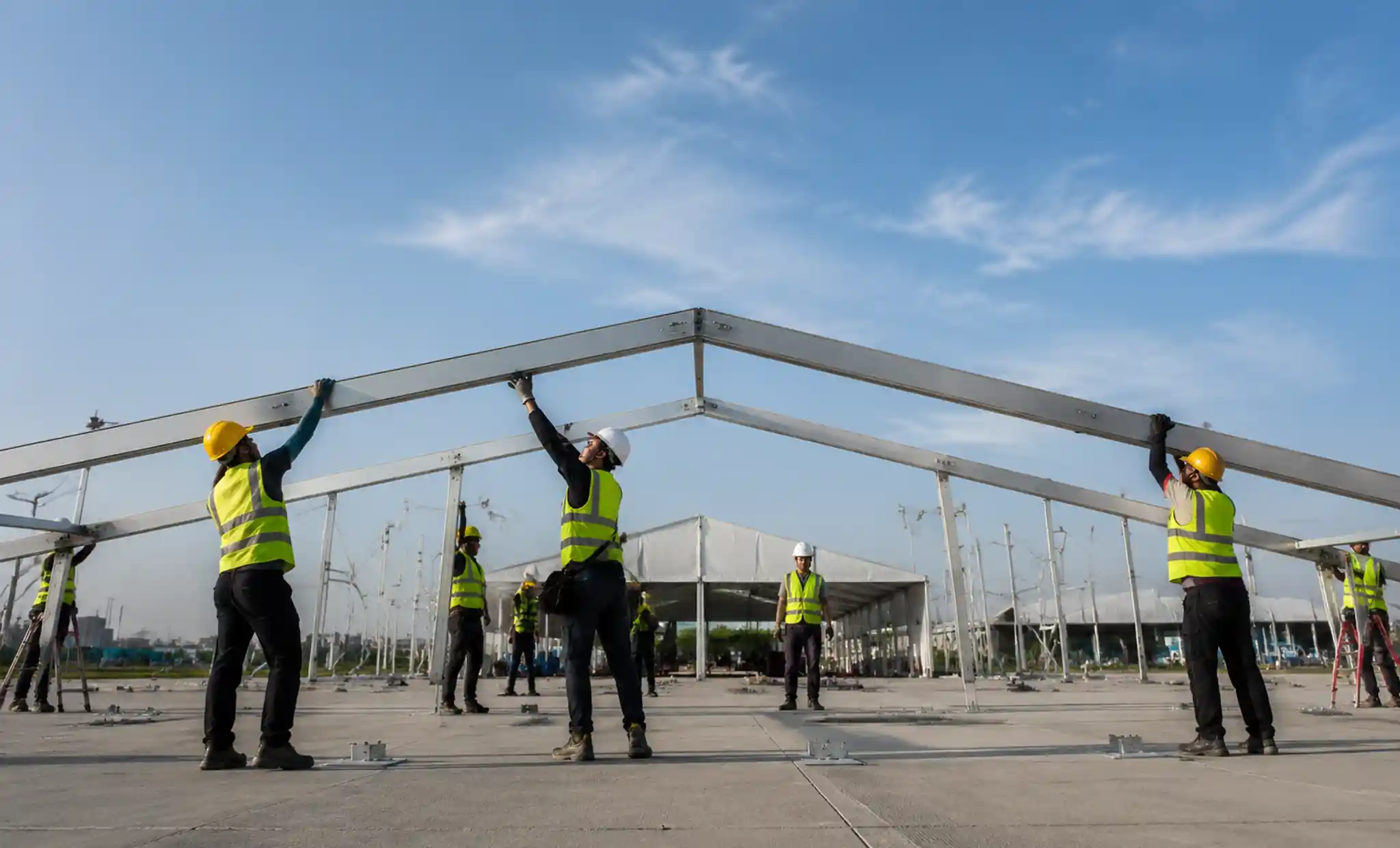 Installation crew working together to erect large event tent frame
Optimal Crew Sizing:
Small tents (under 100 sqm) need 2-4 workers. One person can technically erect a 5m × 5m pagoda tent, but two-person teams work 40% faster and maintain safety protocols. Three workers is optimal for 10m × 10m structures—one manages frame assembly while two handle fabric deployment and tensioning.
Medium tents (100-500 sqm) require 4-8 workers. A 15m × 25m structure needs minimum four people for safe frame handling, but six workers reduce setup time by 35%. The extra crew members eliminate bottlenecks during fabric attachment and guy rope tensioning phases.
Large tents (500+ sqm) demand 8-16 workers depending on span width. A 25m × 50m installation with six workers takes 18-22 hours, but twelve workers complete the same structure in 11-14 hours—a 40% reduction. However, crews larger than sixteen people show diminishing returns due to coordination overhead.
Crew Experience Multiplier:
Professional tent installation crews work 50-70% faster than general labor teams. Experienced crews understand frame sequencing, recognize alignment issues before they become problems, and maintain consistent work pace without supervision.
Research on construction productivity shows that mixed-experience crews (combining veterans with trainees) achieve 85-90% of expert crew speed while building skills. Never staff entirely with inexperienced workers for time-critical installations.
Ground Conditions and Anchoring Time
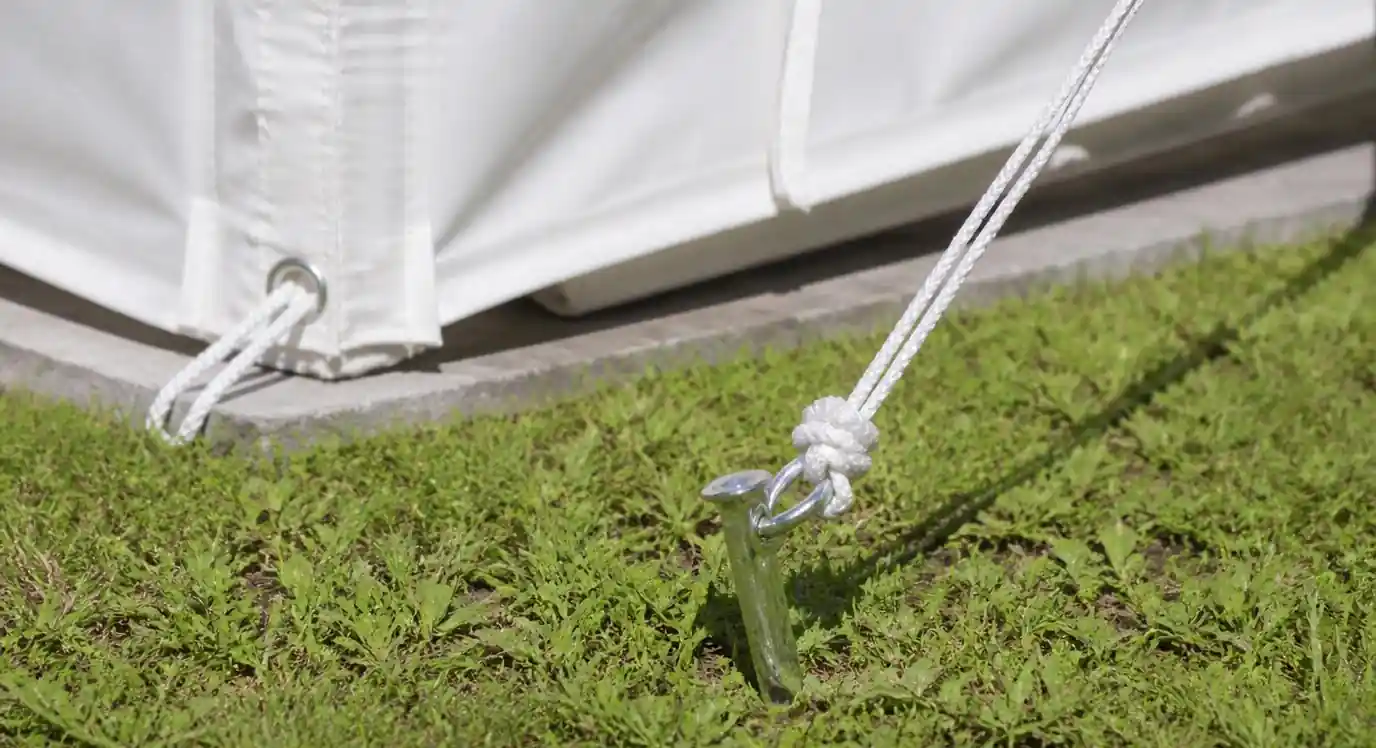 Ground stake anchoring system for event tent installation
Ground surface conditions determine anchoring method selection and dramatically affect total installation time. This factor causes more schedule overruns than any other variable because planners rarely conduct proper site assessment.
Anchoring Time by Ground Type:
| Ground Type | Anchoring Method | Time per Anchor Point | Equipment Needed | Challenges |
|---|---|---|---|---|
| Soft Soil/Grass | 900mm stakes | 3-5 minutes | Pneumatic driver or sledgehammer | Easiest, weather dependent |
| Hard Soil/Clay | 1200mm auger stakes | 8-12 minutes | Power auger, backup stakes | Requires drilling, stake bending risk |
| Asphalt/Concrete | 400kg ballast weights | 15-20 minutes per leg | Forklift or manual handling | Heavy lifting, precise positioning |
| Mixed/Rocky | Hybrid stake-ballast | 12-18 minutes | Multiple systems | Unpredictable, highest failure risk |
Soft grass sites provide fastest anchoring—a 15m × 20m tent with 24 anchor points takes 75-120 minutes for complete staking. Pneumatic stake drivers reduce this to 50-70 minutes but require compressed air equipment.
I've managed installations where hard clay soil tripled anchoring time. Stakes bent at 30-degree angles during driving, requiring extraction and re-positioning. A project scheduled for 6 hours stretched to 11 hours because site assessment missed compacted fill under 200mm of topsoil.
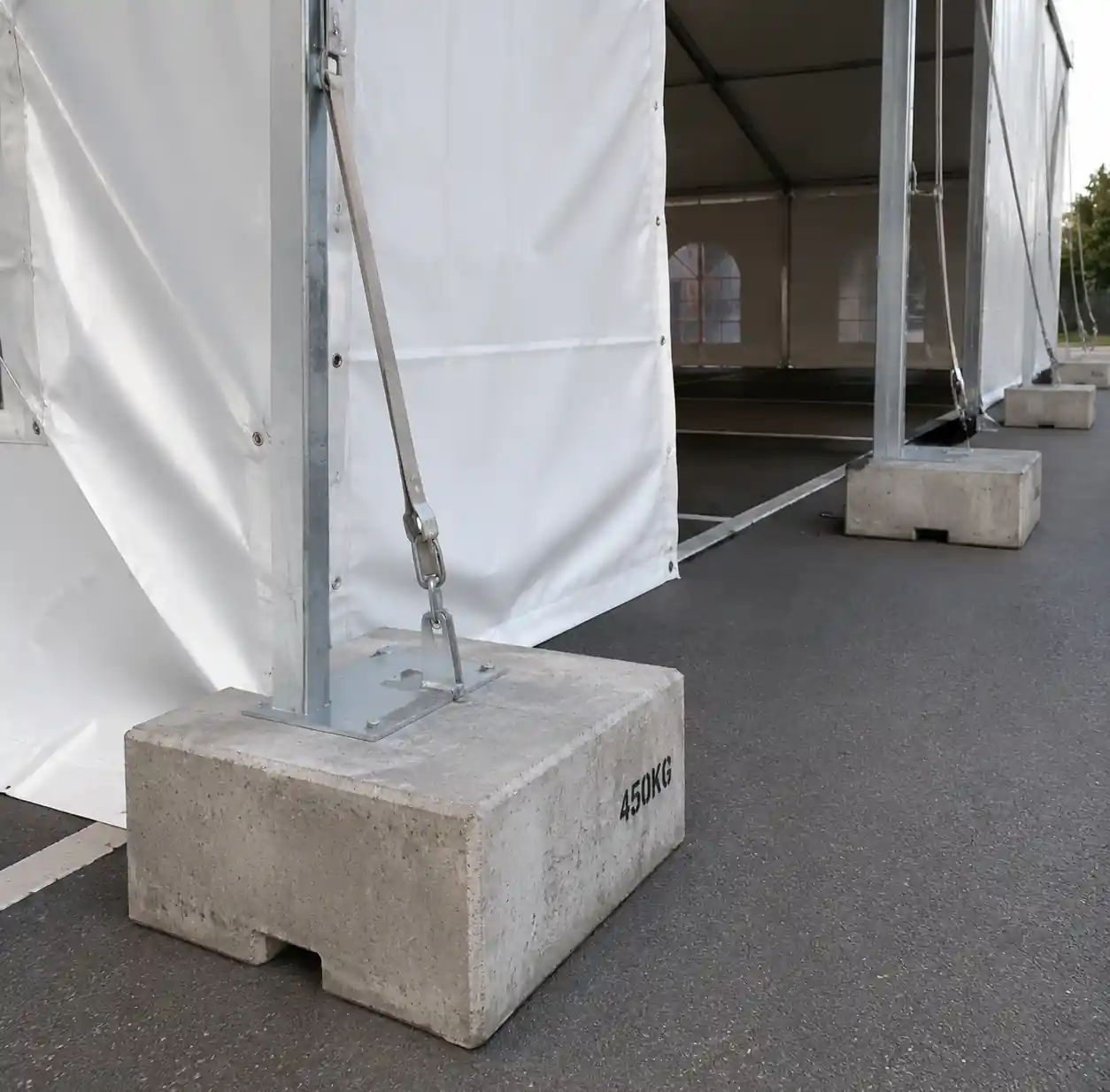 Concrete ballast weights anchoring clear span tent on hard surface
Concrete and asphalt surfaces eliminate stake options. Ballast weights (400-500kg per leg) require forklift placement or multi-person manual handling. A 20m × 30m clear tent structure with 32 anchor points needs 8-10 hours just for ballast positioning and weight distribution verification.
Critical Site Assessment Protocol:
Conduct test staking 48-72 hours before installation. Drive stakes at multiple site locations to verify soil consistency. Underground utilities, irrigation systems, and buried debris cause delays that surface inspection cannot detect. I've seen crews hit concrete footings, sprinkler lines, and fiber optic cables—each incident adding 2-4 hours while damage assessment and rerouting occurs.
Weather Delays and Contingency Planning
Weather conditions stop tent installation progress faster than any other factor. Wind, rain, lightning, and extreme temperatures force work stoppages that compressed schedules cannot absorb.
Weather Stop-Work Thresholds:
Wind speeds above 40 km/h (25 mph) make fabric handling dangerous and impossible. Loose fabric acts as a sail, creating uncontrolled forces that injure workers and damage materials. Professional installation standards require work suspension at sustained winds of 35-40 km/h, with full stoppage at 50 km/h gusts.
Rain creates multiple problems beyond worker discomfort. Wet fabric gains 15-20% weight, increasing manual handling difficulty and frame loading during installation. Wet surfaces reduce friction for rope tensioning and create slip hazards. Lightning within 10 kilometers mandates immediate work stoppage per OSHA requirements—aluminum frames conduct electricity and create deadly strike risks.
Temperature extremes affect both workers and materials. Above 35°C, PVC fabric becomes more pliable but workers face heat exhaustion risks requiring mandatory rest breaks—reducing productivity by 30-40%. Below 5°C, PVC stiffens and loses flexibility, making tensioning difficult and increasing tear risk at stress points.
Contingency Time Buffers:
Weather-dependent outdoor installation requires time buffers that many planners resist. For critical events, I recommend:
- Spring/Fall (variable weather): Add 40-50% contingency time
- Summer (stable conditions): Add 25-30% contingency time
- Winter (challenging weather): Add 60-80% contingency time or avoid altogether
A 10-hour installation scheduled during October in temperate zones needs 14-15 hour total window. This allows 4-5 hours for weather delays, meal breaks, and unforeseen issues without compromising event start time.
Real-world example: A 25m × 40m wedding tent installation scheduled for 12 hours faced unexpected afternoon thunderstorms. Four hours of weather delay plus two hours of wet ground rework pushed completion to 18 hours total—but we planned 16-hour window with overnight crew option, so ceremony proceeded on schedule.
Permit Inspections and Compliance Timeline
Municipal permits and safety inspections add mandatory delays that schedule-driven planners often ignore. Permit violations result in forced tent removal, event cancellation, and liability exposure that far exceeds time buffer costs.
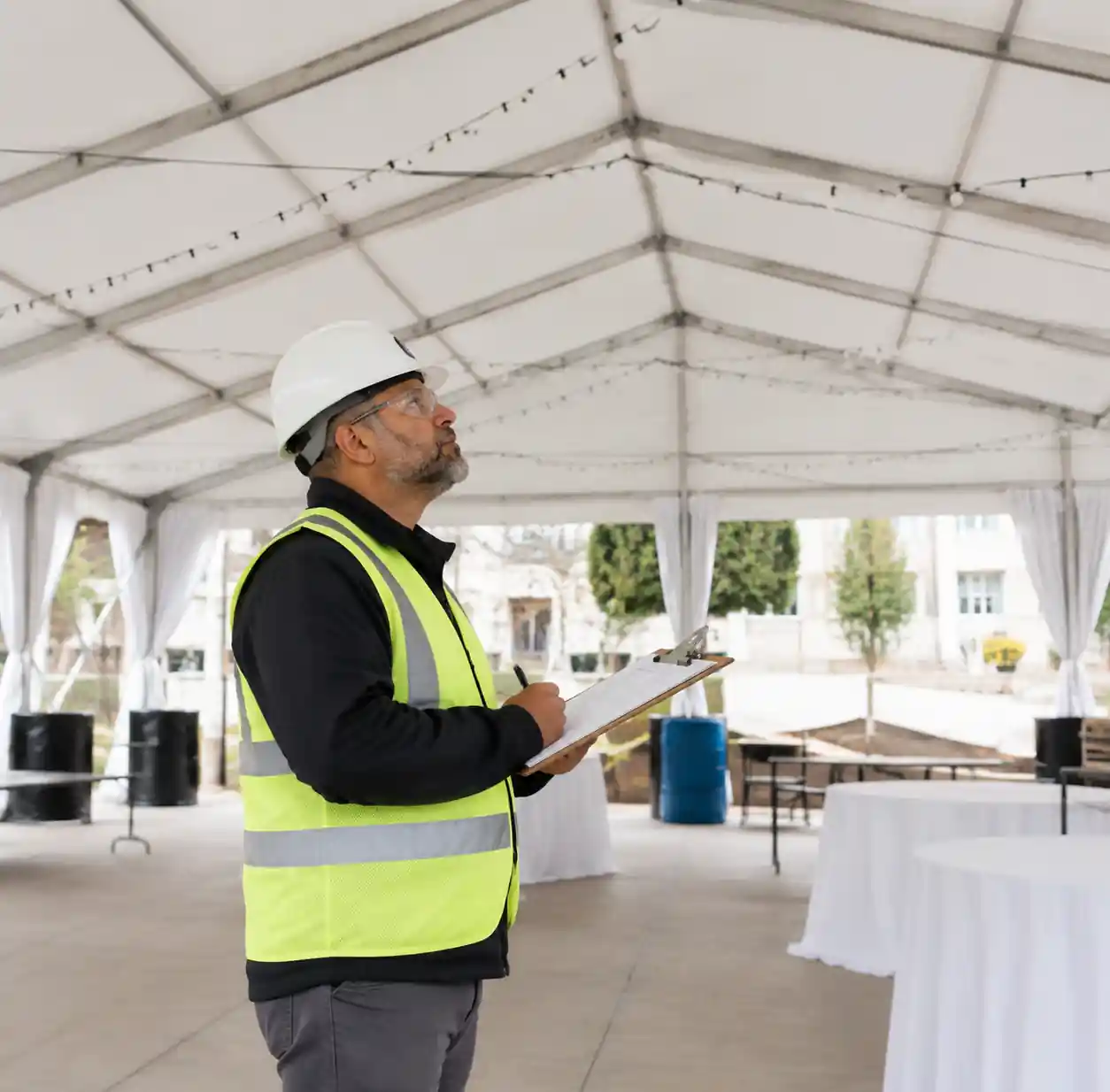 Safety inspector reviewing event tent installation for permit compliance
Permit Timeline Requirements:
Temporary structure permits typically require 7-21 day processing depending on jurisdiction and tent size. Structures over 200 sqm almost always trigger engineering review and inspection requirements. Submit permit applications 4-6 weeks before installation to accommodate processing delays and revision requests.
The permit specifies approved installation dates and requires inspection before occupancy. Schedule inspections minimum 24 hours after setup completion to allow inspector availability and potential correction time. Never plan event start immediately after tent completion—inspectors may identify issues requiring 2-6 hours of remediation.
Common Inspection Issues Causing Delays:
Insufficient anchoring is the most frequent inspection failure. Inspectors verify stake depth, ballast weight, and guy rope tension against engineering plans. Under-specification requires immediate correction—adding stakes or ballast extends timeline by 2-4 hours plus re-inspection scheduling.
I've witnessed inspectors red-tag installations for:
- Guy ropes crossing pedestrian paths without protection
- Insufficient emergency egress width
- Missing fire extinguisher placement
- Inadequate electrical grounding
- Blocked emergency vehicle access
Each violation adds 1-3 hours for correction plus potential re-inspection delays of 4-24 hours if inspector must return another day.
Compliance Strategy:
Engage professional tent companies with permit experience in your jurisdiction. Velaria Spatia provides engineered drawings, permit application support, and installation crews trained to inspection standards. Our installations pass first inspection 94% of the time because we build compliance into setup procedures rather than treating it as afterthought.
Breakdown and Removal Schedule
Tent removal takes 60-70% of installation time when done properly. Rushed breakdown damages materials, creates safety hazards, and leaves site restoration problems that generate complaints and penalties.
Breakdown Time Estimates:
| Tent Type | Size Range | Crew Size | Breakdown Time | Site Restoration |
|---|---|---|---|---|
| Pagoda Tent | 5m × 5m | 2 people | 20-30 minutes | Minimal—grass recovery only |
| A-Frame Tent | 15m × 20m | 4-6 people | 3-5 hours | 1-2 hours stake removal, soil filling |
| Clear Span Tent | 25m × 40m | 8-12 people | 6-10 hours | 2-4 hours anchor point remediation |
| Geodesic Dome | 20m diameter | 6-8 people | 7-12 hours | 1-3 hours depending on anchoring |
Fabric removal requires the same wind condition limits as installation—work stops above 40 km/h sustained winds. Wet fabric from overnight condensation or rain adds 20-30% to handling time and weight.
Frame disassembly proceeds faster than installation because connection familiarity eliminates trial-and-error. However, corroded or over-torqued bolts cause delays—I've seen single seized connection consume 45 minutes of crew time with cutting torches.
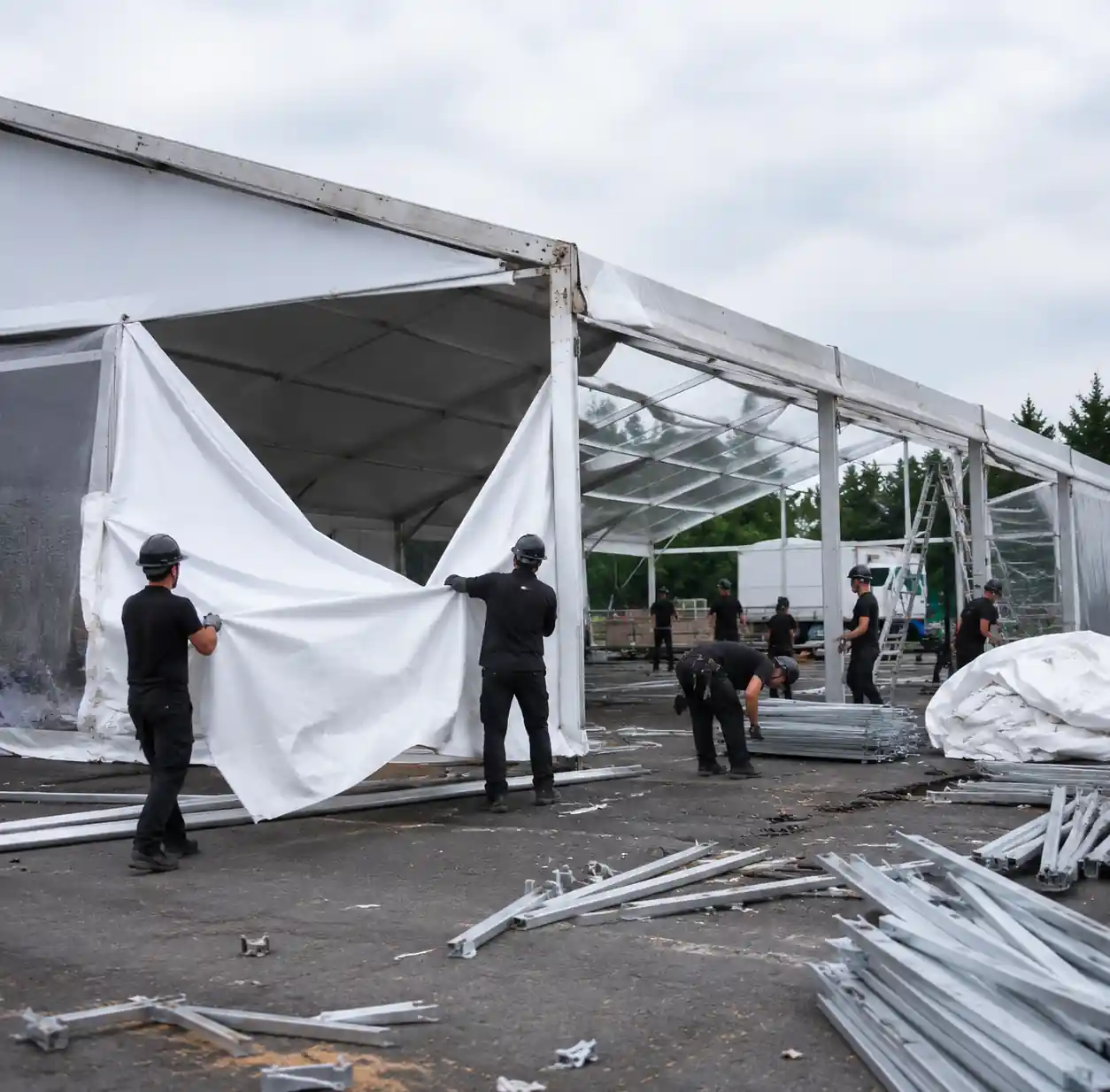 Crew disassembling event tent frame after event completion
Site Restoration Requirements:
Property owners and venues enforce site restoration standards. Grass sites need stake hole filling and turf repair. Hard surface sites require anchor hardware removal and surface cleaning. Failure to meet restoration standards triggers penalty charges of $500-2000 and damages future booking relationships.
Budget 15-25% of total breakdown time for site restoration. A venue requiring pristine condition might need 3-4 hours of detailed cleanup after an 8-hour tent removal—extending total schedule to 11-12 hours.
FAQs
How long does it take to set up a 20m × 30m wedding tent?
A 20m × 30m clear span wedding tent requires 10-14 hours with an 8-person professional crew on grass with good soil conditions. This includes frame erection, fabric installation, guy rope tensioning, and basic interior preparation. Add 3-4 hours for flooring installation, 2-3 hours for lighting and décor, and 4-6 hours for furniture setup. Total venue preparation spans 20-28 hours across 2-3 days for a complete wedding marquee installation.
Can you set up an event tent in one day?
Yes, but only for specific tent types and sizes. Pagoda tents under 50 sqm install in under one hour. A-frame tents up to 15m × 20m can complete in 6-8 hours with adequate crew, allowing same-day setup and event. Larger structures over 300 sqm rarely complete safely in single day—rushing creates structural compromises and safety violations that risk event cancellation or collapse.
What slows down tent installation the most?
Ground conditions cause more delays than any other factor. Hard soil requiring auger drilling, concrete surfaces needing ballast weights, and hidden underground obstacles can double or triple planned installation time. Weather ranks second—wind over 40 km/h stops all fabric work, and rain delays create cascading schedule impacts. Poor site access for equipment ranks third, especially when frame components must be hand-carried long distances.
How many people does it take to set up a large event tent?
Large tents over 500 sqm require 8-16 workers depending on span width and complexity. A 25m × 50m structure needs minimum 8 people for safe manual handling, but 12 workers reduce installation time by 35-40%. Geodesic domes and tension structures may need specialized crews of 10-14 people due to technical complexity. Never attempt large tent installation with undersized crews—manual handling injuries and structural failures result from inadequate workforce.
Do you need permits for temporary event tents?
Most jurisdictions require permits for tents over 50-100 sqm or structures accommodating more than 50 people. Permit requirements vary by location but typically include engineering drawings, anchoring plans, fire safety compliance, and on-site inspection before occupancy. Permit processing takes 7-21 days minimum. Operating without required permits risks forced tent removal, event cancellation, fines up to $5000, and liability exposure if incidents occur.
How long before an event should you set up a tent?
Setup should complete minimum 24-48 hours before event start to allow inspection clearance, interior finishing, and contingency time for weather delays or correction work. For critical events like weddings, I recommend 72-96 hour advance setup. This buffer accommodates unexpected delays without jeopardizing event timing. Installation companies typically schedule setup 3-5 days before large events to eliminate time pressure and ensure quality.
Conclusion
Accurate tent setup time estimation prevents the schedule failures, safety compromises, and cost overruns that plague rushed installations. Understanding how tent type, crew size, ground conditions, and weather factors combine to determine realistic timelines allows proper contingency planning and vendor coordination.
Professional event tent installation requires technical expertise, proper equipment, and realistic time allocation. Velaria Spatia offers complete event infrastructure solutions including engineered structures, experienced installation crews, and permit support for projects worldwide. Our portfolio includes large-scale installations for international exhibitions, luxury weddings, corporate events, and festival infrastructure where schedule reliability and structural safety are non-negotiable.
Contact us today for detailed project timelines, installation planning support, and competitive pricing on professional event tent solutions.