


Event Tent Fire Safety: Compliance & Prevention Guide
If you are planning a wedding, corporate event, or festival under a tent structure, fire safety compliance is not optional—it's a legal requirement that protects lives and shields you from liability. In the United States alone, tent fires at outdoor events cause an estimated $2.3 million in property damage annually, with 70% of incidents traced to preventable causes like improper electrical installation, cooking equipment violations, or non-compliant fabric materials. Understanding fire safety requirements for event tents means knowing which certifications your fabric must carry, how to plan emergency exits, where to position fire extinguishers, and how to pass mandatory inspections before your event opens to guests.
Table of Contents
- 1. Fire-Retardant Fabric Certifications: NFPA 701 & International Standards
- 2. Emergency Exit Requirements: Distance, Width & Signage Standards
- 3. Fire Extinguisher Placement: Type, Quantity & Travel Distance Rules
- 4. Electrical Safety Protocols: Load Calculations & Grounding Requirements
- 5. Cooking Equipment Restrictions: Separation Distance & Ventilation Standards
- 6. Smoking Policies & Open Flame Control: Designated Areas & Enforcement
- 7. Pre-Event Fire Safety Inspections: Checklist & Documentation Requirements
- 8. FAQ
- 9. Conclusion
Fire-Retardant Fabric Certifications: NFPA 701 & International Standards
Event tent fabric must meet flame-resistance standards, and NFPA 701 is the most widely recognized certification in North America. This standard, established by the National Fire Protection Association, requires that tent materials self-extinguish within 2 seconds, produce a char length less than 6.5 inches, and prevent flaming drips that could spread fire. Most U.S. jurisdictions mandate NFPA 701 certification for any commercial tent over 400 square feet.
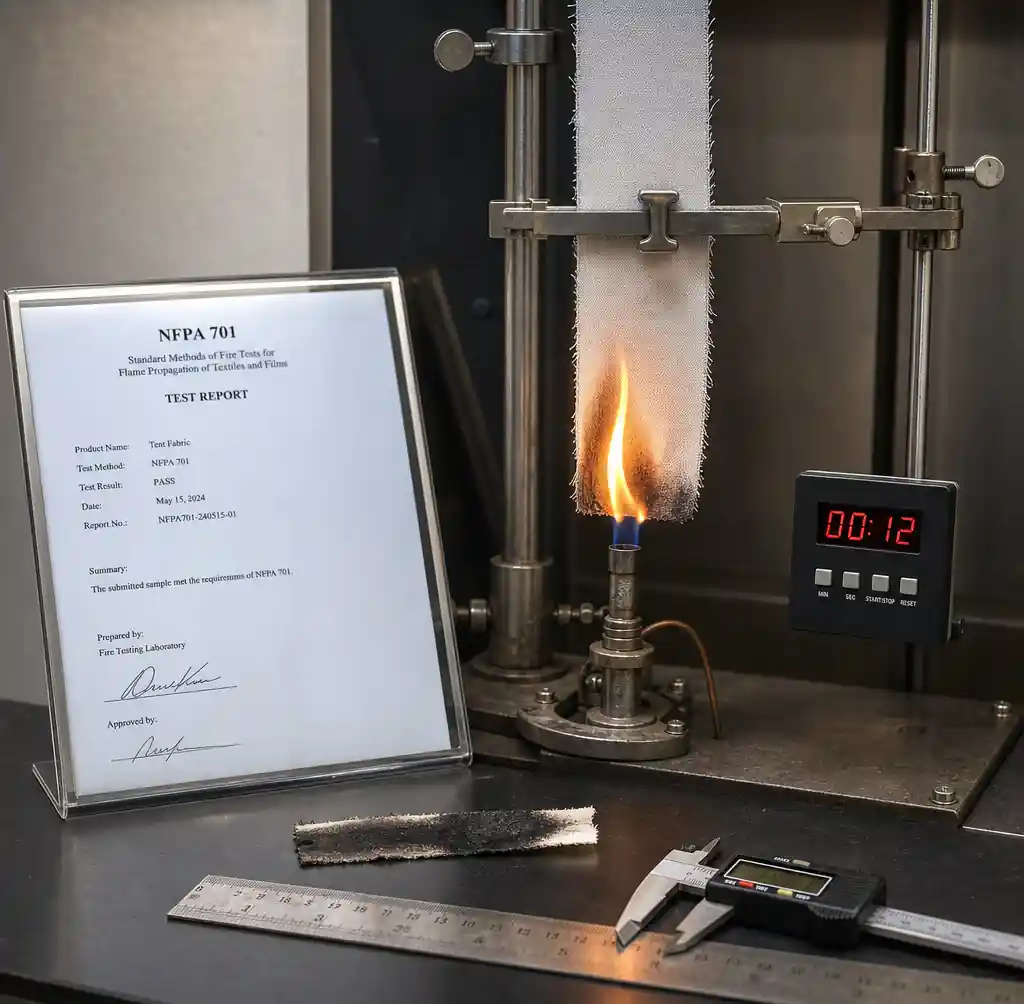 NFPA 701 flame test certification process for event tent fabric
Beyond NFPA 701, you should understand regional certification requirements. European markets require EN 13501-1 flame classification (typically B-s1, d0 or better for public assembly tents), while the UK follows BS 7837 standards. Canadian events must comply with CAN/ULC-S109, and Australian venues require AS/NZS 1530.2 certification. If you are sourcing tents internationally, verify that your supplier provides certification documents for your specific jurisdiction—generic "flame-resistant" claims without third-party testing certificates will not pass fire marshal inspections.
The certification process involves laboratory flame testing where fabric samples are exposed to a controlled ignition source. Passing materials receive a dated certificate that typically expires after 12 months, as flame-retardant coatings can degrade with UV exposure, moisture, and repeated installation cycles. You must request updated certificates annually and ensure your tent rental or purchase includes current documentation.
| Standard | Region | Key Requirements | Validity Period |
|---|---|---|---|
| NFPA 701 | USA/Canada | Char length <6.5", self-extinguish <2 sec | 12 months |
| EN 13501-1 | Europe | B-s1, d0 classification or better | Per certificate |
| BS 7837 | UK | Type B performance (limited flame spread) | 12-24 months |
| AS/NZS 1530.2 | Australia/NZ | Ignitability index <20, spread index <10 | 12 months |
Emergency Exit Requirements: Distance, Width & Signage Standards
Emergency exit planning saves lives during tent fires, where smoke accumulation occurs faster than in traditional buildings due to membrane structures trapping heat and combustion gases. According to fire code standards, every point inside a tent must be within 100 feet of an exit, and exits must be spaced at approximately equal intervals around the tent perimeter. This means a 60-foot by 90-foot wedding marquee (5,400 square feet) requires a minimum of four exits, one on each side.
Exit width requirements scale with occupancy load. For tents accommodating fewer than 50 people, each exit must be at least 36 inches wide. Events with 50-300 guests require 72-inch (6-foot) wide exits, and venues over 300 occupants need 96-inch exits or multiple egress points totaling that width. You calculate occupancy by dividing your tent's square footage by the occupancy factor for your event type: 15 square feet per person for standing receptions, 10 square feet for dining with dance floor, or 7 square feet for assembly seating without tables.
Clear exit signage is mandatory for all commercial tent events. Illuminated "EXIT" signs must be visible from any point inside the tent, positioned above each egress opening, and powered by battery backup systems that maintain illumination for at least 90 minutes during power failure. Exit pathways must remain clear of decorations, furniture, and equipment at all times—fire marshals commonly cite violations where pipe-and-drape, floral installations, or band equipment blocks egress routes. For wedding solution tents, you should mark exit routes on your floor plan during setup and ensure catering staff, venue coordinators, and security personnel know the evacuation protocol.
Fire Extinguisher Placement: Type, Quantity & Travel Distance Rules
Fire extinguisher requirements depend on tent size, occupancy, and hazard classification. The maximum travel distance to a fire extinguisher is 75 feet for general event tents, meaning a standard 40-foot by 60-foot structure (2,400 square feet) requires at least two extinguishers positioned at opposite corners. For larger exhibition solution tents or multi-tent festival configurations, you must ensure that no point in the venue exceeds this 75-foot travel distance threshold.
Extinguisher type matters as much as placement. ABC-rated multi-purpose extinguishers handle the most common tent fire scenarios: Class A fires (fabric, wood, paper), Class B fires (flammable liquids like lamp oil or cooking grease), and Class C fires (electrical equipment). Each extinguisher must have a minimum 2A:10B:C rating, which means it contains at least 2.5 pounds of extinguishing agent. For tents with cooking operations, you should add Class K extinguishers specifically designed for commercial kitchen fires involving oils and fats.
Extinguisher mounting and inspection are critical compliance points. Units must be mounted on stands or hung on support posts at a height between 3.5 and 5 feet from the ground to the top of the extinguisher. Each unit requires monthly inspection tags showing it is fully charged (pressure gauge in the green zone) and the safety pin is intact. If you are renting extinguishers, verify that your supplier provides recently serviced units with current inspection documentation—expired inspection tags are grounds for event permit denial.
For large-scale events with multiple structures, you can calculate your exact extinguisher needs using this formula: (Total tent square footage ÷ 3,000) rounded up = minimum number of 2A-rated extinguishers required. A 15,000-square-foot festival site would need five extinguishers minimum, plus additional units for cooking areas, electrical distribution points, and fuel storage locations.
Electrical Safety Protocols: Load Calculations & Grounding Requirements
Electrical system failures cause 35% of tent fires, typically from overloaded circuits, improper grounding, or damaged extension cords hidden beneath flooring. You must calculate your total electrical load before the event by adding the wattage of all devices: lighting, HVAC units, audio equipment, catering appliances, and charging stations. According to electrical safety guidelines for events, the total connected load should not exceed 80% of your power source capacity to maintain a safety margin.
For a typical 200-guest wedding under a tent, expect to require 15-20 kW of power: 3-4 kW for lighting, 6-8 kW for climate control, 2-3 kW for audio/visual, and 4-5 kW for catering equipment. If your venue provides a 100-amp, 240-volt service (24 kW capacity), your 20 kW load leaves a safe 4 kW buffer. When power demands exceed site capacity, you must bring in generator sets with proper load distribution panels and Ground Fault Circuit Interrupter (GFCI) protection on all circuits.
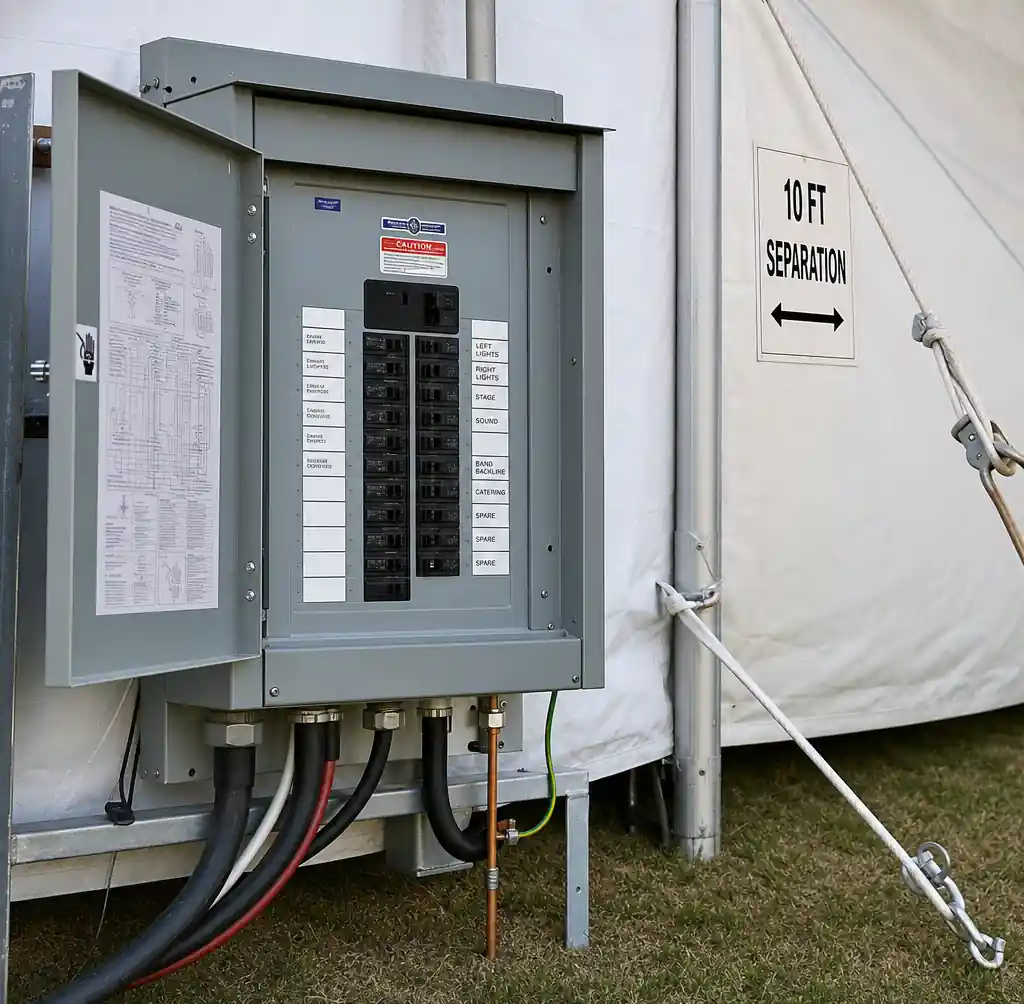 Weatherproof electrical distribution panel setup for tent events
All electrical equipment must be grounded through a three-prong plug system. Extension cords rated for outdoor use (labeled "W-A" or "SJTW") are required for any above-ground wiring, and cords must be rated to carry 125% of the connected load to prevent overheating. Never run extension cords under tent sidewalls where they create trip hazards and mechanical damage risks, and never daisy-chain multiple cords together—each circuit should run directly from the distribution panel to the equipment. For restaurant hospitality solution tents with commercial cooking equipment, you should hire a licensed electrician to install dedicated 240-volt circuits with appropriate breaker sizing.
Distribution panels (breaker boxes) must be positioned outside the tent structure at least 10 feet from any tent wall, enclosed in weatherproof NEMA-rated housings, and clearly labeled with circuit directories. If your event runs multiple days, daily visual inspections of all connections, cords, and equipment are mandatory—look for scorch marks, exposed wiring, warm plugs, or tripped breakers that indicate developing problems.
Cooking Equipment Restrictions: Separation Distance & Ventilation Standards
Cooking operations present the highest fire risk in event tents, which is why fire safety regulations require cooking tents to be positioned at least 20 feet away from any other tent or structure. This separation distance prevents fire from spreading between structures and allows emergency vehicle access. For events where food service is integrated into the main tent, you must install a Type I commercial kitchen hood with fire suppression systems—the same equipment required in permanent restaurant kitchens.
Open-flame cooking (charcoal grills, propane burners, wood-fired pizza ovens) is prohibited inside most event tent structures unless you have specific fire marshal approval and install a comprehensive fire suppression system. When approved, these systems typically include automatic extinguishing hood systems that discharge wet chemical agents when temperatures exceed 450°F, along with manual pull stations positioned near exit routes. The installation cost for a compliant Type I hood system ranges from $8,000 to $15,000, which is why many event planners opt for external cooking tents or cold catering service.
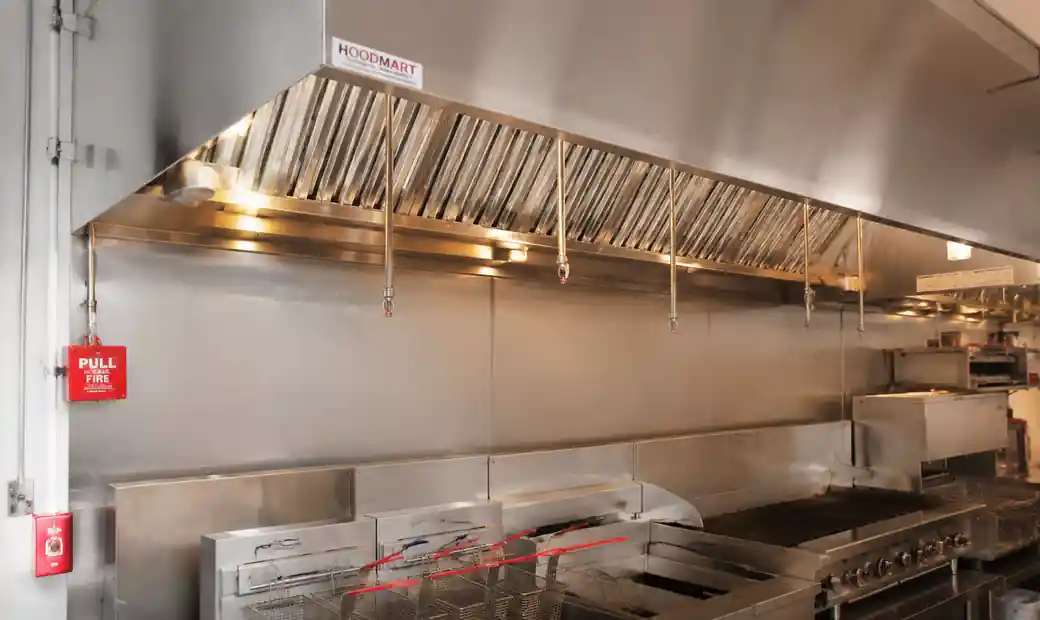 Type I commercial hood with fire suppression system in event cooking tent
For propane-powered equipment, you must follow strict fuel storage and handling protocols. Propane tanks over 20 pounds (5-gallon capacity) must be stored outside the tent at least 10 feet from any tent fabric, secured in an upright position, and separated from ignition sources. Tank connections require annual inspection by certified technicians, and you should use appliances specifically rated for commercial food service rather than consumer-grade camping equipment.
Electric cooking equipment (induction burners, convection ovens, warming cabinets) presents lower fire risk but still requires compliance with electrical load capacity and grounding standards covered in Section 4. When planning catering logistics for your event, verify your equipment list with your local fire authority during the permit application phase—last-minute substitutions of propane equipment for electric appliances, or vice versa, often trigger permit denials and event delays.
| Cooking Equipment Type | Minimum Separation from Tent | Fire Suppression Required | Fuel Storage Rules |
|---|---|---|---|
| Open-flame grills/burners | 20 feet outside tent | Yes - Type I hood system | Propane tanks >20 lbs: 10 ft from tent |
| Enclosed propane appliances | Can be inside with approval | Yes - Automatic suppression | Tanks secured upright, external storage |
| Electric cooking equipment | Inside tent allowed | Not required | N/A |
| Warming/holding equipment | Inside tent allowed | Not required | N/A |
Smoking Policies & Open Flame Control: Designated Areas & Enforcement
Smoking bans are mandatory within all tent structures and extend to a minimum perimeter of 10 feet around the tent exterior. Fire safety regulations require designated smoking areas to be clearly marked with signage and positioned at least 25 feet from any tent structure, fuel storage, or flammable materials. These designated areas must include proper cigarette disposal receptacles—metal containers filled with sand or water—never plastic bins or decorative planters where smoldering materials can ignite.
You should communicate your smoking policy through multiple channels: event invitations, on-site signage, verbal announcements, and printed programs. For wedding and corporate events, assign venue staff or security personnel to politely enforce the policy, as guests often underestimate fire risk or assume rules don't apply to them. In our experience managing large-scale events, 60-70% of smoking policy violations occur during cocktail hours when guests are most relaxed and supervisory attention is divided.
Beyond smoking, open-flame decorations and lighting present similar ignition hazards. Traditional candles are prohibited inside most event tents unless they are enclosed in glass hurricane shades with a minimum 2-inch clearance above the flame. For wedding solution clients who want candlelit ambiance, we recommend battery-operated LED candles that provide the same visual effect without fire risk. If you insist on open-flame candles, they must be positioned on stable surfaces at least 12 inches from any fabric surface (including tablecloths, curtains, and decorative draping) and extinguished before the tent is vacated.
Decorative elements like sky lanterns, sparklers, and fireworks are strictly prohibited within and around event tents. These items produce temperatures exceeding 1,800°F and release burning particles that can ignite tent fabric even after the display appears extinguished. Many jurisdictions impose substantial fines ($500-$2,500) for open-flame violations, and your event insurance may exclude coverage for fire damage when prohibited items are used.
Pre-Event Fire Safety Inspections: Checklist & Documentation Requirements
Fire marshal inspections typically occur 24-48 hours before your event, after tent installation is complete but before decorating begins. You must schedule your inspection when applying for your event permit, which should happen 20-30 business days before the event date to allow time for corrections if violations are found. The inspector will verify compliance with all requirements covered in this guide and issue a certificate of approval required before the event opens to guests.
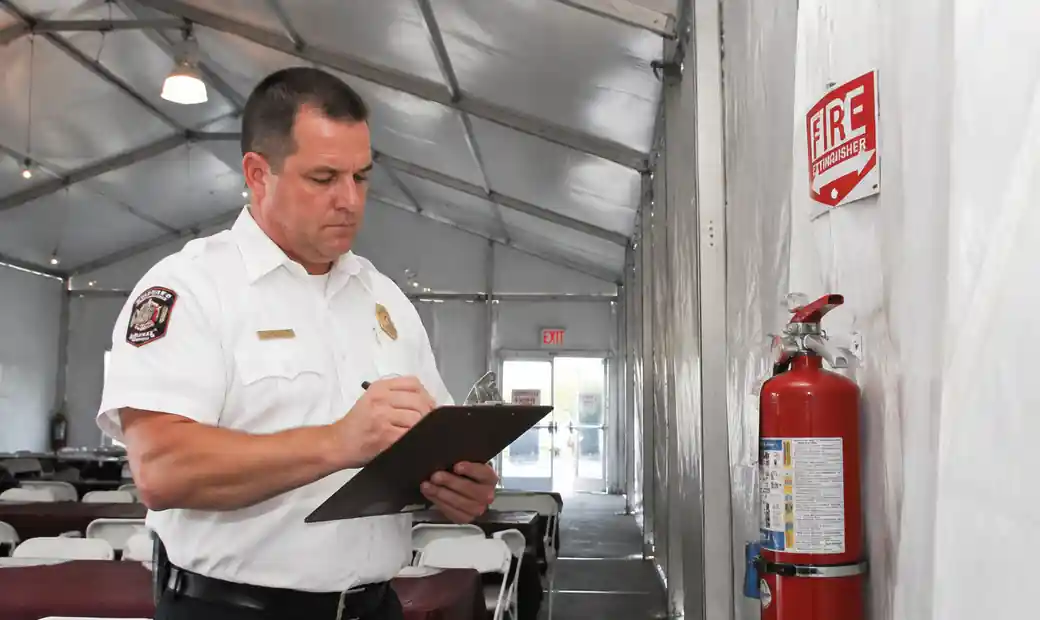 Fire marshal conducting pre-event safety inspection of tent structure
Prepare the following documentation for your inspection appointment: current NFPA 701 or equivalent fabric certifications for all tent materials; electrical load calculations and equipment specifications; fire extinguisher inspection records; site plan showing tent locations, exit routes, cooking areas, and clearance distances; emergency action plan including evacuation procedures and fire department access routes; and certificates of insurance with adequate liability limits (typically $1-2 million minimum for commercial events).
The physical inspection covers eight critical checkpoints: fabric certification labels (sewn tags or stamps visible on tent material), exit quantity, width, and spacing per occupancy calculations, fire extinguisher placement, charge status, and current inspection tags, electrical system grounding, GFCI protection, and load capacity, cooking equipment separation, suppression systems, and fuel storage, clearance of flammable materials from 10-foot perimeter around tent, smoking policy signage and designated areas, and emergency lighting and exit signage with battery backup power.
Common violations that delay event permits include expired fabric certification (certificates older than 12 months), blocked exits due to furniture placement or decorative elements, insufficient number of fire extinguishers or expired inspection tags, extension cords with damaged insulation or improper outdoor rating, cooking equipment positioned too close to tent structures, vegetation or combustible materials within the 10-foot clearance perimeter, and missing or non-illuminated exit signage. Each violation must be corrected and re-inspected before the fire marshal issues approval.
For multi-day events like festivals or corporate conferences, daily safety briefings are required. Your event staff should conduct morning walk-throughs checking that fire extinguishers remain in position, exit paths stay clear, electrical connections show no damage, and all equipment operates properly. If weather conditions change—high winds, lightning storms, or extreme heat—you should consult with fire authorities about temporarily closing the event or implementing additional safety measures.
FAQ
Q: Do I need fire-retardant certification for a small tent at a backyard wedding?
A: Yes, if your tent exceeds 400 square feet in most U.S. jurisdictions, or if you are charging admission or serving more than 50 guests. Private family gatherings under 50 people in tents smaller than 400 square feet may be exempt from commercial fire codes, but you should verify requirements with your local fire marshal. Even for exempt events, using NFPA 701 certified fabric provides crucial safety protection for your guests.
Q: How much does a fire safety inspection cost for event tents?
A: Inspection fees typically range from $75 to $300 depending on event size and jurisdiction. Complex multi-tent festivals with cooking operations may cost $500-$1,000 for comprehensive inspection services. Many jurisdictions include one inspection in your event permit fee, with re-inspection fees of $100-$150 if violations require correction. Budget for inspection costs when planning your event, as they are non-negotiable requirements.
Q: Can I use decorative string lights inside my event tent?
A: Yes, but they must be LED bulbs rated for commercial use with proper electrical certification (UL or ETL listing). Traditional incandescent string lights produce excessive heat and are prohibited in most jurisdictions. Your total lighting load must be included in electrical capacity calculations, and all fixtures must be securely mounted to prevent contact with fabric surfaces.
Q: What happens if my tent fails the fire safety inspection?
A: The fire marshal will issue a list of violations with required corrections. You must remedy all violations and schedule a re-inspection before your event can proceed. Depending on the severity of violations, this process may take 24-72 hours. In cases of serious non-compliance (non-certified fabric, grossly inadequate exits, hazardous electrical systems), your event permit may be denied until fundamental issues are resolved.
Q: Are battery-powered heaters safer than propane heaters for tent events?
A: Electric heaters eliminate open-flame hazards but require significant electrical capacity (1,500 watts per standard space heater). For large tents, the electrical load for adequate heating often exceeds site capacity. Propane heaters are permitted when they are commercial-grade units with automatic tip-over shutoffs, oxygen depletion sensors, and proper ventilation. Both options require fire marshal approval and must be positioned at least 3 feet from any fabric surface.
Q: How often should fire extinguishers be inspected for event tents?
A: Monthly professional inspections are required for all commercial fire extinguishers, with documentation tags showing inspection date and technician signature. For single-day events, your rented extinguishers must have been inspected within the previous 30 days. If you own extinguishers, annual maintenance by a certified technician is mandatory, plus monthly visual checks that you document.
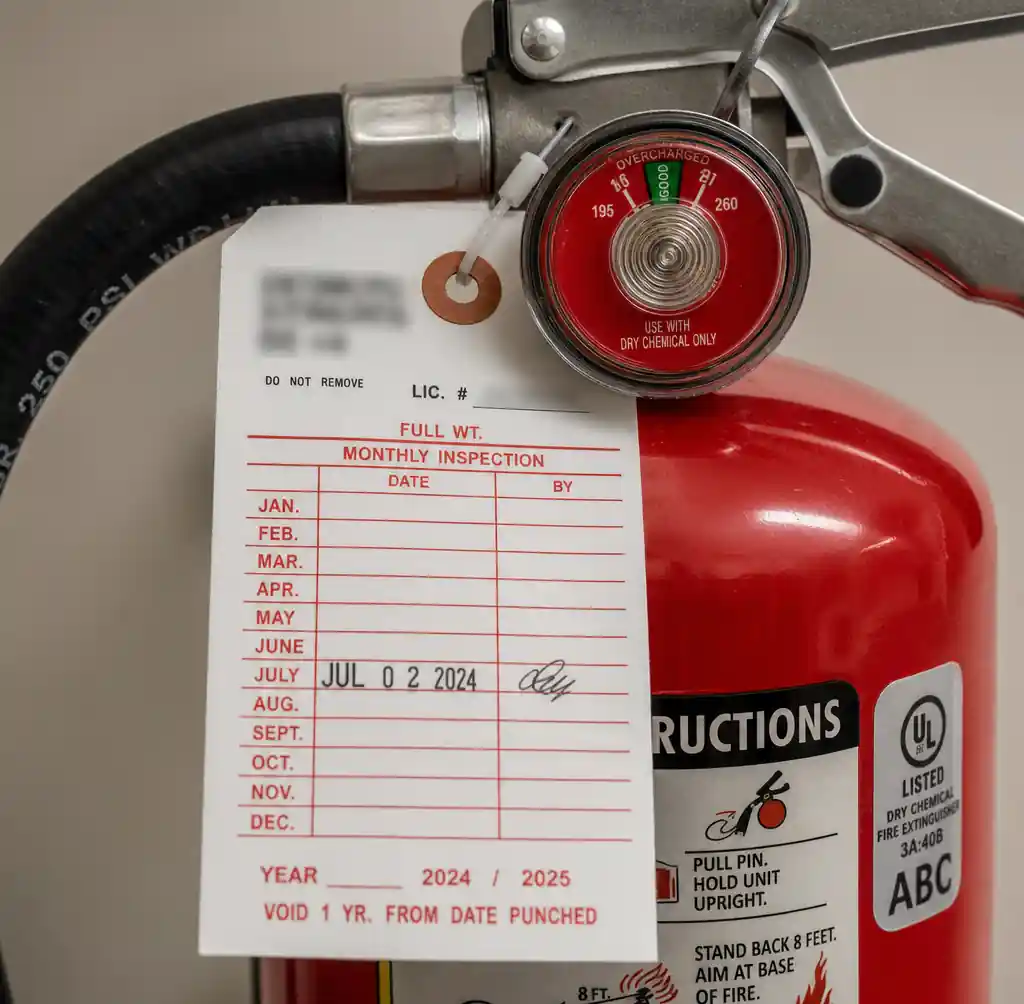 Close-up of fire extinguisher monthly inspection tag showing current certification
Conclusion
Fire safety compliance for event tents protects your guests, preserves your venue, and shields you from liability—but it requires meticulous planning and documentation. NFPA 701 fabric certification, properly spaced exits with illuminated signage, strategically placed fire extinguishers, grounded electrical systems, separated cooking areas, enforced smoking policies, and passed fire marshal inspections are not bureaucratic obstacles but proven safeguards that prevent the majority of tent fires.
If you need professional event tent structures that meet fire safety standards from the manufacturing stage, Velaria Spatia provides certified aluminum-frame tents with NFPA 701 and EN 13501-1 compliant fabrics. Our wedding solution, exhibition solution, and restaurant hospitality solution tents are engineered for safety compliance, with clear-span designs that simplify exit planning and modular configurations that accommodate fire safety equipment placement. We supply current certification documents with every tent delivery and can connect you with fire safety consultants who specialize in event tent compliance.
Contact us for fire-rated tent solutions, compliance documentation, and technical specifications that simplify your fire marshal approval process.