


Clear Span Tent vs Pole Tent: Which Is Right for Your Event?
If you want to choose the right tent structure for your outdoor wedding, corporate event, or exhibition, then you will need to understand the fundamental differences between clear span tents and pole tents. These two tent styles dominate the event industry, yet they serve distinct purposes and offer vastly different spatial configurations. Each structure affects guest capacity, layout flexibility, setup requirements, and overall event aesthetics in unique ways.
In today's article, we will explain the core structural differences between clear span and pole tents, compare their performance characteristics across multiple dimensions, and provide practical selection criteria based on event type, venue conditions, and budget constraints. This comprehensive guide will help event planners and venue managers make informed decisions that maximize both functionality and guest experience.
Table of Contents
- What Are Clear Span Tents?
- What Are Pole Tents?
- Key Structural Differences
- Interior Space and Layout Flexibility
- Setup Requirements and Installation
- Cost Comparison
- Weather Performance and Durability
- Best Applications for Each Tent Type
- How to Choose the Right Tent for Your Event
- Frequently Asked Questions
- Conclusion
What Are Clear Span Tents?
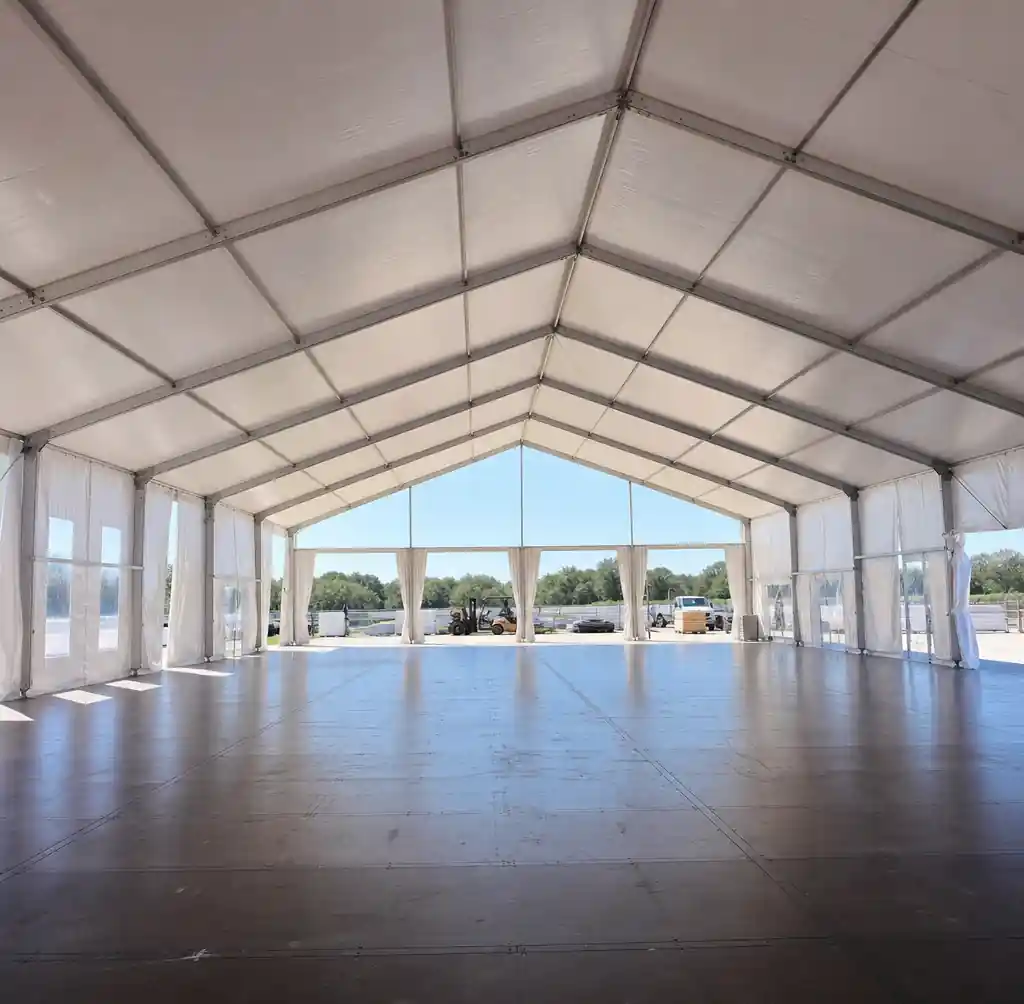
Clear span tents are aluminum-framed structures that eliminate interior support columns, providing completely unobstructed space from wall to wall. The modular frame system uses extruded aluminum profiles connected with steel joints, creating a self-supporting structure that transfers loads through the perimeter framework to ground anchors.
 Clear Span Tent Aluminum Frame Structure
This engineering approach delivers maximum interior flexibility because the entire tent volume remains free of poles or support posts. You can arrange tables, stages, dance floors, buffet stations, and seating configurations without working around center poles or guy lines. The clear span design accommodates guest counts from 200 to 1000+ attendees depending on span width, which typically ranges from 10 meters to 60 meters.
Modern clear span structures feature modular construction, allowing expansion in 5-meter increments to match exact capacity requirements. You can install these tents on virtually any surface including concrete, asphalt, grass, or uneven terrain, using weighted ballast systems or ground anchors depending on substrate conditions.
What Are Pole Tents?
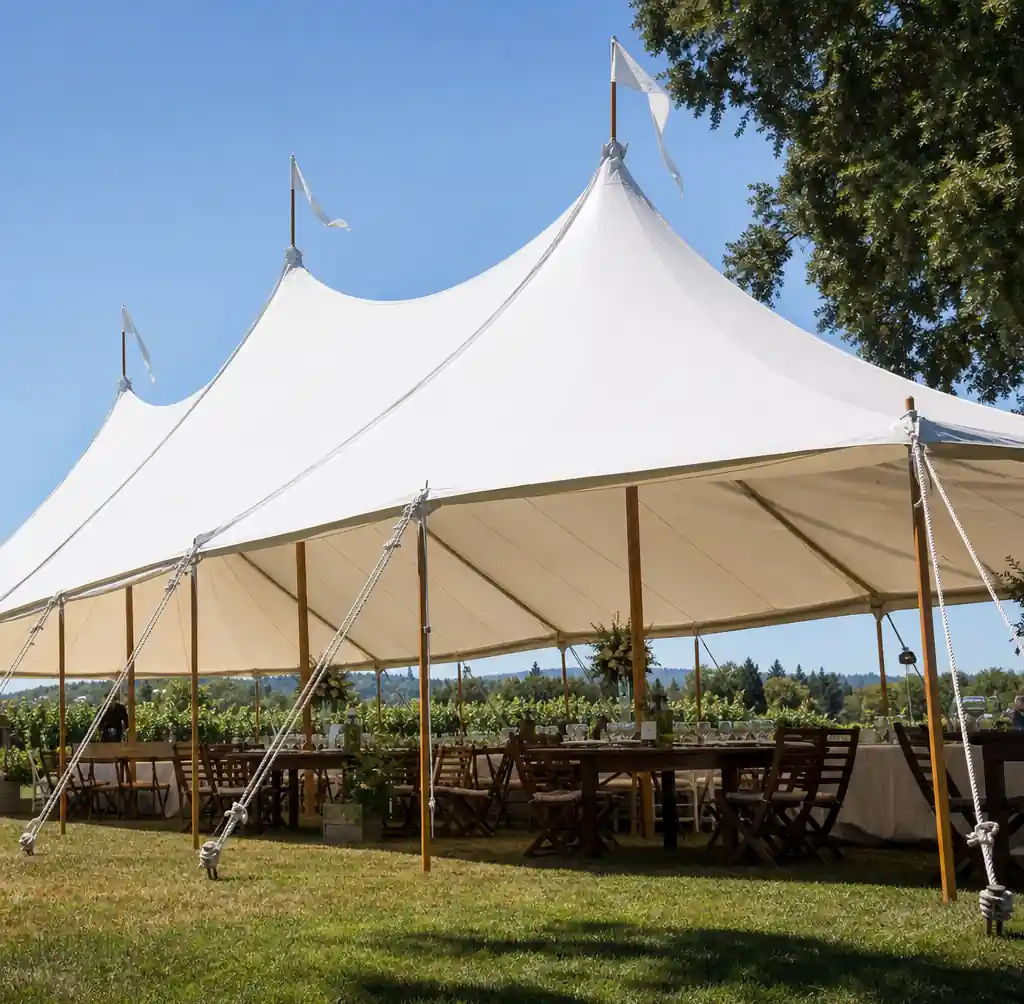
Pole tents use tall center poles and perimeter stakes to tension a peaked fabric top, creating the classic high-peaked silhouette associated with traditional outdoor celebrations. The fabric membrane stretches over vertical center poles (typically one or more depending on tent size) and anchors to the ground via guy ropes and stakes around the perimeter.
 Traditional Pole Tent with High Peaked Roof
This tension-based structure achieves stability through the fabric's pull against ground stakes, requiring installation on soft ground surfaces like grass, soil, or sand. The center poles create interior obstacles that influence furniture placement and traffic flow patterns, but they also produce the distinctive vaulted ceiling that many clients prefer for weddings and garden parties.
Pole tents offer excellent height-to-width ratios, with center pole heights reaching 16 to 20 feet, creating dramatic vertical volume that enhances the sense of space. The peaked roof design facilitates natural air circulation and provides superior rainwater drainage compared to flat-top structures.
Key Structural Differences
The structural engineering of clear span and pole tents represents fundamentally different load transfer mechanisms that determine their respective capabilities and limitations.
Frame vs Tension Systems
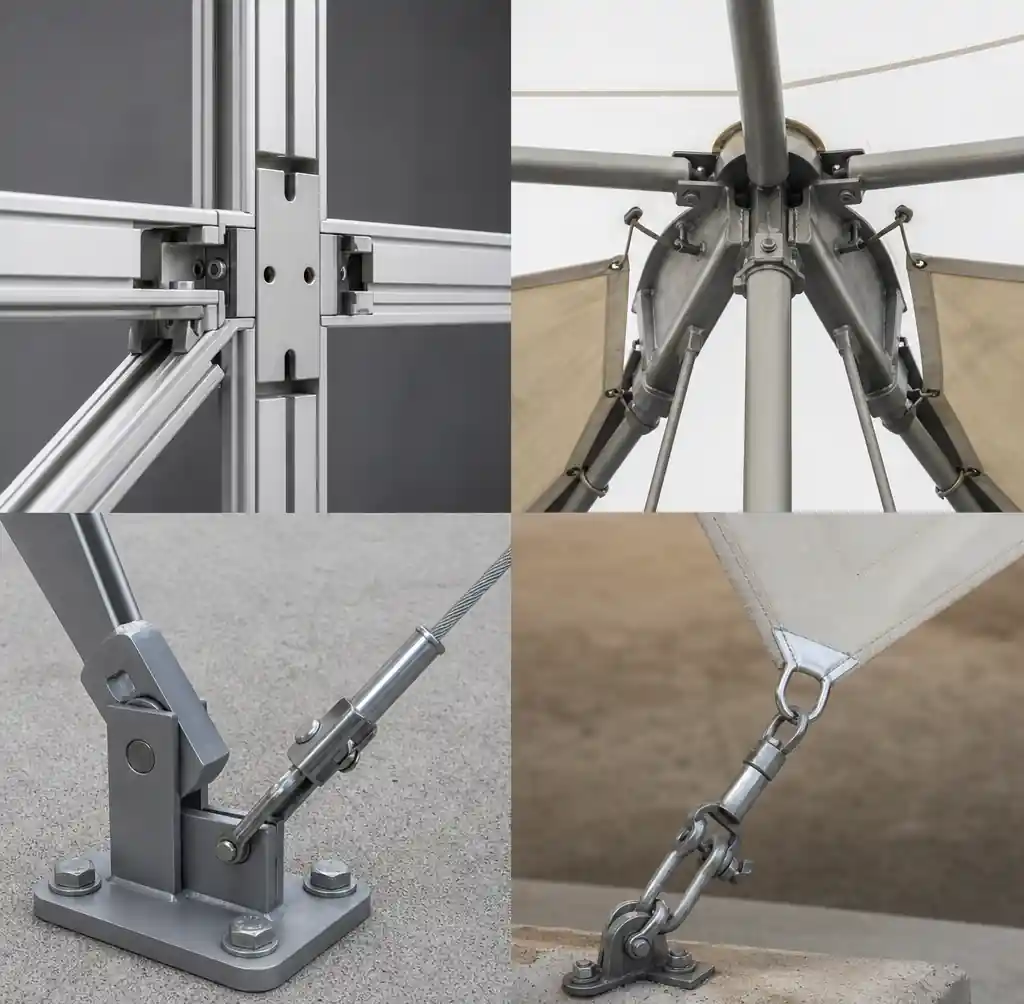
Clear span tents rely on rigid aluminum frames that create a self-supporting structure. The frame bears all structural loads (dead load, wind load, snow load) and transfers them through vertical columns to foundation points. This eliminates the need for interior supports and allows installation on hard surfaces where staking is impossible.
 Tent Frame Structure Comparison Detail
Pole tents use tension fabric systems where the membrane itself becomes a structural element. The fabric pulls against center poles and perimeter stakes, creating a balanced tension network. This design requires substantial ground penetration (stakes driven 2 to 3 feet deep) and performs best on soft, penetrable surfaces.
Comparison Table: Structural Characteristics
| Clear Span Tent | Pole Tent |
| Aluminum frame structure | Tension fabric system |
| No interior columns | Center poles present |
| Self-supporting | Requires staking |
| Works on any surface | Needs soft ground |
| Modular expandable | Fixed size configurations |
| Wind load rated to 100 km/h | Wind load rated to 80 km/h |
Interior Space and Layout Flexibility
The presence or absence of interior poles dramatically affects how event planners can utilize tent space and configure guest experiences.
Clear Span Space Advantages
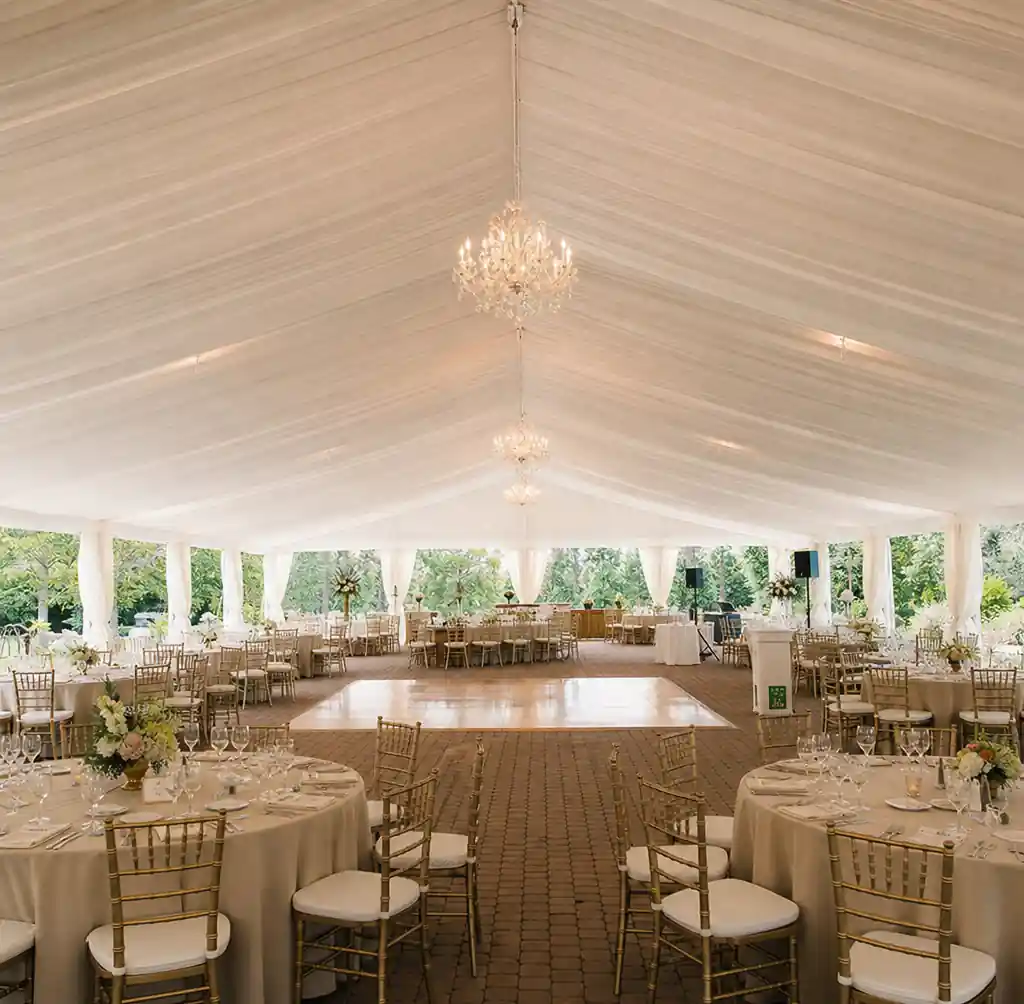
Clear span tents provide 100% usable floor area because no structural elements interrupt the interior volume. You can position staging, lighting rigs, AV equipment, and oversized displays anywhere within the tent footprint. Long banquet tables can run the full length of the structure without awkward interruptions, and dance floors can occupy prime center locations.
This unobstructed space proves especially valuable for exhibitions and trade shows where booth layouts require precise positioning and sponsor visibility matters. Corporate events benefit from the ability to create distinct zones (registration, networking, dining, presentation) without structural constraints limiting spatial planning.
 Clear Span Wedding Tent Interior Layout
For weddings accommodating 300+ guests, clear span structures allow symmetrical seating arrangements, central aisle configurations, and unimpeded sight lines to ceremony or reception focal points. The layout flexibility extends to equipment placement: HVAC systems, sound systems, and lighting grids can be suspended from roof trusses without ground-based equipment occupying valuable floor space.
Pole Tent Space Considerations
Pole tent interiors feature one or more center poles (depending on tent dimensions) that create functional zones while simultaneously presenting layout challenges. Event designers must work around these vertical elements when positioning head tables, stages, or dance floors.
However, experienced planners often incorporate center poles into décor schemes, using them as anchor points for fabric draping, floral installations, or decorative lighting. The poles can enhance the tent's traditional aesthetic when properly dressed, transforming structural necessities into design features.
For smaller gatherings (50 to 200 guests), a single center pole rarely poses significant layout problems. Larger pole tents may require multiple poles arranged in rows, which creates more complex furniture placement scenarios but maintains the distinctive peaked appearance many clients desire.
Setup Requirements and Installation
Installation logistics differ substantially between tent types, affecting project timelines, labor costs, and venue requirements.
Clear Span Installation Process
Clear span tents require professional installation teams and mechanical equipment (forklifts or telehandlers) to position and secure aluminum frame components. The modular frame assembly follows a systematic process: base plates, vertical uprights, roof trusses, and fabric covering.
Setup time for clear span structures ranges from 6 to 12 hours for 20m x 30m configurations, with larger spans requiring 1 to 2 days depending on complexity. The installation can proceed regardless of ground conditions because these tents use weighted ballast (concrete blocks or water barrels) on hard surfaces or ground anchors on soft terrain.
You can install clear span tents adjacent to buildings, on rooftops, or in parking lots where staking is impossible. This versatility makes them ideal for urban venues with limited grass areas or restrictive underground utility infrastructure.
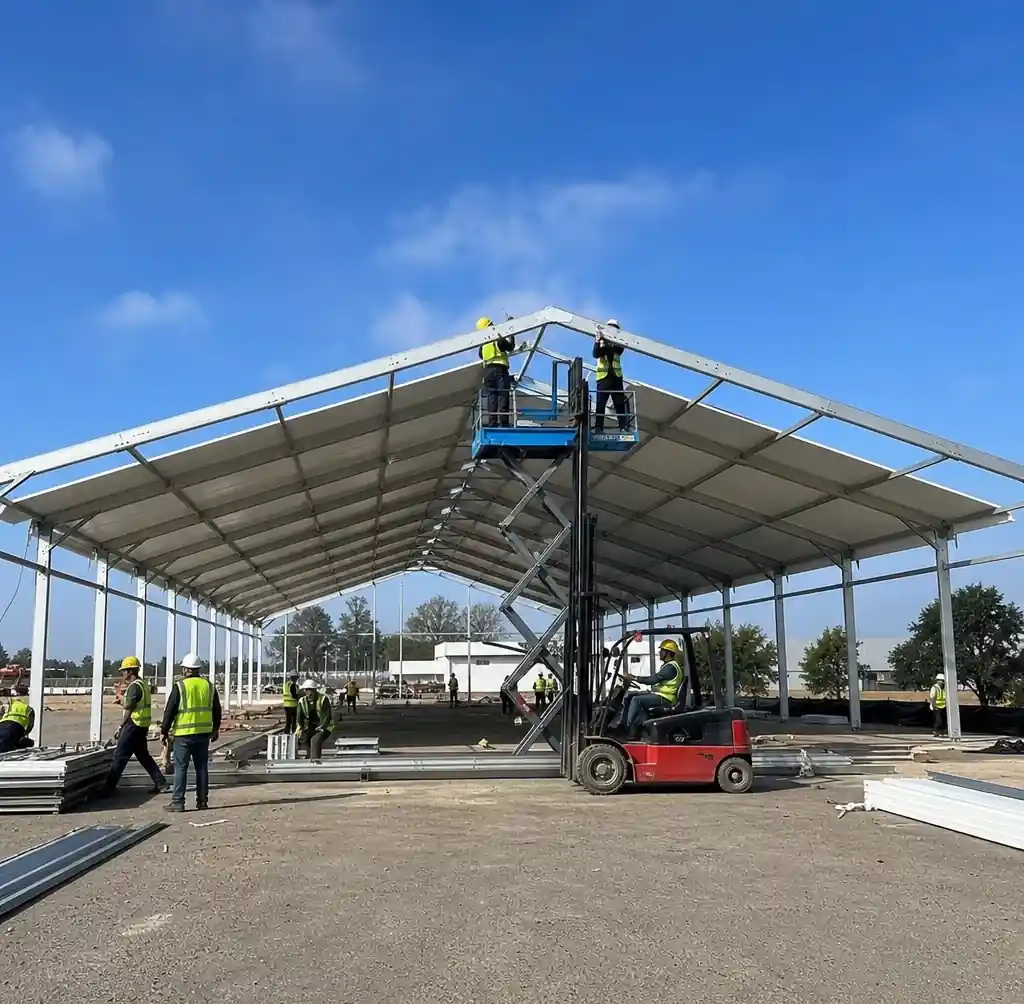 Event Tent Installation and Setup Process
Pole Tent Installation Process
Pole tents offer faster setup times (3 to 6 hours for comparable sizes) because they require less structural assembly. The installation process involves laying out the fabric, raising center poles, staking perimeter guy lines, and tensioning the structure.
However, pole tents absolutely require stakeable ground surfaces. Rocky soil, hard-packed earth, or underground utilities can prevent proper installation. The tent perimeter extends beyond the covered area due to guy ropes angling outward from stake points, requiring additional clearance (typically 5 to 8 feet beyond tent edges) that may constrain placement on smaller properties.
Weather conditions affect pole tent installation more significantly than clear span setups. High winds during installation create safety hazards when raising poles with fabric attached, sometimes forcing installation delays that wouldn't affect frame tent projects.
Comparison Table: Setup Characteristics
| Factor | Clear Span Tent | Pole Tent |
|---|---|---|
| Setup Time | 6-12 hours (20m x 30m) | 3-6 hours (20m x 30m) |
| Labor Requirements | Professional crew + equipment | Professional crew |
| Ground Requirements | Any surface | Soft, stakeable ground only |
| Weather Sensitivity | Low (can install in wind) | High (wind delays installation) |
| Footprint | Tent dimensions only | Tent + 5-8 ft perimeter |
| Removal Time | 6-10 hours | 2-4 hours |
Cost Comparison
Budget considerations significantly influence tent selection, with upfront rental or purchase costs varying based on structure type, size, and specifications.
Rental Cost Analysis
Pole tents typically cost 30% to 50% less than clear span tents for equivalent covered area. A 20m x 30m (600 sqm) pole tent rental averages $2,500 to $4,000 for a weekend event, while a comparable clear span structure ranges from $4,500 to $7,500.
This price differential reflects manufacturing costs, transportation logistics (clear span frames require more trucking capacity), and setup labor intensity. For budget-conscious events where interior poles don't compromise the event vision, pole tents offer excellent value.
However, you must factor in potential additional costs for pole tent installations: ground protection fees if venue requires restoration after staking, décor expenses to dress center poles, and layout compromises that may reduce effective guest capacity.
Purchase Cost for Event Companies
Event rental companies and venues considering tent purchases face different cost equations. Clear span structures command higher initial investment ($50 to $120 per sqm) but offer superior versatility that increases rental frequency and revenue potential.
Pole tents cost less upfront ($25 to $60 per sqm) but limit venue compatibility, potentially reducing booking opportunities at locations without suitable staking areas. The long-term ROI calculation must account for maintenance costs (fabric replacement cycles), storage requirements, and market demand for each tent style in your service area.
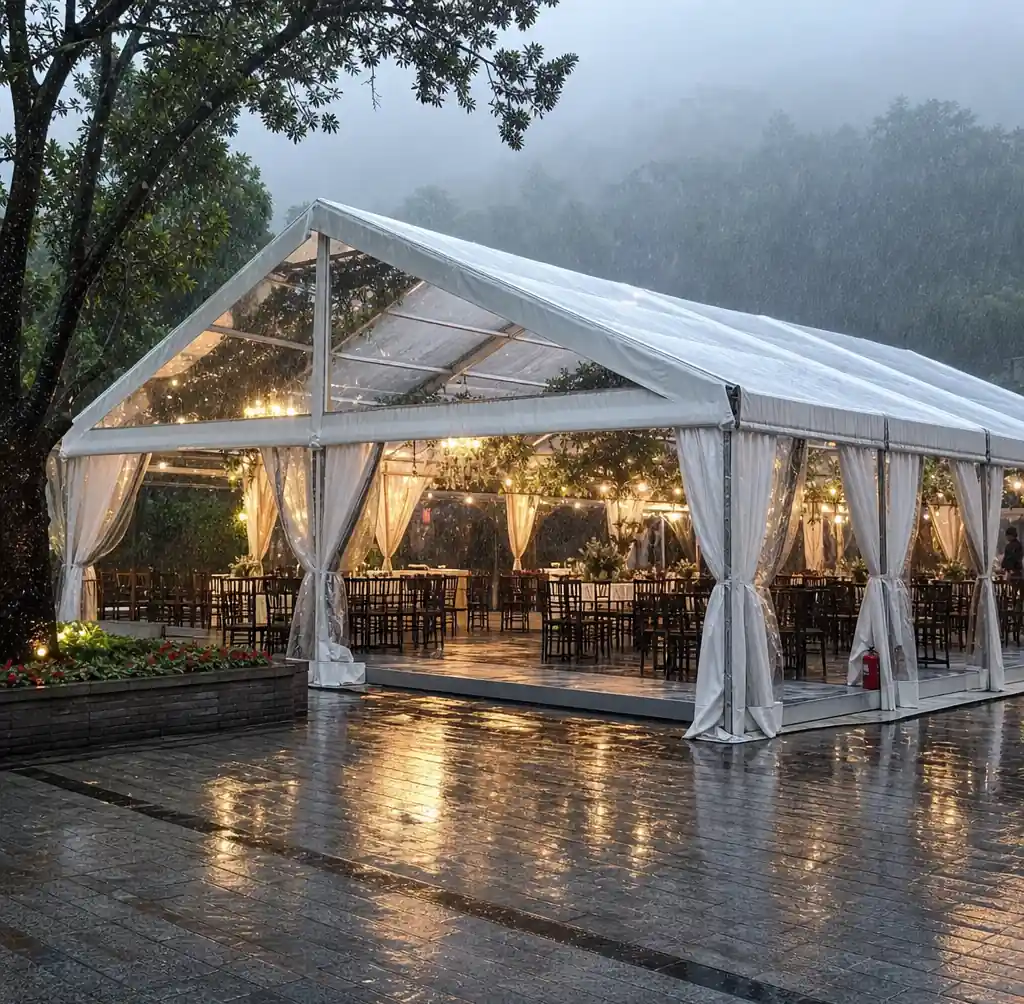 Event Tent in Various Weather Conditions
Weather Performance and Durability
Both tent types provide weather protection, but their engineered performance characteristics vary across different environmental conditions.
Wind Resistance
Clear span structures achieve wind load ratings up to 100 km/h (Beaufort Scale 10) when properly anchored, making them suitable for exposed locations and year-round installations. The rigid frame distributes wind loads across the entire structure, and engineers can calculate exact load capacities for specific configurations and anchor systems.
Pole tents typically rate to 80 km/h wind loads, though performance depends heavily on proper staking depth and soil conditions. Loose or sandy soils reduce holding capacity, while rocky ground may prevent adequate stake penetration. The tension-based system performs well in moderate winds but requires more careful site assessment than frame structures.
Rain and Snow Handling
Both tent types shed rainwater effectively, though through different mechanisms. Pole tents' peaked roofs create steep drainage angles that prevent water pooling, with runoff directed to perimeter drip lines away from entrances and high-traffic areas.
Clear span tents use slightly pitched roof panels (typically 10 to 15 degrees) that channel water to designated drainage points. The aluminum frame can support substantial snow loads when properly designed, making clear span structures suitable for winter events in regions with snowfall.
Temperature Control
Clear span tents accommodate HVAC systems more easily than pole tents because equipment can be positioned flexibly without avoiding center poles, and the sealed perimeter (when using solid sidewalls) improves climate control efficiency. You can maintain comfortable interior temperatures even in extreme weather, extending the event season in hot or cold climates.
Pole tents' higher peak height creates natural air circulation that benefits summer events, though this same feature makes heating more expensive in cold weather due to increased volume.
Best Applications for Each Tent Type
Selecting the optimal tent structure aligns with event characteristics, venue conditions, and guest experience priorities.
When to Choose Clear Span Tents
Clear span structures excel in scenarios requiring maximum space utilization and layout precision:
Corporate Events and Exhibitions: Product launches, trade shows, and corporate galas benefit from unobstructed interiors that accommodate booth configurations, staging, and branded environments without structural compromise.
Large Weddings (300+ guests): High-capacity events require efficient space planning where every square meter counts. Clear span tents maximize seating density and create symmetrical layouts impossible in pole tents.
Urban Venues: Properties with limited grass areas, underground utilities, or building-adjacent installation needs can only accommodate clear span structures due to surface flexibility.
Multi-Day Events: Festivals, conferences, and extended celebrations benefit from clear span tents' superior weather protection and structural stability for installations lasting several days or weeks.
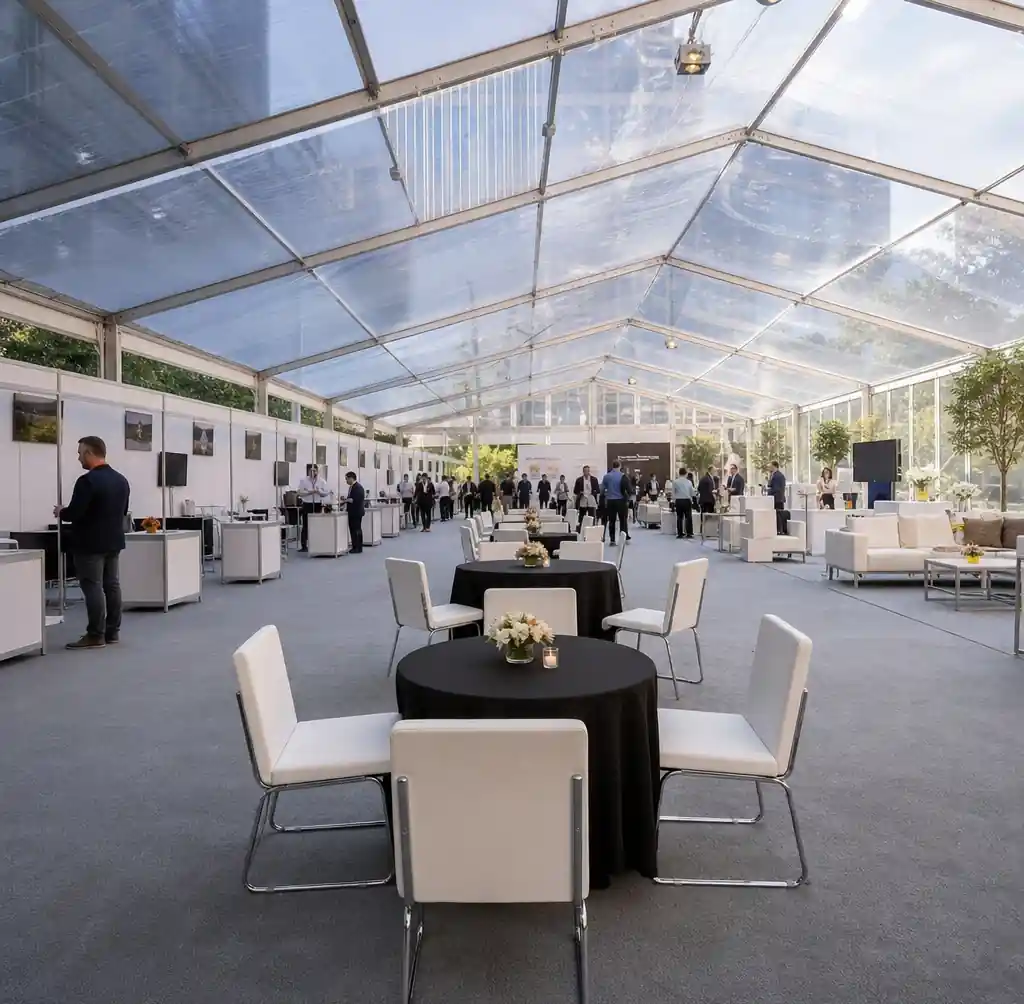 Corporate Exhibition in Clear Span Tent
When to Choose Pole Tents
Pole tents serve specific applications where their characteristics provide advantages:
Garden Weddings and Estate Events: The traditional aesthetic of peaked pole tents complements historic properties, vineyards, and garden settings where classic elegance matters more than spatial efficiency.
Budget-Conscious Events (Under 200 guests): Smaller gatherings can work around single center poles, making pole tents' cost advantage meaningful without significant layout compromises.
Venues with Ample Grass Areas: Locations with extensive lawn space and stakeable ground make pole tent installation straightforward while providing the perimeter clearance guy ropes require.
Events Prioritizing Height and Airflow: Summer outdoor celebrations benefit from pole tents' superior ceiling height and natural ventilation that keeps guests comfortable without mechanical cooling.
How to Choose the Right Tent for Your Event
Decision-making frameworks help event planners evaluate which tent type aligns with their specific requirements.
Decision Factors Checklist
Assess Your Venue:
- Ground surface type (grass, concrete, gravel)?
- Underground utilities or irrigation systems?
- Available installation area including perimeter clearance?
- Building proximity or overhead restrictions?
Define Your Event Requirements:
- Guest count and seating arrangement style?
- Interior equipment needs (staging, AV, HVAC)?
- Aesthetic preferences (traditional vs contemporary)?
- Event duration and seasonal weather concerns?
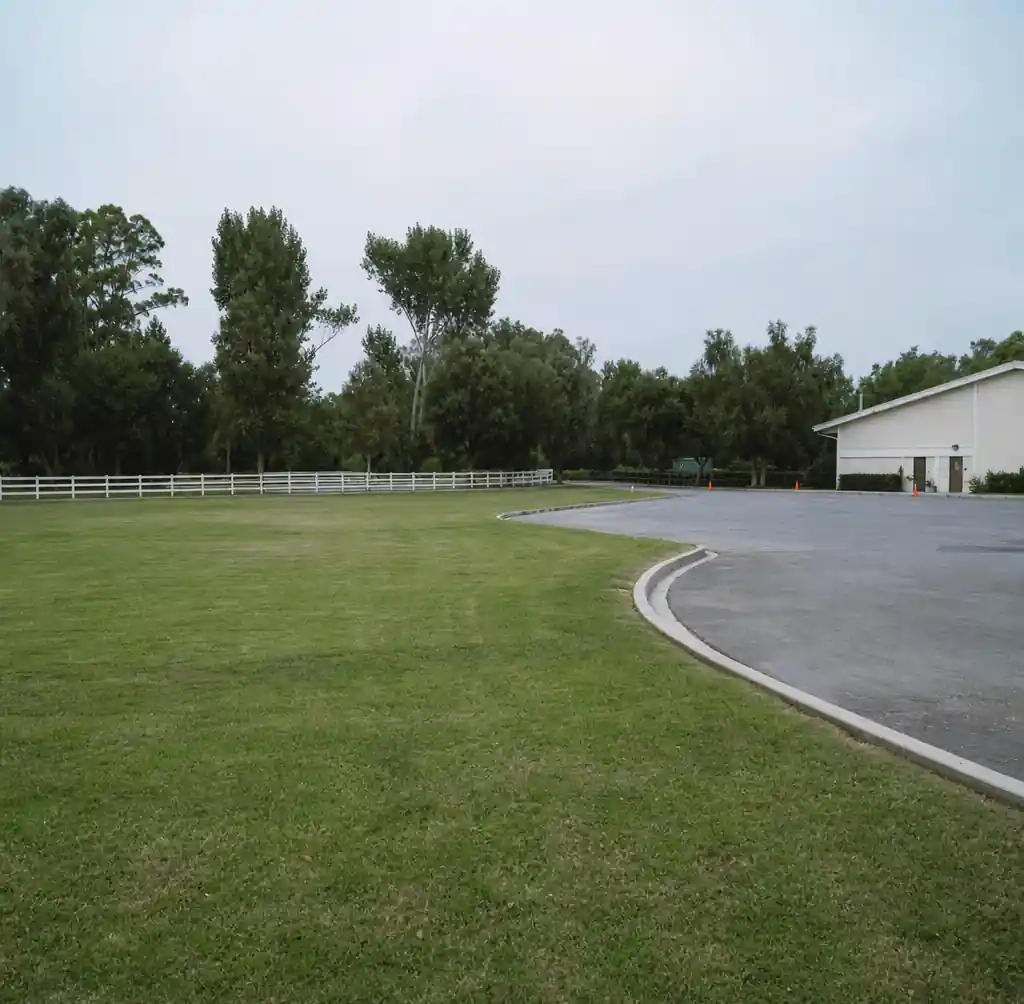 Event Venue Site Assessment for Tent Installation
Evaluate Your Budget:
- Total rental budget including delivery and setup?
- Décor budget to address center poles if applicable?
- Weather contingency needs (HVAC, flooring)?
- Long-term ROI if purchasing for rental business?
Selection Guidelines by Event Type
For weddings with 200+ guests and formal seating: Choose clear span tents to maximize layout flexibility and eliminate center pole interference with head table positioning and dance floor placement.
For intimate garden weddings under 150 guests: Consider pole tents to enhance traditional aesthetics and reduce costs, especially when décor budgets allow for attractive pole treatments.
For corporate events requiring precise booth layouts: Specify clear span structures to ensure sponsor visibility and exhibitor satisfaction without structural obstacles compromising floor plans.
For festivals and multi-day events: Select clear span tents for superior weather protection, structural stability, and installation flexibility across varied venue conditions.
Frequently Asked Questions
Can clear span tents be installed on grass like pole tents?
Yes, clear span tents work on grass using ground anchors driven 3 to 4 feet deep, similar to pole tent stakes but positioned only at frame column locations rather than around the entire perimeter. The frame structure actually provides better wind resistance on soft ground than tension systems.
Do pole tents always cost less than clear span tents?
Pole tents typically cost 30% to 50% less for equivalent covered area, but total event costs may be comparable after factoring in décor expenses to dress center poles, potential layout inefficiencies reducing usable capacity, and venue restrictions on staking that might require alternative locations.
How many center poles do pole tents have?
Pole count depends on tent dimensions. Smaller tents (up to 12m x 12m) typically use a single center pole. Larger structures employ multiple poles arranged in rows: a 15m x 30m tent might have two rows of three poles, while a 20m x 40m configuration could require 8 to 12 poles.
Which tent type handles wind better?
Clear span tents achieve higher engineered wind load ratings (up to 100 km/h vs 80 km/h for pole tents) because rigid frames provide more predictable structural performance. However, properly installed pole tents perform adequately in most weather conditions when soil conditions support deep stake penetration.
Can I install a clear span tent without professional help?
No, clear span installation requires professional crews with specialized equipment (telehandlers, power tools) and structural knowledge to ensure proper assembly and load-bearing anchor installation. Incorrect installation creates safety hazards and voids insurance coverage.
Do pole tents work on hard surfaces like parking lots?
No, pole tents absolutely require stakeable ground for guy rope anchoring. Hard surfaces prevent stake penetration, making installation impossible. If your venue has paved or concrete areas, clear span structures are your only option.
Which tent type provides better insulation for winter events?
Clear span tents offer superior climate control because solid sidewall panels create a sealed envelope that works efficiently with HVAC systems. Pole tents' higher peaks and traditional canvas fabric make heating more expensive, though modern double-layer PVC pole tents improve thermal performance.
How long does each tent type take to set up?
Pole tents install faster (3 to 6 hours for 20m x 30m) due to simpler construction. Comparable clear span tents require 6 to 12 hours because aluminum frame assembly involves more components and precision alignment, though this varies with crew experience and equipment availability.
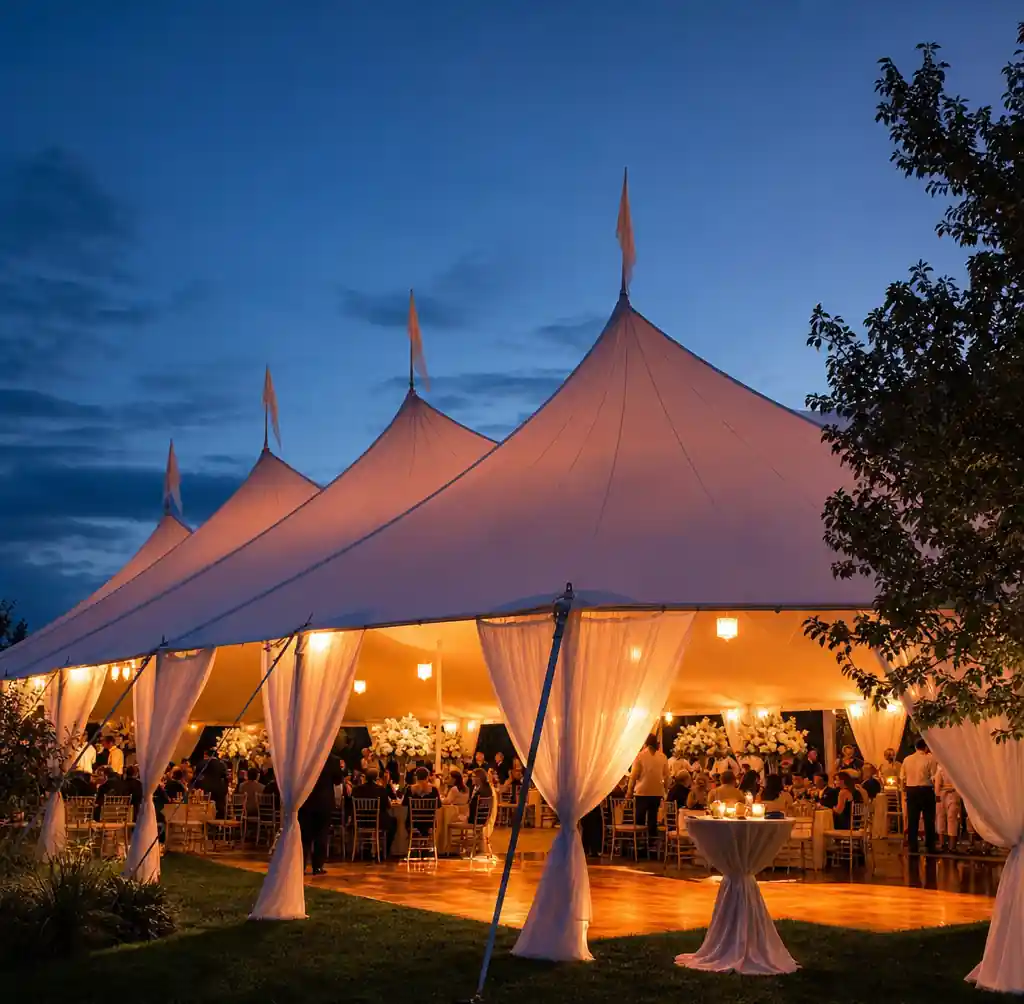 Luxury Wedding Tent with Evening Lighting
Conclusion
Clear span and pole tents serve distinct roles in the event industry, each offering advantages that align with specific venue conditions, budget parameters, and aesthetic preferences. Clear span structures provide maximum interior flexibility and surface versatility, making them ideal for large corporate events, urban venues, and celebrations requiring precise layout control. Pole tents deliver traditional elegance and cost efficiency for garden weddings and events on properties with ample grass areas where staking poses no constraints.
Your optimal choice depends on venue characteristics, guest count, layout requirements, and budget reality. Event planners should evaluate both structural types against their specific needs rather than assuming one solution fits all circumstances. Understanding the engineering principles, installation requirements, and performance characteristics of each tent style enables informed decisions that enhance guest experiences while managing costs effectively.
If you need high-quality event tents for your outdoor celebration, corporate function, or exhibition, Velaria Spatia offers world-class tent manufacturing capabilities including clear span structures up to 60 meters and traditional pole tents for events of all scales. Our facility features advanced aluminum extrusion lines and weather-resistant fabric systems, ensuring superior quality and precision for large-scale event infrastructure. We have successfully supplied tents for iconic events including international exhibitions, luxury weddings, and corporate gatherings worldwide.
Contact us today for custom event tent solutions, technical specifications, and competitive factory-direct pricing.